The Kill Artist by Daniel Silva – Book

The Kill Artist by Daniel Silva- big OverDrive

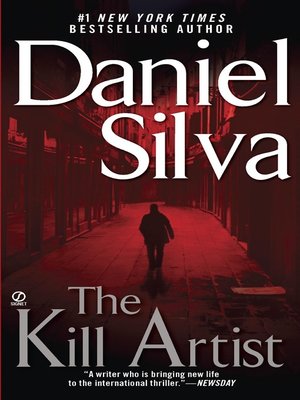
I finally managed to find the first book in the Gabriel Allon series, only to find out that this book refers back to three prequels, including one about an operation to avenge the deaths at the Munich Olympics. These books are not in the Allon series but they offer explanations for the events in The Kill Artist which is considered the first book in the series. In 1996, Silva wrote The Unlikely Spy, in 1998 he wrote the Mark of the Assassin, and in 1999, The Marching Season.

The events that caused the death of Gabriel’s son and the maiming of his wife – events that haunt Gabriel’s dreams and inform his current activities, happened because Allon had killed two members of a family of Palestinian terrorists who killed Israeli athletes at the Munich Olympics. Tariq al-Hourani, Gabriel’s target in The Kill Artist, is the man who placed the bomb that blew up Gabriel’s family, as he watched helplessly. Tariq is also a Palestinian, related to the two terrorists killed for their murders in Munich, his car bombing an act of revenge.

(Many readers, sympathetic to the needs of Palestinians, find this plot line unpalatable. It is true that readers of thrillers don’t want to dwell on the Israeli-Palestinian divide. But after these early books, Silva is not always focused on righting wrongs (imagined or real) of Palestinian “terrorists” against Jews. If this was the axe that was ground by the author through every book, his work would not be so popular. Silva chooses to address diverse forms of the terror humans perpetrate against each other.)

Another interesting element to note in Silva’s books is his female characters. They are usually strong, beautiful, and driven by some injustice or injury in their past. Silva creates his spy, Gabriel, who trusts women to be as talented and ruthless as men, given the proper training, and using their existing motivations to exact justice. Although he sometimes sleeps with these talented beauties, they know he doesn’t love them and they know he will not let them be victimized if he can prevent it. These women bear no grudges against the handsome spy who has lost his family, although considering how almost every operation ends, they would, if they knew, probably be less inclined to cooperate.

Tariq al-Hourani is a brutal guy but he is dying. Gabriel uses a woman, born Jewish but raised by a French family; a woman whose parents were murdered by the Nazis at Sobibor. She is Sarah Halévy, but her French name is Jacqueline Delacroix. She has her own reasons to help Gabriel assassinate al-Hourani. Things, as usual, go terribly awry but Gabriel is the one who ends up with a bullet in his chest. This is not really a spoiler because we never wonder if Allon will be hurt, only how it will happen. Roaming around the best bits of Europe with Gabriel Allon is always a nerve-wracking adventure. But this book begins and ends in one of my favorite Gabriel locations, an isolated cottage in Cornwall, England.

June 2018 Book List

Books with Glasses big

There is something for everyone on this month’s booklist. You’ll find plenty of interesting new literature and fiction, including thrillers and crime titles. You can read a biography of Bruce Lee. Perhaps you might enjoy a book by some of the Simpson’s writers. There is a book about two Norwegian teen-aged girls who went to join ISIS. You can also find at least three different ways to spell Fredrick if you so desire. Happy reading!

 Amazon

Literature and Fiction

Kudos: A Novel(Outline Trilogy) by Rachel Cusk

Invitation to a Bonfireby Adrienne Colt

Us Against You: A Novelby Fredrik Backman

When Life Gives You Lululemonsby Lauren Weisberger

A Place for Us: A Novelby Fatima Farheen Mirza

Treebone: A Novelby Caleb Johnson

Harry’s Trees: A Novelby Jon Cohen

There There: An NovelbyTommy Orange

Convenience Store Womanby Sayuka Murata, Ginny Tapley Takemori

Mystery and Thrillers

Bearskin: A Novelby James A. McLaughlin

The Anomalyby Michael Rutger

London Rules (Slough House) by Mike Herron

Lying in Wait: A Novelby Liz Nugent

Invitation to a Bonfireby Adrienne Colt

The Perfect Coupleby Elin Hilderbrand

The Book of M: A Novelby Peng Shepherd

The Word is Murder: A Novelby Anthony Horowitz

Still Lives: A Novelby Maria Hummel

Social Creature: A Novelby Tara Isabella Burton

The President is Missing: A Novelby Bill Clinton with John Patterson

Who is Vera Kelly?By Rosalie Knecht

Science Fiction and Fantasy

Storm Glass (The Harbinger Series)by Jeff Wheeler

Witchmarkby C. L. Polk

Bring Me Their Heartsby Sara Wolf

The Robots of Gothamby Todd McAulty

The Book of M: A Novel by Peng Shepherd

Biographies and Memoirs

Calypso by David Sedaris (Essays)

The World as it Is: A Memoir of the Obama White House Ben Rhodes

Famous Father Girl: A Memoir of Growing Up Bernstein

by Jamie Bernstein

Flash: The Making of Weegee the Famousby Christopher Bonanos

Somebody I Used to Know: A Memoirby Wendy Mitchell

Mother American Night: My Life in Crazy Timesby John Perry Barlow, Robert Greenfield

To Throw Away Unopened: A Memoirby Viv Albertine

Reporterby Seymour M. Hersch

Room to Dreamby David Lynch, Kristine McKenna

Springfield Confidential: Jokes, Secrets and Outright Lies from a Lifetime Writing for the Simpsonsby Mike Reiss, Matthew Klickstein

Nonfiction

She Has Her Mother’s Laugh: The Powers, Perversions and Potentials of Heredityby Carl Zimmer

Frenemies: The Epic Disruption of the Ad Businessby Ken Auletta

Fail Until You Don’t: Fight, Grind, Repeatby Bobbie Bones

Lost in Math: How Beauty Leads Physics Awryby Sabine Hossenfelder

How Democracy Endsby David Runciman

Red Card: How the U. S. Blew the Whistle on the World’s Biggest Sports Scandalby Ken Bensinger

Unthinkable: An Extraordinary Journey through the World’s Strangest Brainsby Helen Thomson

My Twenty-Five Years in Provence: Reflections on Then and Nowby Peter Mayle

Orca: How We Came to Know and Love the Oceans Greatest Predatorby Jason Colby

The Traveling Feast: On the Road and at the Table with My Heroes by Rick Bass

The New York Time Book Review

May 6

Crime

Twisted Preyby John Sanford

The Way I Dieby Derek Haas

A Death of No Importanceby Mariah Fredericks

The Fleur De Sel Murdersby Jean Luc Bannalec

Parking Lot Attendantby Nafkote Tamirat

Varinaby Charles Frazier

The Sparsholt Affair by Alan Hollingshurst

3 Sparkling Debuts

Laura and Emmaby Kate Greathead

The House of Impossible Beautiesby Joseph Cassara

Self-Portrait with Boyby Rachel Lyon

Nonfiction

Dancing Bearsby Withold Szblowski

Chasing Hillaryby Amy Chozick

Beneath a Ruthless Sunby Gilbert King

Broadwayby Fran Leadon

Automating Inequalityby Virginia Eubanks

Left Bank: Art, Passion, and the Rebirth of Paris, 1940-50by Agnes Poirier

Two Sistersby Asne Seierstad (why 2 teens left Norway for ISIS)

The Women’s Hourby Elaine Weiss

May 13

Fiction

The Mars Roomby Rachel Kushner

You Think It, I’ll Say Itby Curtis Sittenfeld (Short stories)

Feast Daysby Ian MacKenzie

Trenton Makesby Tadzio Koelb (Short Stories)

The Gunnersby Rebecca Kauffman

Momento Parkby Mark Sarvas

Every Other Weekendby Zulema Renee Summerfield

Nonfiction

Road to Unfreedomby Timothy Snyder

Bibi: The Turbulent Life and Times of Benjamin Netanyahuby Anshel Pfeffer

The Wife’s Taleby Aida Edemariam

Battleship Yamatoby Jan Morris

The Island that Disappearedby Tom Feiling

St. Petersburg: Madness, Murder, and Art on the Banks of the Nevaby Jonathan Miles

What is Real?by Adam Becker

White Extremism

Everything You Love Will Burn: Inside the Rebirth of White Nationalism in Americaby Vegas Tenold

White Youth: My Descent Into America’s Most Violent Hate Movement-and How I Got Outby Christian Picciolini

Healing from Hate: How Young Men Get Into-and Out of- Violent Extremismby Michael Kimmel

May 20

Fiction

Motherhoodby Sheila Heti

White Housesby Amy Bloom

Undiscovered Countryby Kelly O’Conner McNees

The Poems of TS Eliot– Audiobook – read by Jeremy Irons

Nonfiction

Things that Make White People Uncomfortableby Michael Bennett, Dave Zirin

Fascism: A Warningby Madeleine Albright

Misèreby Linda Nochlin (Art)

Into the Raging Seaby Rachel Slade

Assault on Intelligenceby Michael Hayden

See What Can Be Done: Essaysby Lorrie Moore

Can Democracy Survive Global Capitalism?by Robert Kuttner

Faithby Jimmy Carter

The Burning Shoresby Frederic Webrey

The Girl Who Smiled Beadsby Clemantine Wamariya

It’s Time to Fight Dirtyby David Faris

Not Enoughby Samuel Moyn

And Now We Have Everythingby Meaghan O’Connell

Like Brothersby Jay and Mark Duplass (filmmakers)

The Order of Timeby Carlo Rovelli as read by Benedict Cumberbatch

May 27

Fiction

All For Nothingby Walter Kempowski

Country Darkby Chris Offutts

The Optimistic Decade by Heather Abel

Nonfiction

Calypsoby David Sedaris (essays)

Insaneby Alisa Roth (mentally ill in prison)

The Electric Woman by Tessa Fontaine

War on Peaceby Ronan Farrow

Live Work Work Work Dieby Corey Pein

Memoirs From Beyond the Grave, 1768-1800by François-René Chateaubriand

Spineless: The Science of Jellyfish and the Art of Growing a Backboneby Juli Berwald

Wild Horse Country: The History, Myth, and Future of the Mustangby David Philipps

My Patients and Other Animals: A Veterinarians Stories of Love, Loss, and Hopeby Suzy Fincham-Gray

Fighting Wars

Army of None: Autonomous Weapons and the Future of War by Paul Scharre

Quicksilver War: Syria, Iraq and the Spiral of Conflictby William Harris

The Caliphate at War: Operational Realities and Innovations of the Islamic Stateby Ahmed S Hashim

The Boer War(Seven Stories) by Martin Bossenbrock

The Killing Seasons: A History of the Indonesian Massacres, 1965-66by Geoffrey Robinson

The Strategy of Victory: How General George Washington Won the American Revolutionby Thomas Fleming

Fight Like a Girl: The Truth Behind How Female Marines Are Trainedby Kate Germano

June 3

Fiction

The Outsiderby Stephen King

Circeby Madeline Miller

First Person by Robert Flanagan

Love and Ruinby Paula McLain

The Judge Hunterby Christopher Buckley

How Hard Can It Be?By Allison Pearson

A Place for Usby Fatima Farheen Mirza

Do This For Meby Raney Moore

What You Don’t Know About Charlie Outlawby Leah Stewart

My Ex Lifeby Stephen McCauley

The Dead Houseby Billy O’Callaghan

Heby John Connolly

The Glitchby Elisabeth Cohen

Sophia of Silicon Valleyby Anna Yen

Madness is Better than Defeatby Ned Beauman

The Life List of Adrian Mandrickby Chris White

Lawn Boyby Jonathan Evison

Nonfiction

Popsby Michael Chabon (essays)

Robinby Dave Itzhoff

Inseparableby Yunte Huang

Asking for a Friend: Three Centuries of Advice on Life, Love, Money and Other Burning Questions From a Nation Obsessedby Jessica Weisberg (Ann Landers)

Publisher’s Weekly

May 7

Lost Empress: A Novelby Sergio De La Pava (F)

Squareby Mac Barnett, illus. by Jon Klassen (F)

Flowers and Foul Play: A Magic Garden Mysteryby Amanda Flower (F)

Barracoon: The Story of the Last “Black Cargo”by Zora Neale Hurston (NF)

The Mars Roomby Rachel Kushner (nothing to do with space) (F)

Warlightby Michael Ondaatje (F)

Junkby Tommy Pico (Book Length Poem) (Poetry) (F)

Our Story: A Memoir of Love and Life in Chinaby Rao Pingru, trans. From the Chinese by Nancy Harman (NF)

Indecencyby Justin Phillip Reed (NF)

A Brotherhood of Spies: The U-2 and the CIA’s Secret Warby Monte Reel (NF)

Against Memoir: Complaints, Confessions and Criticismby Michelle Tea (NF)

The Perfectionists: How Precision Engineers Created the Modern Worldby Simon Winchester (NF)

May 11

I’m Still Here: Black Dignity in a World Made for Whitenessby Austin Channing Brown (NF)

Pops: Fatherhood Pieces by Michael Chabon (essays)

The Ensembleby Aja Gabel (F)

When Einstein Walked with Gödel: Excursions to the Edge of Thoughtby Jim Holt (essays)

The Favorite Sisterby Jessica Knoll (F)

How It Happenedby Michael Koryta (F)

All the Answers: A Graphic Memoirby Michael Kupperman (Memoir)

The Lives of the Surrealistsby Desmond Morris (NF)

How to Change Your Mind: What the New Science of Psychedelics Teaches Us About Consciousness, Dying, Addiction, Depression, and Transcendenceby Michael Pollan

May 18

Tip of the Iceberg: My 3,000-Mile Journey Around Wild Alaska, the Last Great American Frontierby Mark Adams (NF)

How Far She’s Comeby Holly Brown (Thriller) (F)

The Summer I Met Jackby Michelle Gable (F)

Last Instructionsby Nir Hezroni, trans. from the Hebrew by Steven Cohen (Thriller) (F)

The Devil’s Half Mileby Paddy Hirsch (F)

Eating My Way Through Italy: Heading Off the Main Roads to Discover the Hidden Treasures of the Italian Tableby Elizabeth Minchilli (NF)

The Ashtray (Or the Man Who Denied Realityby Errol Morris (NF)

The Seventh Crossby Anna Seghers, trans. from the German by Margot Bettauer Dembo

May 25

Turncoat: Benedict Arnold and the Crisis of American Libertyby Stephen Brumwell (NF)

Broken Places: A Chicago Mysteryby Tracy Clark (F)

Some Trickby Helen DeWitt (F)

Planet Funny: How Comedy Took Over Our Cultureby Ken Jennings (NF)

Star of the Northby D. B. John (Thriller) (NF)

No Ashes in the Fire: Coming of Age Black and Free in Americaby Darnell C. Moore (Memoir)

The Council of Twelve: A Hangman’s Daughter Taleby Oliver Pötzsch, trans. from the German by Lee Chadeayne (F)

Somnambulanceby Fiona Smyth (F)

The Freeze-Frame Revolutionby Peter Watts (F)

She Has Her Mother’s Laugh: The Powers, Perversions, and Potential of Heredityby Carl Zimmer (NF)

June 1

Lagos Noiredited by Chris Abani (Short stories)

Rough Beauty: Forty Seasons of Mountain Livingby Karen Auvinen (NF)

Social Creatureby Tara Isabella Burton (F)

The President is Missingby Bill Clinton and James Patterson (F)

Kudosby Rachel Cusk (F)

Rough Animalsby Rae Del Bianco (F)

Reporter: A Memoirby Seymour M Hersh (Memoir)

The Word is Murderby Anthony Horowitz (F)

The Good Sonby You-Jeong Jeong, trans. from the Korean by Chi-Young Kim (F)

There Thereby Tommy Orange (F)

How Hard Can It Beby Allison Pearson (F)

Bruce Lee: A Lifeby Matthew Polly (NF)


Moscow Rules by Daniel Silva – Book

Moscow-Rules-by-Daniel-Silva-big-PIcClick

In Moscow Rules by Daniel Silva, when a Russian journalist dies in the arms of Gabriel Allon, an Israeli operative, at the Basilica in Rome, Gabriel’s highest level friends in the Vatican are not thrilled. Gabriel had a meeting with this, now dead, reporter who had something to tell him. Gabriel is not thrilled either. He was on his honeymoon in Umbria and he does not want any part of this. But it’s a mystery that involves injustice, assassination, and perhaps more; clarion calls that Allon can never fail to answer. Gabriel immediately knows his honeymoon is over.

Ops inside Russia, especially in Moscow, are rarely undertaken by any nation’s spy agency, let alone the Israelis. Moscow plays by its own rules. What is supposed to be a quick in and out excursion, under a false identity, to talk with Olga Sukhova, another journalist, goes badly awry when Gabriel decides to outstay his team. Moscow rules say, “Assume every room is bugged and every telephone monitored. Assume every person you encounter is under opposition control. And don’t look back. You are never completely alone.” And yet he defies his boss and friend Ari Shamron and stays. Guess how that turns out.

In these days when we talk about Russia every day, the information the author gives us about Russia is very familiar to us. Olga tells Gabriel, “To understand Russia today, you must understand the trauma of the nineties. Everything we had, everything we had been told, was swept away. We went from superpower to basket case overnight. Our people lost their life savings, not just once but over and over again. Russians are paternalistic people. They believe in the Orthodox Church, the State, the Tsar. They associate democracy with chaos. Our president… uses words like ‘managed democracy’ and ‘State capitalism’ but they’re just euphemisms for something more sinister, fascism.”

Gabriel’s Russian op does not stay in Russia. He learns that the man our reporters were so worried about is a very wealthy Russian oligarch who is very well guarded. Olga tells Gabriel exactly why this particular oligarch is so dangerous and exactly how he has stepped over a “red line” to pursue a business deal that must be stopped.

In Moscow Rules you can read about the plan Gabriel comes up with to flush him out. Since we know that Gabriel’s plans do not go smoothly, find out how he messes up this time. Find out if his new wife is still speaking to him after he never gets back to the honeymoon. It’s a very satisfying Gabriel Allon book. It has all the characteristic parts of the pattern readers expect when they throw in their lot with the Israeli Secret Service and their painterly operative, who manages, despite the powerful people he chases down, to get some of the worst players off the world  stage. I think you will find that it also resonates with the situation we find ourselves in today, vis a vis Russia. Serendipity.

The Messenger by Daniel Silva – Book

The Messenger horz you tube big

I seem to have summer fever. Instead of reading nonfiction with serious content, I have wandered back to lighter fare. Since I am of the firm conviction that even fiction that entertains is not necessarily cheerful and may even encompass some social commentary, my idea of a frivolous summer book may not be the same as yours. I often click on lists of summer reading suggestions that other people love to post online and their choices almost never conform with mine.

I had previously read two books by Daniel Silva in the Gabriel Allon series. I decided to try to finish up that series this summer. What I discovered is that there are 17 books in this series so far. Silva has written one a year since 2000, only missing 2001 and 2012. It was my idea to read them in order but I am finding that that is difficult if I want to use the library, so out-of-order it is. I will include a list of all 17 books at the end of this post, however. The Messenger was first on my summer agenda. A few words about Gabriel Allon. Mr. Allon may be a stone killer when necessary but he never kills without good reason. He is a good guy, a rescuer, a green-eyed weapon trained by the Israeli Secret Service at King Saul Boulevard and he is at the peak of his talents. He might have been a world class painter if he had not been recruited by his mentor Shamron. Instead he is a first class restorer of famous paintings when he is not following up on intel about some criminal who intends to wreak havoc on whatever part of the world that the miscreant perceives as an enemy.

The villain in The Messenger is a terrorist behind the 9/11 attacks on the World Trade Center and a man who has managed to stay hidden in plain sight by changing his appearance (which has rarely been glimpsed and almost never photographed) and by being under the protection of the very rich Zizi al-Bakari, who funds terrorists but has never been caught at it. Gabriel hates terrorists and, even when he promises his wife he will not get involved he cannot help himself. Gabriel has a whole team of operatives who we also get to know, although not in any great detail. In this particular book we meet Sarah, an American girl who lost her fiancé on 9/11. Sarah has a degree in art and she is no trained operative but she agrees to take part in this plan to catch Zizi and the terrorist he hides. Gabriel’s team is not on board with using Sarah in this dangerous op.

Gabriel’s plans are often quite audacious because the people he is after are so good at evading capture. His plans often center around what he knows best, famous works of art. And Gabriel’s plans almost never go smoothly. They go awry in often spectacular fashion and people get hurt and they die. Gabriel takes a beating in every one of these adventures in keeping the world safe from really bad guys that I have read so far. Sometimes he is not even completely recovered from the last op before it is time for a new one, but he is no bruiser. He is a thin guy approaching middle age who strikes people he meets as very sincere and serious, and who relies on guns more often than his fists. He’s likable but it’s hard to pin down why. When each plan goes off the rails and Gabriel is roughed-up or nearly killed once again I get angry at him for being unable to plan and execute a perfect op. However it is good to see someone who is human in scale beat some of the super bad actors that Gabriel pursues and he always wins in the end, although he never gets much credit. Governments are happy with his results but not with the chaos and mayhem that precedes the rough justice. Gabriel is not a rule follower and that is why he is always in trouble.

2000  The Kill Artist

2002  The English Assassin

2003  The Confessor

2004  A Death in Venice

2005  Prince of Fire

2006  The Messenger

2007  The Secret Servant

2008  Moscow Rules

2009  The Defector

2010  The Rembrandt Affair

2011  The Fallen Angel

2013  The English Girl

2014  The Heist

2015  The English Spy

2016  The Black Widow

2017  House of Spies

2018  The Other Woman

The Orphan Master’s Son by Adam Johnson – Book

01-The-Orphan-Masters-Son big pulitizer prize edition guide

In Adam Johnson’s book The Orphan Master’s Son, winner of the Pulitzer Prize in 2013, you immerse yourself in the North Korea of Kim Jong-Il. You will often want to leave but, as awful as the story is, it is fascinating as well. Adam Johnson did not grow up in North Korea or have any special knowledge of North Korea. He had a grant, and he used his time to read all the best books on the matter. He reads his essay about this to us at the end of the Audible version of this book. He tells us that while this research gave plenty of detail about Korean principles of economics, farming, militarism, and governing, there was little in these references about the people of North Korea. So the book is fiction. The people are characters Johnson has created. How close to the realities of life in North Korea this novel comes I cannot say, but there are defectors from North Korea and yet there have been no denouncements of the general truthfulness of this book. It seems that readers can put some faith in the descriptions of the fear we suspect lies at the heart of this strange, secretive nation.

We meet Pak Jun Do, reared in Long Tomorrows with the orphans, but not actually an orphan. He is the son of the Orphan Master and a beautiful singer who is taken away to the capital to serve the Dear Leader. Jun Do seems to have a lucky life for a while, avoiding assignment to hard labor, or being sent to a prison camp. He is taught English. He listens on a radio aboard a fishing boat, the Junma, he is chosen, as a hero of the people (a lie) to go to Texas with a group of North Koreans, perhaps because he speaks English. He goes to Japan (to kidnap Japanese people to bring to North Korea). He travels to South Korea to kidnap an opera singer for the Dear Leader. Why doesn’t he ever defect, we wonder. There is more. He has been tattooed with the image of the lovely Sun Moon, Kim Jong-Il’s favorite actress. She was stolen from the Dear Leader by the ferocious martial arts champion Commander Ga.

Jun Do loses his lucky life (or gets really lucky) when he ends up killing Commander Ga and when Kim Jong-Il makes him the new Commander Ga, replacement husband to Sun Moon. His Captain on the Junmaonce said to him, “It’s not because no one ever taught you about a family and sacrifice and doing whatever it takes to protect your own.” He reminds Jun Do that the Captain and crew are his family. When he is assigned a real family we will see what sacrifices he is willing to make.

For some unknown reason we find that Jun Do as Commander Ga is also in a prison interrogation unit and we hear this part of his story in flashbacks and flashforwards. How did he get there? What happened to his luck? Did love make the difference?

Every day in Pyongyang and throughout N. Korea loudspeakers give encouragement and tell pretty lies to Koreans. The speaker also tells each day a new installment in the best story of the year. This year they are telling the love story of Commander Ga and Sun Moon – not the real one – the Dear Leader approved one.

“Citizens, we bring good news! In your kitchens, in your offices, on your factory floors – wherever you hear this broadcast, turn up the volume! The first success we have to report is that our Grass into Meat Campaign is a complete triumph. Still, more soil needs to be hauled to the rooftops, so all housing-block managers are instructed to schedule extra motivation meetings. …Finally, the first installment of this year’s Best North Korea Story begins today. Close your eyes and picture for a moment our national actress Sun Moon. Banish from your minds the foolish stories and gossip that have lately swirled our city about her. Picture her the way she will live forever in our national consciousness.” (pg. 218)  On Audible these announcements are read in a voice that is perfect for the role.


We meet Jun Do’s/Commander Ga’s interrogator. He is a creature more typical of North Korea, determined to do his assigned job of producing “biographies”/confessions from his subjects to file in the “library” and hooking subjects up to the autopilot (now that lobotomies are out of style) for electric shock treatments. He is opposed by the old-school pubyok (pu-bi-oks) who are more thuggish and who learned to perform lobotomies with #20 nails. They laugh at the idea of biographies and make our unnamed interrogator’s life complicated. Cans of peaches play a big role in the dark side of Johnson’s story.

The Orphan Master’s Son is a detailed and layered story of a place run by a truly pathological (bipolar) autocrat, where life has no stability, no predictability, and no sweetness (except for one lucky Orphan Master’s son). It would be poignant but we are not allowed to dwell on that. It would be horrific, but we are not allowed to dwell on that either. It was strange to read this novel at a moment in time when the newest Dear Leader is trying to rejoin the community of nations. It’s a novel, but it speaks to everything we suspect about the “Hermit Kingdom.” Perhaps it will be disappearing forever. We can only hope.

May 2018 Book List

May 2018 Book List

Books with Glasses big

I did not include all the interesting lists from editors, publisher’s and readers for Summer Reading suggestions but you might want to Google them. Some people like to choose a long and meaty selection that will occupy them for most of the summer, some people like lighter fare, such as romances or stories that happen near beaches, some want thrillers or detective stories. We are so rich in writers and good books that it should not be difficult to find something engrossing to read while you soak up sun (or lounge in dappled shade).

Amazon

Literature and Fiction

A Shout in the Ruins by Kevin Powers

Alternative Remedies for Loss by Joanna Cantor

Pretend I’m Dead by Jen Beagin

My Ex-Life: A Novel by Stephen McCauley

Tomb of the Unknown Racist by Blanche McCrary Boyd

The Mars Room: A Novel by Rachel Kusher

Warlight: A Novel by Michael Ondaatje

The Cactus by Sarah Haywood

Tin Man by Sarah Winman

Mr. Flood’s Last Resort by Jess Kidd

Love and Ruin by Paula McClain

Mysteries and Thriller

The Mars Room: A Novel by Rachel Kushner

Star of the North by D B John

It Ends with Her by Brianna Labuskes

The Favorite Sister by Jessica Knoll

Wicked River: A Novel by Jenny Milchman

How it Happened by Michael Koryta

The Dark Angel (Ruth Galloway Mysteries) by Elly Griffiths

Cult X by Fuminori Nakamura, Kalau Almony

Our Kind of Cruelty by Araminta Hall

The Outsider by Stephen King

A Million Drops by Victor de Ánbol, Lisa Dillman

Biographies and Memoirs

Paul Simon: The Life by Robert Hilburn

From Cold War to Hot Peace: An American Ambassador in Putin’s Russia by Michael McFaul

The Electric Woman: A Memoir of Death-Defying Acts by Tessa Fontaine

Robin by Dave Itzkoff

Figures in a Landscape: People and Places by Paul Theroux

Spring by Karl Ove Knausgaard

Tip of the Iceberg: My 3,000-Mile Journey Around Wild Alaska, The Last Great American Frontier by Mark Adams

The Destiny Thief: Essays on Writing, Writers and Life by Richard Russo

Kickflip Boys: A Memoir of Freedom, Rebellion, and the Chaos of Fatherhood by Neal Thompson

The Last Cowboys: A Pioneer Family in the New West by John Branch

Nonfiction

Talking to my Daughter About the Economy or, How Capitalism Works – and How it Fails by Yanis Varoufakis

Bull Shit Jobs: A Theory by David Graebar

Our Towns: A 100,000-Mile Journey into the Heart of America by James Fellows, Deborah Fellows

Men in Blazers Present Encyclopedia Blazertannica: A Suboptimal Guide to Soccer, America’s Sport of the Future since 1972 by Roger Bennett, Michael Davies

Tyrant: Shakespeare on Politics by Stephen Greenblatt PhD

The Order of Time by Carlo Rovelli

The Vory: Russia’s Super Mafia by Mark Galeotti

The Perfectionists: How Precision Engineers Created the Modern World by Simon Winchester

Sex Money Murder: A Story of Crack, Blood, and Betrayal by Jonathan Green

Bad Blood: Secrets and Lies in a Silicon Valley Startup by John Carreyrou

Twilight of the Gods: A Journey to the End of Classic Rock by Steven Hyden

How to Change Your Mind: What the New Science of Psychedelics Teaches us about Consciousness, Dying, Addiction, Depression and Transcendence by Michael Pollan

Kickflip Boys by Neal Thompson

The Feather Thief: Beauty, Obsession, and the Natural History Heist of the Century by Kirk Wallace Johnson

Into the Raging Sea: Thirty-Three Mariner’s, One Megastorm and the Sinking of El Faro by Rachel Slade

Science Fiction and Fantasy

Only Human (The Themis Files) by Sylvain Neuvel

The Plastic Magician (A Paper Magician Novel) by Charlie N. Holmberg

Sky in the Deep by Adrienne Young

Furyborn (The Empiricum Trilogy) by Claire Legrand

Medusa Uploaded (The Medusa Cycle) by Emily Devenport

In the Region of the Summer Stars (Eirlandia) by Stephen R. Lawhead

Dark Queen (Jane Yellowstone) by Faith Hunter

Artificial Condition: The Murderbot  Diaries by Martha Wells

The Poppy War: A Novel by R F Kuang

King of the Ashes: Book One of the Firemane Saga by Raymond E Feist

Time Was by Ian McDonald


NY Times Book Review


Apr. 8

Fiction

The Female Persuasion by Meg Wolitzer

Gun Love by Jennifer Clement

Alternate Side by Anna Quindlen

Tangerine by Christine Mangan

Nonfiction

Russian Roulette by Michael Isikoff and David Corn

Educated by Tara Westover

Blue Dreams by Lauren Slater

Never Remember by Masha Gessen and Misha Friedman

Alt-Right by Mike Wendling

No Turning Back by Rania Abouzeid

I Am I Am I Am by Maggie O’Farrell

The Food Explorer by Daniel Stone

The Making of a Dream by Laura Wides-Muñoz

Watch One with the Gipper: An Aide Recalls Movie Nights with the Reagans by Mark Weinberg

Apr. 13

Fiction

Overstory by Richard Powers

The Italian Teacher by Tom Rachman

Stray City by Chelsey Johnson

American Histories by John Edgar Wideman

The Sandman by Lars Kepler

The Ghost Notebooks by Ben Donick

Summer Hours at the Robbers Library by Sue Halpern

Crime Fiction

The Cutting Edge by Jeffrey Deaver

Twenty-One Days by Anne Perry

Black and White Ball by Loren D. Estleman

Greeks Bearing Gifts by Philip Kerr

Nonfiction

A Higher Loyalty by James Comey

Thinking Without a Banister by Hannah Arendt (essays)

The Marshall Plan by Benn Steil

The Art of Screen Time by Anya Kamenetz

Be the Parent, Please by Naomi Schaefer Riley

To Change the Church by Ross Douthat

A Dangerous Woman by Susan Ronald

Apr. 20

Fiction

Macbeth by Jo Nesbo

The Bible of Dirty Jokes by Eileen Pollack

The Life to Come by Michelle de Kretser

Happiness by Aminatta Forna

Paris Metro by Wendall Steavenson

Anatomy of a Miracle by Jonathan Miles

Science Fiction and Fantasy

The Merry Spinster: Tales of Everyday Horror by Daniel Mallory Ortberg

The Tea Master and the Detective by Aliette de Bodard

Gods, Monsters, and the Lucky Peach by Kelly Robson

The Queens of Innishear by Tessa Gratton

Nonfiction

Who We Are and How We Got Here by David Reich

On Grand Strategy by John Lewis Gaddes

Picasso and the Painting that Shocked the World by Miles J Unger

The Recovering: Intoxication and its Aftermath by Leslie Jamison

Look Alive Out There (essays) by Sloane Crosley

Maker of Patterns by Freeman Dyson

Apr. 27

Fiction

Going for a Beer by Robert Coover

The Only Story by Julian Barnes

If We Had Known by Elise Juska

How to Be Safe by Tom McAllister

Census by Jesse Ball

Bob Honey Who Just Do Stuff by Sean Penn

Nonfiction

God Save Texas by Lawrence Wright

State of Resistance by Manuel Pastor

The Promise and the Dream by David Margolick

Make Trouble (Memoir) by Cecile Roberts

The Space Barons: Elon Musk, Jeff Bezos, and the Quest to Colonize the Cosmos by Christian Davenport

Rocket Billionaires: Elon Musk, Jeff Bezos, and the New Space Race by Tim Fernholz

Sharp: The Women Who Make an Art of Having an Opinion by Michelle Dean

Wrestling with the Devil by Ngugiwa Thiong’o

The Beekeeper by Dunya Mikhail


Publisher’s Weekly

Apr. 6

Dictionary Stories by Jez Burrows (F)

Sharp: The Women Who Make an Art of Having an Opinion by Michelle Dean (NF)

The Cutting Edge: A Lincoln Rhyme Novel by Jeffrey Deaver (F)

The Dark Clouds Shining (last in a quartet) by David Downing

The Plant Messiah: Adventures in Search of the World’s Rarest Species by Carlos Magdalena (NF)

Circe by Madeline Miller (F)

Blackfish City by Sam J Miller (F)

A Necessary Evil by Abir Mukherjee (F)

Demi-gods by Eliza Robertson (F)

Apr. 13

Beyond the Map: Unruly Enclaves, Ghostly Places, Emerging Lands and Our Search for New Utopias by Alastair Bonnett

The Little Art(Memoir) by Kate Briggs

How to Write an Autobiographical Novel: Essays by Alexander Chee (NF)

The Art of the Wasted Day by Patricia Hampl (F)

The Human Instinct: How we Evolvedto Have Reason,Consciousness, and Free Will by Kenneth Miller (NF)

Postcards from Auschwitz by Daniel P Reynolds (NF)

Foxby Dubravka Ugresic trans. From the Croatian by Elias-Bursac and David Williams (F)

Apr. 20

The Rise and Fall of the Dinosaurs: A New History of a Lost World by Steve Brusatte (NF)

Companions by Christina Hesselholdt, trans from the Danish, by Paul Russell Garnett (NF)

The Pope Who Would Be King: The Exile of Pius IX and the Emergence of Modern Europe by David I Kertzer (NF)

Beneath the Ruthless Sun: A True Story of Violence, Race, and Justice Lost and Found by Gilbert King (NF)

Theory of the Bastards by Audrey Schulman (F)

Property by Lionel Shriver (F)

You Think It, I’ll Say It by Curtis Sittenfeld (F)

The Feather Thief: Beauty, Obsession, and the Natural History of the Century by Kirk W Johnson (F)

The Girl Who Smiled Beads by Clemantine Wamarlya and Elizabeth Weil (F)

The Art of Reading (Essays) by Damon Young (NF)

Apr. 30

The Optimistic Decade by Heather Abel (F)

Slave Old Man by Patrick Chamoiseau, trans from the French and Creoleby Linda Coverdale (F)

Sorority by Genevieve Sly Crane (F)

The Electric Women: A Memoir in Death-Defying Acts by Tessa Fontaine

Alter Ego: A Jonathan Stride Novel by Brian Freeman (F)

Motherhood by Sheila Heti (F)

Tradition by Brendan Kiely (F-YA)

Beauty in the Broken Places: A Memoir of Love, Faith, and Resilience(Memoir) by Allison Pataki

Exit Strategy by Charlton Pettus (F)

Asperger’s Children: The Origins of Autism in Nazi Vienna by Edith Sheffer (NF)

Into the Raging Sea: Thirty-Three Mariners One Megastorm, and the Sinking of El Faro by Rachel Slade (NF)

Chasing New Horizons: Inside the Epic First Mission to Pluto by Alan Stern and David Grinspoon (NF)


Ready Player One by Ernest Cline – Book


Ready Player One horz Good e-Reader

Yes, Ready Player One by Ernest Cline is a YA novel, but why should kids have all the fun? Here we have a Steve-Jobs-type, James Donovan Halliday, and a Woz (Steve Wozniak) type, Ogden Morrow. We have an America that has disintegrated into poverty for most people. In fact the world is so gritty, gray and depressing that most people spend a good part of their days in the VR (virtual reality) world created by Halliday, a world called the OASIS.

We visit the OASIS with Parzival (the avatar of Wade Owen Watts) and we meet his best friend Aech (H). We also visit Wade in the real world where he lives in a mobile home parked by a crane in the “stacks” outside of Oklahoma City. He also has found an intact van buried in a car junkyard where he gets away from his Aunt Alice’s cranky boyfriend. He attends a VR high school in the OASIS.

Ernest Cline has enshrined in this novel the pop computer/movie culture of the 80’s. This is a nerd book, but one that can still be enjoyed by those of us who are not so nerdy. Parzival has memorized the movie War Games, for example, but I also confess to having watched the movie a few too many times.

When Halliday dies he creates a quest, that all in the OASIS can try to win, to determine who will be the heir to his billions and his creation. This quest is at the heart of this story. It involves challenges, deep knowledge of the computer games and movies of the 80’s, and takes us across much of the “landscape” of the OASIS. James Halliday was socially awkward, perhaps on the autism spectrum. His friend Og wins the woman Halliday was in love with. This drives a wedge between these two friends. There is a love interest for Parzival in the form of Art3mis and there are plenty of villains under an arch-villain Nolan Sorrento and his company the IOI.

This book can be devoured in one afternoon which is something I rarely experience these days. I found it thoroughly entertaining, full of “easter eggs” (read the book), and with a light running commentary on the ways that VR and AI (artificial intelligence) may affect the social aspects of societies if we are not careful. You can find critiques of this novel as a literary endeavor but I see no reason to be quite so adult and judgmental about it. I enjoyed the book enough to go see the movie (in RPX). The book, for me, was better than the movie.

If you want the in-depth nerd skinny you might enjoy this article:

http://readyplayerone.wikia.com/wiki/Ready_Player_One


How Democracies Die by Levitsky and Ziblatt – Book

How democracies die big Chicago Humanities Festival

Steven Levitsky and Daniel Ziblatt wrote How Democracies Die. They were challenged to complete this book project by their agent Jill Kneerim. They did so with help from their student research assistants who are listed in the acknowledgments. It is a book that tries to analyze how much danger we are in of losing our democracy at this current moment in time. It begins with a story about Benito Mussolini and ends with references to the goings-on in the Trump/Republican administration, the 2016 primaries, and in the campaign of 2016. In the middle the authors look at a number of “political outsiders” who “came into power from the inside via elections or alliances with powerful political figures.” They take us through the rise of Adolf Hitler, Getúlio Vargas in Brazil, Alberto Fujimori in Peru and Hugo Chavez in Venezuela. They say, “in each instance, elites believed the invitation to power would containthe outsider, leading to a restoration of control by mainstream politicians. But their plans backfired. A lethal mix of ambition, fear, and miscalculation conspired to lead them to the same fateful mistake: willingly handing over the keys of power to an autocrat-in-the-making.”

Although the authors remind us that America has had no shortage of authoritarian personalities in politics we also, they explain, have had “gatekeepers”, first in the form of powerful men in smoke-filled rooms and later in the form of political parties, conventions and the electoral college which kept authoritarianism in check, possibly with the sacrifice of some of the “will of the people”. They go on to explain that the primary system opened elections up to “outsiders” who had not come up from the ranks of government. Two factors weakened the gatekeepers, one being the availability of outside money (Citizen’s United) and two being the “explosion of alternative media”. “It was like a game of Russian roulette: The chances of an extremist outsider capturing the presidential nomination were higher than ever before in history.”

There were signs as early as the primaries that Trump might represent dangers for our democratic government.

  1. He would not say whether he would accept the results of the election
  2. He denied the legitimacy of his opponents
  3. He show a tolerance for and encouragement of violence
  4. He exhibited a readiness to curtail civil liberties of rivals and critics

The authors tell us that “No other major presidential candidate in modern U.S. history, including Nixon, has demonstrated such a weak public commitment to constitutional rights and democratic norms.” They offer evidence for each point they make. They also say that Republicans closed ranks behind Trump and normalized the election results.

Throughout their interesting and well-researched book we are shown examples of instances when outsiders have gradually and, sometimes, almost invisibly, sometimes rather violently taken the reins of power from the “referees” such as the courts, or the congresses of government, bought off their opponents, subverted the media, and have ended up with absolute control, thus ending a democracy. We can see where the authors are headed. They want to warn us that our democracy also could die such a death, just sliding into authoritarianism one baby step at a time. Here we look at Erdogan in Turkey and the Orbán government in Hungary and many more.

“Even well-designed constitutions cannot, by themselves, guarantee democracy,” say the authors. Successful democracies rely on informal rules, they add. “Two norms stand out as fundamental to a functioning democracy: mutual toleration and institutional forbearance.” The rest of the book shows us how these two norms are no longer functioning or are being eroded. In the end they explore our possible futures under Trump, but even if he is not the one who destroys our democracy it seems as if it has never been more threatened and it is good time to have a blueprint of what cues we should look for. Knowing when to put on the brakes or when the brakes will no longer functions could be very important either in the near or the more distant future.

Although this book seems scholarly and is constructed according to academic principles it is very readable. The language is not at all obscure and the examples of other nations who have lost their democratic government to a dictatorial government are interesting with easy-to-draw parallels. How Democracies Die should, perhaps, be required reading given where we find ourselves right now in America. It is the very best kind of thriller, the real kind.

An American Marriage by Tayari Jones – Book


An American Marriage horz. Parnassus books big

Oprah chooses book club books that explore social and cultural issues, sometimes very graphic abuses. Her choices can be quite literary and even somewhat gritty. I have not always kept up with Oprah’s book choices because I have my own lists that I can never seem to keep up with, but I did decide to read her latest choice, An American Marriage by Tayari Jones. We meet Roy Othaniel Hamilton in the first chapter and right away his language patterns make him unique and interesting. In the next chapter we meet his wife Celestial (nicknamed Georgia). Roy comes from a country family, not farmers, but a family from a small rural town in Louisiana. Celestial grew up in Atlanta, Georgia in a more upscale family, although her parents have divorced and her father has married the woman he was having an affair with. Both Roy and Celestial have attended classic African American colleges, Morehouse and Spelman. They meet through Celestial’s friend, and neighbor since childhood, Andre.

These two are only married for moments (about one year) before something awful drives them apart, something that is terrible because it is so racist and unexpected. Although this might happen to a white couple the odds against it are astronomical. However, if even one person in a marriage is black this can and does still happen in America. Roy is accused of raping a woman at a motel where he is staying with Georgia. His wife knows he is not guilty because they were together all night but the woman is so emotional and so certain that he is the one that he is sentenced to twelve years in prison.

Celestial has a career, she has a way to survive. At first she writes Roy every day and sees him as often as possible. But life happens. She makes sure he has money in his prison account and an uncle works on Roy’s appeal. When Roy gets out of prison after only five years, Celestial has already moved on but has not told Roy because she is so conflicted about it. There are some very emotional moments when Roy is released from prison that I cannot tell you about.

Although this book speaks to the dynamic in a marriage especially when a geographical separation takes place in a marriage, it also speaks to the overwhelming imbalance between incarceration for Americans of African Descent and other Americans. It is entirely possible that this is something many marriages in the black community have to deal with. The book doesn’t make a big deal of this demographic anomaly, but if you are aware of it then it is there in the back of your mind.

An American Marriage is much more than a classic novel about a marriage. It does not push the issue of racism, but it’s in there. It doesn’t push the fear that many people of color carry with them that they could be falsely arrested or even killed just for being black, but we feel it. It doesn’t go into detail about the way law enforcers sometimes go nuts if they think a black man has committed a crime against a white woman (in fact we do not even know for sure if the woman at the motel is white) but we are witnesses to it.

However Tayari Jones’ novel also stands as a story about a man and a woman and a marriage. In this sense it can be read at more than one level. So if you tend to avoid fiction that is loosely disguised social commentary you don’t have to eliminate An American Marriage by Tayari Jones. I believe that most likely you will enjoy it as much as any other offbeat love story.

Still I don’t think Oprah chose it because it is just a uniquely American love story, or a uniquely modern love story. It should shock us all that what happened to Roy and Celestial is still a thing that could happen in America in the 21stcentury, along with other racist actions perpetrated in the name of law and order but having little to do with the subject. It will be very telling when a romance between people of color does not need to come with an undercurrent of social injustice, if that ever happens.

April 2018 Book List

book-club-recomendations

It’s spring although it won’t stop snowing, but more time to read before the garden demands attention. This book list seems a bit smaller than usual and, of course, there are titles that call out to me. Keep writing all our authors and we will keep reading. When it finally warms up take a book to the park.

Amazon


Literature and Fiction

The Extraordinary Life of Sam Hell: A Novel by Robert Dugoni

Ecstasy: A Novel by Mary Sharratt

Lawn Boy: A Novel by Jonathan Evison

Varina: A Novel by Charles Frazier (Cold Mountain)

The Only Story: A Novel by Julian Barnes

The Female Persuasion: A Novel by Meg Wolitzer

The Overstory: A Novel by Richard Powers

Circe by Madeline Miller

Mysteries and Thrillers

Greeks Bearing Gifts (A Bernice Gunther Novel) by Philip Kerr

The Oracle Year: A Novel by Charles Soule

Macbeth by Jo Nesbo

To Die But Once: A Maisie Dobbs Novel by Jacqueline Winspear

Warning Light by David Ricciardi

The Hellfire Club by Jake Tapper

Tangerine: A Novel by Christine Mangan

After Anna by Lisa Scottoline

Shattered Mirror: An Eve Duncan Novel by Iris Johansen

The Knowledge: A Richard Jury Mystery by Martha Grimes

Science Fiction and Fantasy

One Way by S J Morden

Head On by John Scalzi

Before Mars (A Planetfall Novel) by Emma Newman

Space Opera by Catherynne M Valente

Nonfiction

Rocket Men: The Daring Odyssey of Apollo 8 and the Astronauts Who Made Man’s First Journey to the Moon by Robert Kurson

The Big Ones: How Natural Disasters Have Shaped Us by Lucy Jones

Natural Causes: An Epidemic of Wellness, the Certainty of Dying, and Killing Ourselves to Live Longer by Barbara Ehrenreich

Look Alive Out There: Essays by Sloane Crosley

Losing the Nobel Prize: A Story of Cosmology, Ambition, and the Perils of Science’s Highest Honor by Brian Keating

The Neuroscientist Who Lost Her Mind: My Tale of Madness and Recovery by Barbara K Lipska PhD, Elaine McArdle

The Consciousness Instinct: Unraveling the Mystery of How the Brain Makes The Mind by Michael S Gazzaniga

Space Odyssey: Stanley Kubrick, Arthur C Clark and the Making of a Masterpiece by Michael Benson

God Save Texas: A Journey into the Soul of the Lone Star State by Lawrence Wright

The Truth about Animals: Stoned Sloths, Lovelorn Hippos and other Tales from the Wild Side of Wildlife by Lucy Cooke

Biographies and Memoirs

The Girl Who Smiled Beads: A Story of War and What Comes After by Clementine Wamariya, Elizabeth Well

Creative Quest by Questlove

Tiger Woods by Jeff Benedict, Armen Keteyian

You All Grow Up and Leave Me: A Memoir of Teenage Obsession by Piper Weiss

The Best Cook in the World: Tales from My Momma’s Table by Rick Bragg

My American Dream: A Life of Love, Family, and Food by Lidia Matticchio Bastianich

The Recovering: Intoxication and its Aftermath by Leslie Jamison

The Man Who Caught the Storm: The Life of Legendary Tornado Chaser Tim Samaras by Brantley Hargrove

Maker of Patterns: An Autobiography through Letters by Freeman Dyson

Swell: A Sailing Surfer’s Voyage of Awakening by Liz Clark, Daniella Manini


The New York Times Book Review


March 11

Nonfiction

Behemoth by Joshua B Freeman

A False Report by T. Christian Miller and Ken Armstrong

Rise and Kill by Ronen Bergman

Fair Shot by Chris Hughes

We the Corporations by Adam Winkler

What Are We Doing Here? (essays) by Marilynne Robinson

Conspiracy by Ryan Holiday

Fiction

The Friend by Sigrid Nunez

Eternal Life by Dara Horn

Brass by Xhenet Aliu

YA Crossover

Truly Devious by Maureen Johnson

The Cruel Prince by Holly Black

The Prince and the Dressmaker by Jen Wang

The Hazel Wood by Melissa Albert

March 18th

Can Donald Trump by Impeached?

Impeachment: A Citizen’s Guide by Cass R. Sunstein

Can It Happen Here? Authoritarianism in America by Cass R Sunstein

Nonfiction

Secrets We Kept by Krystal Sital

Sabers and Utopia: Visions of Latin America by Marco Vargas Llosa

The Neighborhood by Marco Vargas Llosa

Built: The Hidden Stories Behind Our Structures by Roma Agrawal

It’s Even Worse Than You Think by David Cay Johnston

A Tokyo Romance (memoir) by Ian Buruma

Victorians Undone by Kathryn Hughes

The Stowaway by Laurie Gwen Shapiro

My Father’s Wake (memoir) by Keven Tooles

Language

Swearing is Good for You: The Amazing Science of Bad Language by Emma Byrne

How We Talk: The Inner Workings of Conversation by N J Enfield

How Language Began: The Story of Humanity’s Greatest Invention by Daniel I Everett

Crime Fiction

The Temptation of Forgiveness by Donna Leon

The Escape Artist by Brad Meltzer

Let Me Lie by Clare Mackintosh

The Big Get-Even by Paul Di Filippo

Fiction

Speak No Evil by Uzodinma Iweala

A Long Way From Home by Peter Carey

The Which Way Tree by Elizabeth Crook

The Driest Season by Meghan Kenny

The Great Alone by Kristin Hannah

March 25th

Fiction

Mrs. By Caitlin Macy

Nonfiction

Stealing the Show by Joy Press

A Lab of One’s Own by Patricia Fara

Broadband by Claire L Evans

Brazen by Pénélope Bagieu

Text Me When You Get Home by Joanne Lipman

Brave by Rose McGowan

Tomorrow Will Be Different by Sarah McBride

Biotopia by Emily Chang

Dear Madam President by Jennifer Palmieri

Ask Me About My Uterus by Abby Norman

April 1

Fiction

The House of Broken Angels by Luis Alberto Urrea

Child Sleuths and Child Victims

The Knowledge by Richard Jury

The Disappeared by C J Box

To Die But Once (Maisie Dobbs) by Jacqueline Winspear

Jack Rabbit Smile by Joe R Lansdale

The Lost Girls of Camp Forevermore by Kim Fu

Call Me Zebra by Azareen Van der Vliet Oloomi (Iranian)

Song of a Captive Bird by Jasmin Darznik

Nonfiction

The Cadaver King and the Country Dentist by Radley Balko and Tucker Carrington

The Return of Marco Polo’s World by Robert D. Kaplan

Victorious Century by David Cannadine

Fatal Discord by Michael Massing

Journey into Europe by Akbar Ahmed

Water

The Water Will Come: Rising Seas, Sinking Cities, and the Remaking of the Civilized World by Jeff Goodell

Replenish: The Virtuous Cycle of Water and Prosperity by Sandra Postel

The Sources: How Rivers Made America and America Remade Rivers by Martin Doyle


Publisher’s Weekly


March 16th

What is Real?: The Unfinished Quest for the Meaning of Quantum Physics by Adam Becker (NF)

Death Comes in Through the Kitchen by Teresa Dovalpage (F)

The Pleasure Shock: The Rise of Deep Brain Stimulation and Its Forgotten Inventor by Lone Frank (NF)

The Punishment She Deserves: A Lynley Novel by Elizabeth George

Never Remember: Searching for Stalin’s Gulags in Putin’s Russia by Masha Gessen and Misha Friedman (NF)

Patriot Number One: American Dreams in Chinatown by Lauren Hilgers

The Gunners: A Novel by Rebecca Kauffman (F)

The Astonishing Color of After by Emily X R Pan (YA)

The Italian Teacher: A Novel by Tom Rachman (F)

Aetherial Worlds by Tatyana Tolstaya trans from the Russian by Anya Migdal (Short Stories)

American Histories by John Edgar Wideman (Short Stories)

March 23rd

The Disappeared: A Joe Pickett Novel by C J Box (F)

Emergency Contact by Mary H K Choi (YA)

I Have Lost My Way by Gayle Forman (YA)

The Sun Does Shine: How I Found Life and Freedom on Death Row by Anthony Ray Hinton (NF)

Searching For Stars on an Island in Maine by Alan Lightman (essays)

The Solitary Twin by Harry Mathews (NF)

Undocumented: Immigration and Militarization of the United States-Mexico Border by John Moore (NF)

Murder on Shades Mountain: The Legal Lynching of Willie Peterson and the Struggle for Justice in Jim Crow Birmingham by Melanie S Morrison (NF)

The Master Key by Masako Togowa trans, from the Japanese by Simon Grove (F) (1st published in 1984)

My Dead Parents by Anya Yurchyshyn (Memoir)

March 30th

What is Real: The Unfinished Quest for the Meaning of Quantum Physics by Adam Becker (NF)

Because We Are Bad: OCD and Girl Lost in Thought by Lily Bailey (memoir)

Paris By the Book by Liam Callanan (F)

The Wolf: Under the Northern Sky: Book 1 by Leo Carew (Fantasy)

America is Not the Heart by Elaine Castillo (F)

Look Alive Out There by Sloane Crosley (essays)

The Consciousness Instinct: Unraveling the Mystery of How the Brain Made the Mind by Michael S Gazzaniga (NF)

The Recovering: Instruction and Its Aftermath by Leslie Jamison (NF)

Denmark Vesey’s Garden by Ethan and Blain Roberts (NF)

Animals Eat Each Other by Elle Nash (F)

Resurrection Bay by Emma Viskic (F)

Killing King: Racial Terrorists, James Earl Ray, and the Plot to Assassinate Martin Luther King Jr. by Stuart Wexler, Larry Hancock (NF)

The Female Persuasion by Meg Wolitzer