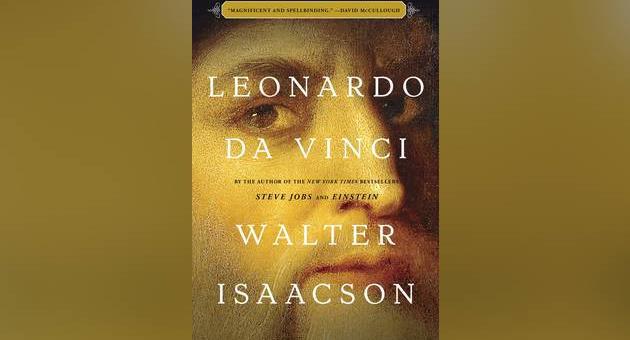
Leonardo Da Vinci by Walter Isaacson – Book

Leonardo horiz big the Malta Independent

If your eyes and heart were opened to a whole new world filled with oil paints, and tempura, gouache, symbolism, and the subject matter of artists you were probably in your first art history class. It was a revelation that you could watch slides and listen to a professor speak about them and come away with a head full of images that lit up your mind, slapped a smile on your face and made you long for the great museums of NYC and Paris.

This is the place that Walter Isaacson takes you to in his book Leonardo Da Vinci. He puts us back in that art history class as he walks us through the details of Da Vinci’s paintings. There are color plates (even on a Kindle).

However, Leonardo was not first and foremost a painter, although that is certainly one way we remember him. After all, he did paint the Last Supper and the Mona Lisa. Leonardo, it seems, was not in love with painting and left many works unfinished. His mind saw all the components of the physical world that needed to be comprehended at great depth in order to make someone a great artist. He spent years dissecting cadavers and made exquisitely detailed anatomy drawings. He wanted to see inside eyes, brains, hearts and he drew very sophisticated conclusions about how bodies work. He studied rocks, birds (to learn about flight) and, in excruciating detail, the movements of water. He studied optics and perspective.

Yes, all of these things relate to art, but they relate even more to physics and engineering. I will leave it to Isaacson to tell you some of the other unique things Da Vinci wanted to know. Leonardo also loved theatrics and building machines for special dramatic effects. In this way he entertained kings and rulers and participated socially in the entertainments of the times, while always searching for a patron to help support his activities, his household, and the students who came to work in his workshop. He was not wealthy, being the illegitimate son of a notary.

Sadly for us, Leonardo was so often enticed by ever newer areas of exploration that he never published his enormous treasure trove of notebooks and he left it to others to receive credit for his discoveries. Perhaps it was because he was left handed and all his notations were made in mirror writing (he wrote from right to left). The idea of ancient aliens who came to earth when men were still quite primitive is now the subject of the Ancient Aliens television series, but I remember running across it years ago. Several times as I read about Da Vinci I thought he might be a distant offspring of such a technologically advanced alien visitor. Walter Isaacson is a true academic though and he said no such thing. He does not deal in conjecture and gives attributions for almost every point he makes in a fairly extensive set of footnotes at the end to the text. There is also a useful index to take you back to sections you want to review.

Isaacson is both a biographer and an art critic, as well as a fan of Leonardo and his book is not at all difficult to read. He doesn’t get bogged down in academia and he clearly wants us to share his admiration for Leonardo Da Vinci. It is a book to read in quiet moments with a nice cup of something warm or on a park bench with your bottled water while taking a break in your daily walk. A chance to dawdle in the 14th and 15th century as Leonardo pursues his life and his art, while wandering Italian towns in his rose colored robes, is the gift that Walter Isaacson gives us.

Pachinko by Min Jin Lee – Book

There are not many family sagas that are non-European but Min Jin Lee has added Pachinko to the genre. Sunja Baek is the Korean woman that we follow to Japan. Hooni and Yongji are her parents, poor Koreans who carve out a viable economic space for themselves in the years just before the Japanese come to occupy the Korean Peninsula (in 1910, prior to Europe’s first world war). Hooni is born with a hair lip and does not expect to marry, but he has strength and personality. Yongji is old enough as a single woman to believe she will never marry. Sunja is their only living daughter. She is no great beauty but she has the allure of youth and she is pursued with some patient skill by Koh Hansu, who only visits Korea, but actually lives in Japan. When she tells him she is pregnant he offers to support her but tells her he cannot marry her.

Sunja and her mother run a boarding house for fishermen which is popular because her mother is a great cook. Izak Baek comes to their boarding house very ill, having just arrived in their village on the ferry. He is a Christian minister, going to Japan to take up a post in his brother’s congregation. He most likely has consumption (TB to us) and is not strong. When he learns of Sunja’s pregnancy he asks her to marry him and come to Japan with him. Sunja is reluctant to go because Koh Hansu lives in the very city where they will go to live but she has few options.

Sunja has a son, named Noah and another son named Mozasu (after Moses). Christians are outlawed in Japan and Koreans are looked upon as dogs so the family lives in what is basically the Korean ghetto. Sunja’s husband Isak is arrested and thrown in jail for preaching Christianity. His health problems make this particularly punitive for him. By the time he gets out of jail he is in very bad shape indeed. According to this author, the Japanese do not feel any foreign people are fine enough to be accepted by the Japanese people. This is the same attitude, seven decades later, that Sunja’s grandson Solomon encounters when he returns from school in America to work in Japan.

Noah, Sunja and Izak’s first child,  is actually the son of Koh Hansu. Hansu climbs the power ladder in Japan, but as a yakuza, so he is considered a criminal type, like a member of a mafia. Noah does not know this man is his father. Noah is very bright and longs to go to college in Japan. Hansu makes sure Noah is able to do as he wishes but there are repercussions and, in a sense, Sunja pays for her sins. The second son meets a Korean mentor who runs several Pachinko parlors. Pachinko is a game similar to pinball but it also involves gambling, so our equivalent of a Pachinko parlor is a casino. Many owners are criminals but Mozasu’s mentor runs his businesses cleanly. Eventually this second son owns three Pachinko parlors of his own and the family no longer has to worry about money.

This book covers the generations of this family growing up in Japan between 1910 and 1989. These Korean people never become Japanese citizens because, in fact, even if an immigrant from Korea does become a naturalized citizen, Koreans must carry passports from South Korea. The family may be fictional but the events they live through are not. This follows the form we are used to in most family sagas.

Sunja lives with Izak’s brother Joseph and his wife and it is the lives of the two couples and their offspring that we follow for seven decades and through two world wars. This novel requires an investment in time but the history covered is new to most of us and interesting because of it.

I listened to this book on Audible as I was able to use a credit to read it in that format without cost. The narrator had a clear voice but she was so sweet she did not always seem appropriate in times when life got bitter for the family. There is also some graphic sex in the last section of the book which seemed odd when read in the same tone as the rest. The sexual scenes were there for a reason but were quite jarring juxtaposed against the rest of the content. Even when Sunja had her illicit relationship with Koh Hansu the encounters were not at all graphic (of course Sunja’s experiences were in 1910 and Hannah’s experiences were in the 1980’s). Still I think if this was used as a book club selection readers would need to be forewarned about what to expect. Pachinko by Min Jin Lee is a book that is growing on me now that I have finished reading it. It is vivid enough to be memorable but has a sort of sparseness that makes it better as history than as literature.

March 2018 Book List

March 2018 Book List


This month we find a long list of topics covered by authors of newly released books. In this March 2018 book list there is sure to be something here for everyone: Physics, the 60’s, Virtual Reality, Romance, China, Paris, Food,  Sex Toys, Justice Marshall, Eisenhower, Hippies and Food, Kids these days, Kennedy women, Doctor books, Factories, Seppuku, Racism and much more including a perennial favorite, crime fiction. Happy reading. If we could only inject books directly into our brain – although, as with everything, there would be disadvantages I’m sure.

Amazon

Literature and Fiction


Every Note Played by Lisa Genova

The Sparshot Affair by Alan Hollinghurst

Gun Love: A Novel by Jennifer Clement

The Italian Teacher: A Novel by Tom Rachman

The Adulterants by Joe Dunthome

Trenton Makes: A Novel by Tadzio Zoelb

Laura and Emma by Kate Greathead

Girls Burn Brighter: A Novel by Shobha Rao

Whiskey and Ribbons by Leesa Cross-Smith

The House of Broken Angels by Luis Alberto Urrea

Gods of Howl Mountain: A Novel by Taylor Brown

The Cloister: A Novel by James Carroll


Biographies and Memoirs


Disappointment River: Finding and Losing the Northwest Passage by Brian Castner

Twentieth Century Boy: Notebooks of the Seventies by Duncan Hannah

Just the Funny Parts…and a Few Hard Facts about Sneaking into the Hollywood Boy’s Club by Nell Scovell

Agatha Christie: A Mysterious Life by Laura Thompson

Patriot Number One American Dreams in Chinatown by Lauren Hilgers

Tomorrow Will Be Different: Love, Life, and the Fight for Trans Equality by Sarah McBride, Joe Biden

I’ll Be Gone in the Dark: One Woman’s Obsessive Search for the Golden State Killer by Michelle McNamara, Gillian Flynn (Intro), Patton Oswalt (Afterword

Broad Band: The Untold Story of the Women Who Made the Internet by Claire L. Evans

The Age of Eisenhower: America and the World in the 1950’s by William I. Hitchcock

A Season in the Sun: The Rise of Mickey Mantle by Randy Roberts, Johnny Smith


Mysteries and Thrillers


Crimson Lake: A Novel by Candice Fox

The Flight Attendant: A Novel by Chris Bohjalian

Auntie Poldi and the Sicilian Lions by Mario Giordano, John Brownjohn

Barbed Wire Heart by Tess Sharpe

The Hunger by Alma Katsu

High White Sun by J. Todd Scott

Bone Music (The Burning Girl Series) by Christopher Rice

The Punishment She Deserves: A Lynley Novel by Elizabeth George

Chicago: A Novel by David Mamet

The Temptation of Forgiveness: A Commissario Guido Brunetti Mystery by Donna Leon

Green Sun by Kent Anderson


Nonfiction


What is Real? The Unfinished Quest for the Meaning of Quantum Physics by Adam Becker

To the Edges of the Earth: 1909: the Race for Three Poles and the Climax of the Age of Exploration by Edward J. Larsen

The Last Wild Man of Borneo: A True Story of Death and Treasure by Carl Hoffman

Walking the Americas: !800 Miles, Eight Countries and One Incredible Journey from Mexico to Columbia by Levison Wood

Astral Weeks: A Secret History of 1968 by Ryan H Walsh

Enlightenment Now: The Case for Reason, Science, Humanism, and Progress by Steven Pinker

The Space Barons: Elon Musk, Jeff Bezos, and the Quest to Colonize the Cosmos by Christian Davenport

Atom Land: A Guided Tour through the Strange (and Impossibly Small) World of Particle Physics by Jon Butterworth

The Wisdom of Wolves: Lessons from the Saw Tooth Pack by Jim Dutcher, Jamie Dutcher


Science Fiction and Fantasy


The Coincidence Makers: A Novel by Yoav Blum

The Hunger by Alma Katsu

The Wonder Engine: Clocktaur War Book 2 by T. Kingfisher

Children of Blood and Bones (Legacy of Orïsha) by Tomi Adeyemi

The Warrior Within by Angus McIntyre

Blood of the Four by Christopher Golden, Tim Lebbon

High Voltage (Fever) by Karen Marie Moning

Burn Bright (Alpha and Omega) by Patricia Briggs

Daughters of the Storm by Kim Wilkins

Lake Silence (The World of the Others) by Anne Bishop


New York Times Book Review

Feb. 4th

Fiction


In Every Moment We Are Alive by Tom Malmquist

Munich by Robert Harris

The Afterlives by Thomas Pierce

Little Reunions by Eileen Chang

Reservoir 13 by Jon McGregor

Asymmetry by Lisa Halliday


Crime Novels


The Gatekeeper by Charles Todd

The Wanted by Robert Crais

Mephisto Waltz by Frank Tallis

The Undertaker’s Daughter by Sara Blaedel


Nonfiction


Dawn of the New Everything: Encounters with Reality and Virtual Reality by Jaron Lanier

Experience on Demand: What Virtual Reality Is, How it Works, and What it Can Do by Jeremy Bailenson

The Wizard and the Prophet by Charles C. Mann

The Road to Sleeping Dragon by Michael Meyer

Nine Continents by Xiaolu Guo

To Fight Against This Age by Rob Riemen

The Saboteur by Paul Kix

L’Appart: The Delights and Disasters of Making My Paris Home by David Lebovitz

A Taste of Paris: A History of the Parisian Love Affair with Food by David Downie

Eating Eternity: Food, Art, and Literature in France by John Baxter


Feb. 11th (for Valentine’s Day)

Fiction


Sunburn by Laura Lippman

Endless Summer by Madame Nielsen

Some Hell by Patrick Nathan

Straying by Molly McCloskey

The Queen of Hearts by Kimmery Martin

The Art of Vanishing by Laura Smith

My Last Love Story by Falguni Kothari

Our Lady of the Prairie by Thisbe Nissen

Surprise Me by Sophie Kinsella


Romances


Devil in Tartan by Julia London

One and Only by Jenny Holiday

Promise Not to Tell by Judith Krentz

Duke in Shining Armor by Loretta Chase

A Princess in Theory by Alyssa Cole


Nonfiction


The Kiss by Brian Turner

Getting Off by Erica Garza

Buzz: The Stimulating History of the Sex Toy By Hallie Lieberman

Vibrator Nation: How Feminist Sex-Toy Stores Changed the Business of Pleasure by Lynn Comella


Feb. 18th

Fiction


Asymmetry by Lisa Halliday

How to Stop Time by Matt Haig

The Maze at Windermere by Gregory Blake Smith

Peculiar Ground by Lucy Hughes-Hallett

Ferlinghetti’s Greatest Poems by Lawrence Ferlinghetti

In Black and White by Junichiro Tanizaki


Crime Fiction


Down the River Unto the Sea by Walter Mosley

The Unforgotten by Laura Powell

The Woman in the Water by Charles Finch

The Policeman’s Daughter by Trudy Nan Boyce


Nonfiction


Directorate S by Steve Loll

Hippie Food by Jonathan Kauffman

Kids These Days: Human Capital and the Making of Millenials by Malcolm Harris

The Selfie Generation: How Our Self Images are Changing Our Nation’s Privacy, Sex, Consent, and Culture by Alicia Eles

iGen: Why Today’s Super-Connected Kids are Growing Up Less Rebelious, More Tolerant, Less Happy – and Completely Unprepared for Adulthood by Jean M. Twenge

The Ukranian Night by Marci Shore

I’ll Be Gone in the Dark: One Woman’s Obsessive Search for the Golden State Killer by Michelle McNamara, intro by Gillian Flynn, afterword by Patton Oswalt


Feb. 25th

Nonfiction


Time Pieces by John Banville

Feel Free by Zadie Smith

When They Call You a Terrorist by Patrisse Khan-Cullors

Up, Up, Down, Down by Cheston Knapp

Smoketown by Mark Whitaker

Jackie, Janet, and Lee by J. Randy Taraborrelli

The New Negro by Jeffrey C.Stewart

The Real Life of the Parthenon by Patricia Vigderman


Fiction


An American Marriage by Tayari Jones (Oprah’s Book Club Pick)

The Boat People by Sharon Bala

A Beautiful Woman by Juliàn López

A Girl in Exile by Ishmail Kadare


Domestic Thrillers


Need to Know by Karen Cleveland

The Wife Between Us by Greer Hendricks and Sarah Pekkanen

Girl Unknown by Karen Perry

The Woman in the Window by A.J. Finn


Mar. 2nd


Nonfiction


Enlightenment Now by Steven Pinker

Eat the Apple by Matt Young

Political Tribes by Amy Chua

It’s Better Than It Looks by Gregg Easterbrook

The Rub of Time by Martin Amis

The Line Becomes a River by Francisco Cantú

Happiness is a Choice You Make by John Leland

Tears of Salt: A Doctor’s Story by Pietro Bartolo and Lidia Tilotta

In Shock: My Journey From Death to Recovery and the Redemptive Power of Hope by Rana Awdish

The Narrow Space: A Pediatric Oncologist, His Jewish, Muslim, and Christian Patients, and a Hospital in Jerusalem by Elisha Waldman

Becoming Myself: A Psychiatrist’s Memoir by Irvin D Yalom


Fiction


Freshwater by Akwaeke Emezi

The Invention of Ana by Mikkel Rosengaard

Neon in Daylight by Hermione Hoby

Daphne by Will Boast


Crime Fiction


Force of Nature by Jane Harper

The Plea by Steve Cavanagh

The Day She Disappeared by Christobel Kent


Publisher’s Weekly

Feb 16th


Napa at Last Light: America’s Eden in an Age of Calamity by James Conaway

I’ll Stay by Karen Day

Where the Dead Sit Talking by Brandon Hobson

Sunburn by Laura Lippman

Down the River Unto the Sea by Walter Mosley

Without Precedent: Chief Justice Marshall and His Times by Joel Richard Paul

What the Night Sings by Vesper Stamper

Educated: A Memoir by Tara Westover


Feb 26th


The Cadaver King and the Country Dentist: A True Story of Injustice in the American South by Radley Balko and Tucker Carrington

A Girl Like That by Tanaz Bhathena

A Good Day for Seppuku by Kate Braverman

Eloquent Rage: A Black Feminist Discovers Her Superpower by Brittney Cooper

Behemoth: A History of the Factory and the Making of the Modern World by Joshua B. Freeman

Fatal Discord: Erasmus, Luther, and the Fight for the Western Mind by Michael Massing

I’ll Be Gone in the Dark: One Woman’s Obsessive Search for the Golden State Killer by Michelle McNamara

Silver Girl: A Novel by Leslie Pietrzyk

We the Corporations: How American Businesses Won Their Civil Rights by Adam Winkler

Eat the Apple: A Memoir by Matt Young


Mar 2nd


The Poet X: A Novel by Elizabeth Acevebo

Children of Blood and Bone by Tomi Adeyemi

Census: A Novel by Jesse Ball

A Tokyo Romance: A Memoir by Ian Buruma

In Search of Us by Ava Dellaira

The Family Medici: The Hidden History of the Medici Dynasty by Mary Hollingsworth

Speak No Evil: A Novel by Uzodinma Iweala

The Infernal Library: On Dictators, The Books they Wrote, and Other Catastrophes of Literacy by Daniel Kalder

The Sandman: A Joona Linna Novel by Lars Kepler

The Escape Artist: A Thriller by Brad Meltzer

3 Kings: Diddy, Dr. Dre, Jay Z and Hip Hop’s Multibillion-Dollar Rise by Zack O’Malley

Woman’s Hour: The Last Furious Fight to Win the Vote by Elaine Weiss

God Save Texas: A Journey into the Soul of the Lone Star State by Laurence Wright


Lincoln in the Bardo by George Saunders – Book


In a book peopled by many ghosts and few living people George Saunders writes a thoughtful book that reminds me of one of those black and white photographs with only one spot of color. Perhaps a splash of bright red or saffron yellow.

Abe Lincoln (and Mary Todd Lincoln) lost their son Willie Lincoln in 1862, probably from typhoid fever. Willie was eleven. The Lincoln’s had planned a grand party to show off the new White House décor. No expense was spared and hundreds of important people had been invited. In such a situation, do you go ahead and have the party with your little son so sick upstairs? If you are the President you must and you do, even though you know some people will think you made the wrong choice. Given that the Civil War had already begun, people’s reactions to the party were bound to be emotional even if guests did not know about the illness of Lincoln’s son.

Thus begins Lincoln in the Bardo, the first full length novel by George Saunders. On the night of the party we are introduced to one of the unusual literary devices used in this amazing book, a book that breaks new ground for fiction. The author begins quoting from some of the many Lincoln books. Each quote describes the sky on the night of the party. The descriptions are not at all consistent. Some describe a clear night with a brilliant moon. Others say the night sky was cloudy and there was no moon. Some actually recall that it was a stormy night.

The narrator uses actual quotes and avoids footnotes by telling the source, title and author as part of the story. If an author is quoted again, we get a name and an “op cit”. There are a lot of “op cit-s” in this novel, adding a sense of authenticity. You might worry that this would be deadly as a device in a novel, but somehow it isn’t, and that is part of the genius of this unusual book.

Willie Lincoln, history tells us, does not recover. He dies so young. His father is distraught.

But what is “the Bardo”? The internet tells me that in some forms of Buddhism this describes an existence between life and death. Saunders puts quite a Christian spin on this, almost like purgatory. Once Willie is laid to rest in a crypt at the cemetery his little body/soul comes forth to join the many other souls who are clinging to what they know (as much as the sort of half-life in that place bears any similarity to real life) because their human failings make them afraid to “go on”.

The Bardo is full of souls, of all classes, and all genders, all ages, and many professions. Many alliances are formed in the Bardo. Three souls in particular are our guides to the Bardo in this particular cemetery. But there are no children here. Children usually “go on” right away. However, Lincoln and Willie are so fond of each other that Willie cannot bring himself to go, and Lincoln cannot bring himself to let go.

Do souls in limbo have feelings? Is there still some sense of good and bad in the Bardo? The shades are genuinely worried about the fact that Willie is staying for his father’s sake. Bad things happen to children who stay in the Bardo. What duty do the shades take on and how does that work out? The reader gets to think long and hard about the nature of death and the after effects of decisions we make in our lives, although the denizens of the Bardo never use any words that might make death seem real. We also get to think about what might have happened if Lincoln had given in to his grief and had been unable to govern well in the critical situation of that moment in time.

I listened to the book on Audible, read by an enormous cast of some pretty well known people. This made the Bardo “come alive”. (Sorry for the double meaning.) I have to caution that not everyone in the Bardo is “quite the thing” so some of the language and the deeds get too inappropriate for children, the folks at the gym, or the neighbors to hear, especially out of context. Headphones might be a good option.

This is a unique book offering several more breaks from “life” in the Bardo to quote from the abundant Lincoln literature with plenty of “op cit-s”. If you sometimes give up on fiction because it seems there may be no new stories to tell or no new ways to tell stories, George Saunders’ book Lincoln in the Bardo will make you question that notion. Saunders book is poignant and profound; thoughtful and thought-provoking.

This site gives a list of characters and also a list of the cast on the Audible version of this book.

http://www.penguinrandomhouseaudio.com/lincolninthebardo

February 2018 Book List

Here’s my February 2018 Book List. You can get a quick summary of any of the books on the list by looking the book up on Amazon, or at Barnes and Noble, or at your library, except for books to be published in the future. Both Publishers Weekly and New York Times Book Review give critiques of the books they list and have “buy this book” buttons.


Publisher’s Weekly


Jan. 8

The Immortalists: A Novel by Chloe Benjamin

Green: A Novel by Sam Graham-Felsen

Gnomen: A Novel Nick Harkaway

The Widows of Malabar Hill by Sujata Massey

Fatal Discord: Erasmus, Luther, and the Fight for the Western Mind by Michael Massing (NF)

Red Sky at Noon: A Novel by Simon Sebag Montefiore

A State of Freedom: A Novel by Neel Mukherjee

Nice Try, Jane Sinner by Lianne Oelke (YA)

When Montezuma Met Cortés: The True Story of the Meeting that Changed History by Matthew Restall (NF)

Walking the Bones: A Ryan DeMarco Mystery by Randall Silvis

The Maze at Windermere by Gregory Blake Smith

1917: War, Peace, and Revolution by David Stevenson


Jan. 22


A Land of Permanent Goodbyes by Atia Abawi (Syria, YA)

Peach: A Novel by Emma Glass

The Wizard and the Prophet: Two Remarkable Scientists and their Dueling Visions to Shape Tomorrow’s World by Charles C. Mann (NF)

The Other Side of Everything by Lauren Doyle Owens

Anatomy of a Scandal: A Novel by Sarah Vaughan


Jan. 29


Set the World on Fire: Black Nationalist Women and the Global Struggle for Freedom by Keisha N Blain (NF)

This is What Happened (Novel) by Mick Herron

Tempest: Old West Book 3 by Beverly Jenkins (Romance)

This Will Be My Undoing: Living at the Intersection of Black, Female, and Feminist in (White) America by Morgan Jenkins (NF)

The Invention of Ana: A Novel by Mikkel Rosengaard

The Book of the Dead by Muriel Rukeyser (Poems)

The New Negro: The Life of Alain Locke by Jeffrey C Stewart (Bio)

A More Beautiful and Terrible History: The Uses and Misuses of Civil Rights History by Jeanne Theoharis (NF)


Most Anticipated Books of Spring 2018 (Pub. Between Feb. and April)


Fiction


The Female Persuasion by Meg Wolitzer

The Mars Room by Rachel Kushner

Circe by Madeline Miller

Speak No Evil by Uzodinma Iweala

Warlight by Michael Ondaatje


Mystery, Thriller, Crime


Green Sun by Kent Anderson

The President is Missing by Bill Clinton and James Patterson

The Word is Murder by Anthony Horowitz


Science Fiction


Blackfish City by Sam J. Miller (YA)

The Merry Spinster by Mallory Ortberg

Space Opera by Catherynne M Valente

Witchmark by CL Polk


Memoirs


The Recovering: Intoxication and Its Aftermath by Leslie Jamison

Brave by Rose McGowan

Eat the Apple by Matt Young

A Higher Loyalty: Truth, Lies, and Leadership by James Comey


Literary Essays (Criticism)/ Biography


Feel Free: Essays by Zadie Smith

How to Write an Autobiographical Novel: Essays by Alexander Chee

Sharp: The Women Who Made an Art of Having an Opinion by Michelle Dean


History


Beneath a Ruthless Sun: A True Story of Violence, Race, and Justice Lost and Found by Gilbert King

God Save Texas: A Journey into the Soul of the Lone Star State by Lawrence Wright

Set the World on Fire: Black Nationalist Women and the Global Struggle for Freedom by Keisha N. Blain

The Woman’s Hour: The Great Fight to Win the Vote by Elaine Weiss


Political/Current Events


China’s Great Wall of Debt: Shadow Banks, Ghost Cities, Massive Loans, and the End of the Chinese Miracle by Dinny McMahon

Fascism: A Warning by Madeline Albright

Political Tribes: Group Instinct and the Fate of Nations by Amy Chua


New York Times Book Review


Jan. 7th


Crime


Robicheaux by James Lee Burke

Beau Death by Peter Lovesey

The Body in the Casket by Katherine Hall Page

Dead Man’s Blues by Ray Celestin


Fiction


Three Floors Up by Eshkol Neva (Israeli)

Solar Bones by Mike McCormack

The King is Always Above the People by Daniel Marcón

The Floating World by C. Morgan Babst


Continental Fiction


How to Behave in a Crowd by Camille Bordas

Yiza by Michael Köhlmeier, Trans by Ruth Martin

Lea by Pascal Mercier, Trans by Shaun Whiteside

Uncertain Glory by Joan Sales, Trans by Peter Bush


Nonfiction


The Written World: The Power of Stories to Shape People, History, Civilization by Martin Puchner

The Social Life of Books: Reading Together in the Eighteenth Century Home by Abigail Williams

Texas Blood by Roger D. Hodges

Ghost Empire by Richard Fidler

Seduced by Mrs. Robinson by Beverly Gray

Playing with Fire by Lawrence O’Donnell

Enemies and Neighbors by Ian Black

Anesthesia: The Gift of Oblivion and the Mystery of Consciousness by Kate Cole Adams

Counting Backwards: A Doctor’s Notes on Anesthesia by Henry Jay Przybylo

The Race Underground: Boston, New York, and the Incredible Rivalry that Built America’s First Subway by Doug Most

Move: Putting America’s Infrastructure Back in the Lead by Rosabeth Moss Kanter

The Side of Brightness by Colum McCann


Jan. 14th


Fiction


The Ruined House by Ruby Namdar

The World Goes On by Laszlo Krasznahorkai, Trans by John Batki, Ottilie Nulzet, and George Szirtes

The War that Saved My Life by Kimberly Brubaker Bradley


Nonfiction


Craeft by Alexander Langlands

The Road Not Taken by Max Boot

The Bughouse by Daniel Swift

Supernormal by Meg Jay

Late Essays by J M Coetzee

The Thin Light of Freedom by Edward L. Ayers

Vivian Maier: A Photographer’s Life and Afterlife by Pamela Bannos

Renoir: An Intimate Biography by Barbara Ehrlich White

A Generous Vision: The Creative Life of Elaine de Kooning by Cathy Curtis


Jan. 21st


The Perfect Nanny by Leila Slimani

Green by Sam Graham-Felsen

King Zeno by Nathaniel Rich

Winter by Ali Smith

In the Midst of Winter by Isabel Allende

Dogs at the Perimeter by Madeleine Thien

State of Freedom by Neel Mukherjee


Crime


The Perfect Nanny by Leila Slimani

The Bomb Maker by Thomas Perry

Lullaby Road by James Anderson

A Map of the Dark by Karen Ellis


Books in Translation


The Temptation to Be Happy by Lorenzo Marone, Trans by Shaun Whiteside

The Time of Mute Swans by Ece Temelkuran, Trans by Kenneth Dakan

Spring Garden by Tomoka Shibasaki, Trans by Polly Barton

Happy Dreams by Jia Pingwa, Trans by Nicky Harman


Nonfiction


Winter by Karl Ove Knausgaard, Trans by Ingvild Burkey

The Last Girl by Nadia Murad

The Years by Annie Ernaux, Trans by Alison L Strayer

Off the Charts: The Hidden Lives and Lessons of American Child Prodigies by Ann Hulbert


Jan 28th


Fiction


The Nothing by Hanif Kureishi

Red Clocks by Naomi Alderonan (What if abortion were illegal again)

Here in Berlin by Cristina Garcia

The Mannequin Makers by Craig Cliff

The Largesse of the Sea Maiden by Denis Johnson

London and the South-East by David Szalay

The Years, Months, Days: Two Novellas by Yan Lianke


Nonfiction


Trumpocracy by David Frum

The Newcomers by Helen Thorpe

Show Medicine by Victoria Sweet

Fire and Fury by Michael Wolff

The Last Man Who Knew Everything by David N Schwartz (Enrico Fermi)

The Meaning of Birds by Simon Barnes

Birdmania: A Remarkable Passion for Birds by Bernd Brunner

Birding without Borders: An Obsession, a Quest, and the Biggest Year in the World by Noah Strycker


Bipolar Disorder


Gorilla and the Bird: A Memoir of Madness and a Mother’s Love by Zack McDermott

The Glass Eye: A Memoir by Jeannie Venasco

Mental: Lithium, Love, and Losing My Mind by Jaime Lowe


Amazon


Literature and Fiction


The Friend: A Novel by Sigrid Nunez

A Long Way From Home: A Novel by Peter Carey

Only Killers and Thieves by Paul Howarth

Asymmetry: A Novel by Lisa Halliday

In Every Moment We Are Still Alive by Tom Malmquist, Henning Koch

Freshwater by Akwaeke Emezi

The House of Impossible Beauties by Joseph Cassara

How to Stop Time by Matt Haig

Call Me Zebra by Azareen Van der Vliet Oloomi

Chicago: A Novel by David Mamet

An American Marriage: A Novel by Tayari Jones

The Great Alone: A Novel by Kristin Hannah

Still Me: A Novel by Jojo Moyes

White Houses: A Novel by Amy Bloom


Mystery and Thrillers


Force of Nature: A Novel by Jane Harper

The Deceivers (A John Wells Novel) by Alex Berenson

A Dangerous Crossing: A Novel by Ausma Zehanet Khan

The Plea: A Novel by Steve Cavanagh

Girl Unknown: A Novel by Karen Perry

The Kremlin’s Candidate: A Novel by Jason Matthews

The Woman in the Water: A Prequel to the Charles Lenox Mystery Series by Charles Finch

Kill the Angel: A Novel (Caselli and Torre Series) by Sandrone Dazieri

The Gate Keeper: An Inspector Rutledge Mystery) by Charles Todd

Look For Me (D.D. Warren by Lisa Gardner


Biographies and Memoirs


The Monk of Mokha by Dave Eggers

The Line Becomes a River: Dispatches from the Border by Francisco Cantú

The Kings of Big Spring: God, Oil, and One Family’s Search for the American Dream by Bryan Mealer

Limits of the Known by David Roberts

Everything is Horrible and Wonderful: A Tragicomic Memoir of Genius, Heroin, Love, and Loss by Stephanie Wittels Wacks, Aziz Ansari

Brave by Rose McGowan

I Wrote This Book Because I Love You: Essays by Tim Kreider

Without Precedent: Chief Justice John Marshall by Joel Richard Paul

I Am, I Am, I Am: Seventeen Brushes with Death by Maggie O’Farrell

Educated: A Memoir by Tara Westover


Nonfiction


The Future of Humanity: Terraforming Mars, Interstellar Travel, Immortality, and Our Destiny Beyond Earth by Michio Kaku

Text Me When You Get Home: The Evolution and Triumph of Modern Female Friendship by Kayleen Schaefer

What Are We Doing Here?: Essays by Marilynne Robinson

Close Encounters with Humankind: A Paleoanthropologist Investigates Our Evolving Species by Sang-Hee, Shin Young Yoon

Brotopia: Breaking Up the Boy’s Club of Silicon Valley by Emily Chang

The Cadaver King and the Country Dentist: A True Story of Injustice in the American South by Radley Balko, Tucker Carrington, Intro by John Grisham

Surveillance Valley: The Secret Military History of the Internet by Yasha Levine

Skin in the Game: Hidden Asymmetries in Daily Life by Hassim Taleb

The Kings of Big Spring: God, Oil, and One Family’s Search for the American Dream by Bryan Mealer

Feel Free: Essays by Zadie Smith

The Culture Code: The Secrets of Highly Successful Groups by Daniel Coyle


Science Fiction and Fantasy


The Gone World by Tom Sweterlitsch

The Philosopher’s Flight: A Novel by Tom Miller

How to Stop Time by Matt Haig

Your One and Only (There is Nothing More Human Than Love) by Adrianne Finlay

Into the Fire by Elizabeth Moon

Fire and Bone by Rachael A Marks (the occult)

Gunpowder Moon by David Pedreira


Artemis by Andy Weir – Book


Artemis by Andy Weir is the kind of book you want to read in one bite. It is just so much fun that the word yummy would apply if a book was a meal (which, in a way it is). Andy creates for us the small domed community of Artemis on the Moon. He describes it for us through the eyes of his irreverent narrator, Jas (Jasmine), whose Dad came to the Moon from Saudi Arabia when Jasmine was young. There are several domes, each named after the astronauts who first journeyed to the Moon. There are rich folks on the Moon who live in the nicest spaces in the nicest dome. There are poor folks who live in more crowded spaces in another dome. There are domes where businesses operate. Jasmine’s father is a skilled welder who owns a fairly large work space until Jas, in a teenaged misadventure, burns it down. Fire is one of the most feared elements in Artemis. There is nowhere to run to. Jas owes her father a lot.

Right now Jas has a pretty big chip on her shoulder, constructed of guilt, dumb gumption, immaturity, and ambition. We meet her when she is taking her test to qualify to lead groups of tourists in EVA’s (Extra Vehicular Activities) on the Moon’s surface. We see how her impatience to earn her own way and move out of the space that she is living in, which is described as a coffin, without a private bathroom, lead her to neglect a careful inspection of her EVA suit. She almost dies and, surprise, fails her test. Because her impatience makes her careless, people she has known since childhood are leery of trusting her with much responsibility. This doesn’t sound like fun, but Jas is telling the story and she is full of sarcastic humor and she is indomitable. She is unfazed by her screw-ups. She just resolves to push on to the next adventure.

Jas is not totally alone. She still can rely on her father who loves her, but she tries not to. She has had a longtime pen pal in Kenya. Kenya is in charge of Artemis, the KFC (irony, humor?) and most goods ship to Artemis from Kenya. Jas is a porter who delivers goods from shipments as they arrive. This is how she earns her meager living right now, along with a bit of smuggling. But Jaz wants to be rich. She wants to live in the best dome and have her own luxurious bathroom. So when Tran offers to pay Jas 1 million slugs (credits) to do something very destructive, for what seem to be very good reasons, the whole, almost-fatal comedy of Moony errors ensues. Jas does love Artemis and she loves her father and she enlists the help of some very reluctant friends who obviously care about her. In the end we guess that Jas will finally enter a somewhat calmer adult lifestyle and we learn that not all her ventures have been so convoluted as the one we enjoy in Artemis. She has actually found a niche in Artemis.

I bought a membership in Audible because I planned to start exercising and I wanted to be very efficient with my time. If I could read and exercise at the same time I would be one of those people who make every second of their life count. I am having a problem with Audible, though, because I cannot see the spelling of the character’s names. I don’t like to read any reviews before I write mine so you may see some very creative spelling from me sometimes. The Moon community is home to people from almost every nation on Earth and offers a real challenge to Rosario Dawson who reads the book to us (I can listen on my Alexa). There are lots of accents which help to differentiate characters and add character to whoever is speaking. After a while the accents sound too similar and some accents sound less authentic than others. Still Dawson’s reading is suited to the saga of Jas and Artemis and the accents add another layer of entertainment to this tale, which gives us a sort of Moon thriller, and a tutorial in space science. Science is not usually this much fun (except perhaps in The Big Bang Theory with its clever writers). Andy Weir also reminds us that our flawed human nature will go with us wherever we go.

Grant by Ron Chernow – Book


Grant by Ron Chernow is not a book; it is tome. He writes a very contemporary biography of Ulysses S. Grant, perhaps unclouded by the political passions and machinations of the 19th century. We often hear more that is negative about Grant than what was positive. We hear he was often drunk, that he headed one of the most corrupt governments in our history, that he was a gullible and simple man, without social graces or persuasive public speaking abilities. Writers in the past accepted, for the most part, that Grant had strong military successes, but opinions of his abilities range from a lazy leader to a military savant (which Chernow feels is much closer to the truth).

Prior to the Civil War, America was experiencing a time of great divisiveness (perhaps even worse that what we are seeing in the 21st century). Slavery and state’s rights were the issues that most passionately divided the nation (and they still are 151 years later). Strong abolitionist movements in the northern states enraged the South whose lifestyle and economy revolved around slave labor. The South claimed that the Federal government had no right to make laws in this matter. The verbal battles were bitter and the differences irreconcilable. Whatever you may feel is the reason for the Civil War (the GOP still cites the state’s rights issue; while Dems tend to cite the issue of keeping human beings as slaves), Grant evolved on the issue of slavery until he came to believe that it was an anathema and absolutely the point of the war. The Union considered the South to be traitors who wanted to dissolve the Republic. Although it may drive you crazy, you need to remember that in the 19th century Southerners were the Democrats and the abolitionists were Republicans.

Chernow does not sidestep graphic descriptions of the terrible tragedy of human destruction left in the wake of every victory and every defeat in the brutal Civil War. Grant, who seemed unable to be a successful businessman, proved to have a genius for warfare, a focus that seemed to appear only when battle loomed, and a broad and long view of the overall geography, scope, and strategy involved in any given battle. Since Grant was educated at West Point, he knew many of the officers on both sides in the Civil War and he had personal insight into how they would behave. Try not to read about these battles while eating.

I can never cover all of the information imparted in this biography. It is minutely comprehensive and still, somehow, eminently readable. It is long but well worth the investment in time. What I appreciated most about Ron Chernow’s tome is the attention he gave to what happened in the South after the war. Perhaps Grant was too sympathetic to the officers and men when the war ended at Appomattox. He did nothing to humiliate them. He let them lay down their weapons and leave without persecution to go home to their land and families. But perhaps this allowed the South to keep too much of its pride and they secretly kept alive the resentments that had caused the rift to begin with. Chernow does not skirt the details of the ways Southern slave owners took out their anger on freed Americans of African Descent.

According to Chernow and his exhaustive research Ku Klux Klan activity was far more prevalent and deadly in those years of Reconstruction than represented in the stories we tell ourselves today (and in our school history classes). Current events teach us that those feelings kept alive in the South and imported to the North still inform our politics, and the feelings of white supremacy that seem to have been resurrected, but which never actually left us. Grant earned the lasting respect of black folks by sending troops to try to stop the carnage and the total unwillingness of slave owners to accept the freedom of their former slaves. He supported programs to educate former slaves and the 13th, 14th and 15th Amendments were passed while he was President. Frederick Douglas remained a loyal acquaintance of Grant and expressed his gratitude again and again for the support Grant provided to back up freedom for all Americans. If Grant accomplished nothing else, what he accomplished in the arena of freedom and equality for formerly enslaved Americans should move him far above the rank he held until now in the pantheon of American presidents. He deplored the fact that Reconstruction did not end racial hatred in Southern whites.

Mr. Chernow does not buy the tales that make drunkenness a key trait in Grant’s life. He finds a pattern to Grant’s binges and gives him credit for fighting against the hold alcohol had for him when he was without the comforts of his family (as soldiers often are). He admits that Grant was connected to a number of corrupt schemes while he was President and later when he resided in NYC. But if you follow the money you find that Grant never was at all corrupt himself. He was guilty of being unable to see through people, especially when they were friends. Since many people had been his fellow soldiers he tended to give them credit for being loyal friends when they were actually involved in collecting payoffs in scams such as the whisky ring, and the Indian ring, and other scandals of the Gilded Age. Juicy, interesting, and deplorable stuff. Many government rules were different than they are today and corruption was easy if you valued money over morals. Probably a number of rules and protections in our current government were passed to fight the human impulse to corruption which exists, of course, to this day.

It’s a wonderful biography, well researched and full of quotes from primary sources and although it may put a crimp in your accounting of the number of books you get to read this year it will offer such in-depth quality that you will not mind the hit you take in terms of the quantity of books you get to read.


Little Fires Everywhere by Celeste Ng – Book

Celeste Ng writes about families. In her first novel, Everything I Never Told You, one of her characters, the family’s oldest child Lydia, who is found dead in a lake, takes us on an exploration of the dynamics in her mixed race (white mom “Oriental” dad) family. In her second book, Little Fires Everywhere Ng introduces us to two modern families, one that may look like a classic nuclear family (except for the fact that their house is on fire), and another that looks like anything but. In this second book we focus, in flashback, on Elena Richardson, her husband and their four children (Lexi, Tripp, Moody and Izzy). Elena is a mom who never realized her dream to be a famous journalist, a mom who may think that she limited her future by settling down and putting her family first and her journalistic goals second. But it is quite possible that it is her inability to untie herself geographically from the Shaker Heights neighborhood into which she was born (where the author also was born) that kept her in a position on the local paper instead of in a big city news room. Elena loves Shaker Heights because it is a neighborhood founded on principles of security and stability and community involvement that she finds comforting.

Elena is not a real hands-on mom, but her sort of distracted style seems to suit her first two children, at least until the decisions of puberty begin to challenge their judgment. Her style does not suit her two younger children quite as well, and, in fact, put her at odds with her youngest daughter Izzy, an impulsive and creative child who needs affection and approval, as opposed to the disapproval and dismissal she experiences from her mom. Izzy does not take her mom’s tempers and slights quietly as her brother Moody does; she acts out to make sure she gets attention, even if that attention is mostly negative.

When Mia Warren enters the lives of this geographically planted family she brings with her a whiff of a sort of gypsy existence, and she brings her daughter, Pearl, the fortunate recipient of her seemingly effortless warmth and affection. Elena hires Mia to help in the morning and cook dinners in the evening, and Elena’s children bask in the parental interest exhibited by Mia, while Pearl longs for the geographical stability of the Richardson family. Mia and Pearl have moved too many times, but this time Mia promised Pearl she would stay put. Eventually Elena becomes jealous of the attractions between her children and Mia. She sees a clue in a photograph in a museum, a photo of Mia with a baby and she uses journalistic research techniques, and resources she has not needed for years, to investigate Mia and to expose her secrets. Why does Mia seem to have no roots – a burning question to a woman to whom roots have seemed all important? Is Mia someone who could be a danger to Elena’s children?

We, as readers, also understand that Mia has a secret in her past and that even Pearl does not know what that secret is. We find Mia likeable but we don’t totally trust our judgment which is based on too little information. We don’t think her secret could be anything terribly bad, but we don’t know. Elena Richardson earns our censure for invading Mia’s life and our gratitude because she unlocks the secrets that Mia guards so carefully. Mia also gave up what could have been a successful career for her daughter but until we get the facts we are not sure why. (Can’t tell you.)

There is another story within this story about an Asian immigrant mom, befriended by Mia, who loses her job just after the birth of her baby. Since the father has bowed out of the relationship the mom, Bebe Chow, finds she cannot care for her baby. She leaves her at the local fire station. The baby is subsequently given to a long-time childless couple, friends of Elena Richardson and her husband. When Bebe gets a new job, she tries to get her child back and finds she must fight this affluent and loving couple in court. (Interesting note about Audible, it encourages creative spelling of characters’ names.)

We are asked to think about what makes someone a parent. Is blood stronger than any other bond? Are children ever born to the wrong parents? Should children sometimes get to pick their own parents? We see the supportive relationship that has developed between Mia and Izzy. What happens in this relationship is one event in this book that raises many questions in our minds and hearts, but I would spoil the book for you if I discussed it here. (Moody’s role in the family is another matter that we continue to contemplate after finishing Ng’s book.) I did find that I liked Celeste Ng’s second book, Little Fires Everywhere, better than her first one.


January 2018 Book List

January 2018 Book List


Amazon


Literature and Fiction


Red Clocks: A Novel by Leni Zumas

The Immortalists by Chloe Benjamin

The Largesse of the Sea Maiden by Denis Johnson

Green: A Novel by Sam Graham-Felsen

The Boat People: A Novel by Sharon Baia

Heart Spring Mountain: A Novel by Robin MacArthur

Oliver Loving: A Novel by Stefan Merrill Block

The Music Shop: A Novel by Rachel Joyce

A State of Freedom: A Novel by Neel Mukherjee

This Could Hurt: A Novel by Jillian Medoff


Biographies and Memoirs


The Most Dangerous Man in America: Timothy Leary, Richard Nixon and the Hunt for the Fugitive King of LSD by Bill Minutaglio, Steven L. Davis

Here’s the Real Magic: A Magical Search for Wonder in the Modern World by Nate Staneforth

Winter by Karl Ove Knausgaard

Brave by Rose McGowan

The Epic City: The World on the Streets of Calcutta by Kushanava Choudhury

The Stowaway: A Young Man’s Extraordinary Adventure to Antarctica by Laurie Gwen Shapiro

When They Call You a Terrorist: A Black Lives Matter Memoir by Patrisse Khan-Cullors, ashe bendele

The Wizard and the Prophet, Two Remarkable Scientists and their Dueling Visions to Shape Tomorrow’s World by Charles L. Mann

Furnishing Eternity: A Father, A Son, a Coffin and a Measure of Life by David Giffels

The Girl on the Velvet Swing: Sex, Murder and Madness at the Dawn of the Twentieth Century by Simon Baatz


Mysteries and Thrillers


The Wife: A Novel of Psychological Suspense by Alifair Burke

Robicheaux: A Novel by James Lee Burke

The Woman in the Window: A Novel by A. J. Finn

Gnomon: A Novel by Nick Harkaway

The Bomb Maker by Thomas Perry

Anatomy of a Scandal: A Novel by Sarah Vaughan

Need to Know: A Novel by Karen Cleveland

The Widows of Malabar Hill by Sujata Massey

Munich by Robert Harris

The Chalk Man: A Novel by C. J. Tudor

The Wife Between Us: A Novel by Greer Hendricks, Sarah Pekkanen


Nonfiction


The Elephant in the Brain: Hidden Motives in Everyday Life by Kevin Simler and Robin Hansen

The Road Not Taken: Edward Lansdale and the American Tragedy in Vietnam by Max Boot

When: The Scientific Study of Perfect Timing by Daniel H. Pink

The Wizard and the Prophet: Two Remarkable Scientists and their Dueling Visions to Shape Tomorrow’s World by Charles L. Mann

The Deepest Will: Healing the Long-Term Effects of Childhood Adversity by Nadine Burke Harris, MD

The Gentle Art of Swedish Death Cleaning: How to Free Yourself and your Family from a Lifetime of Clutter by Margareta Magnusson

Tell Me More: Stories About the 12 Hardest Things I’m Learning to Say by Kelly Corrigan

Saving Tarboo Creek: One Family’s Quest to Heal the Land by Scott Freeman, Susan Leopold Freeman

Achtung Baby: An American Mom on the German Art of Raising Self-Reliant Children by Sara Zaske

Uneasy Peace: The Great Crime Decline, the Renewal of City Life and the Next War on Violence by Patrick Sharkey

The New York Times Book Review (Abbreviated Lists at Christmas Time because Special Seasonal Books are Reviewed, which I won’t list here)


December 17th


Nonfiction


Cartoon Country by Collen Murphy

Vacationland by John Hodgeman

The Gifted Generation by Daniel Goldfield

A Promise at Dawn by Romain Gary, translated by John Markham

The Kites by Romain Gary

The Vanity Fair Diaries: 1983-1992 by Tina Brown

Bloodlines by Melissa del Boque

The Trade by Jere Van Dyk


Fiction


The City of Brass by S.A. Chakraborty

Timeless by Armand Baltazar


December 24th


Nonfiction


God: A Human History by Reza Aslan

What the Qur’an Meant by Garry Wills

Belonging: 1492-1900 by Simon Schama

The Book of Separation by Tora Mirvis

The Great Shift by James L Kugel

The Exodus by Richard Elliott Friedman

The Abu Dhabi Bar Mitzvah by Adam Valen Levinson

Martin Luther by Eric Metaxas

Meetings with Remarkable Manuscripts by Christopher de Hamel

Bethlehem, Tracing the Life of a Storied Little Town by Nicholas Blincoe

Heaven on Earth by Michael Shermer

Finding Oneself in a Coffin by David Giffels


Fiction


Crimes of the Father by Thomas Keneally

By the Book by Francis Ford Coppola


Found object


Harriet Tubman’s hymnal


December 31st


Nonfiction


Windfall by Meghan O’Sullivan

Megafire by Michael Kodas

Firestorm by Edward Struzik

The Great Quake by Henry Fountain

Quakeland by Kathryn Miles

The Ends of the World: Volcanic Apocalypses, Lethal Oceans and Our Quest to Understand Earth’s Past Mass Extinctions by Peter Brannen

Woolly: The True Story of the Quest to Revive One of History’s Most Iconic Extinct Creatures by Ben Megrich

Understanding the Mammoth: A Tale of Giants, Unicorns, Ivory, and the Birth of a New Science by John McKay

The Only Girl in the World by Maude Julien

The Doomsday Machine by Daniel Ellsberg

Inheritance of the Earth by Chris Thomas


Column of Fire by Ken Follett – Book

Column of Fire by Ken Follett is the third book in the Kingsbridge Series and my least favorite of the three. It’s not that it was difficult or did not tell a story. It was not so terrible that it made me set it aside or stop reading. I liked the fictional characters placed among the actual historical figures enough to wonder what would happen to them but I did not feel strongly invested in them. I always realized they were fictional and there to involve the reader in the events occurring in the mid 1500’s and beyond in England, France, Spain, and the Netherlands.

Religion was the key issue of these times after the declarations of Martin Luther and the beginnings of a Protestant movement that was growing and alarming Catholics. Protestants thought they could talk directly to God without a priest as intermediary. They published Bibles in national languages, rather than Latin, so people could read the Bible by themselves or in church services. They did not feel any allegiance to the Pope in Rome. Catholics saw Protestants as heretics and felt it their religious duty to crush them and their interpretation of Christianity. As Column of Fire begins Protestants are hunted by Catholics, considered criminals by royals, and must practice their religion in secrecy. But this book also covers the pivotal moment when events, especially in England, turned this dynamic around. By the end of the story Catholics are on the defensive and, at least in England, Protestants can worship without fear.

Since England had recently lost Queen Mary Tudor, a strongly Catholic queen, there were two women who could possible take the throne, Elizabeth Tudor, tolerant of Protestantism, and Mary Queen of Scots, strongly Catholic. The story of how Elizabeth took the throne and how she held it against Catholic sympathizers who stood to lose both their brand of religion and lots of power and money has fascinated readers for centuries. Elizabeth held her throne with the help of talented spies and one of these spies was William Cecil.

Ned Willard becomes one of Cecil’s spies, moving in and out of France, with family in Spain for a while (Barney Willard), who later becomes a shipper and a ship’s captain adding more clout to Ned Willard’s information network. There is a villain, in fact there are two and they are just about as hateful as you would like them to be. Pierre Armande de Guise is an ambitious, soulless creature who uses information he steals through his first wife Sylvie Palot, a list of important Protestants in Paris, to ingratiate himself with the de Guise family and to realize his life time ambition of being a royal (however tangentially). Rollo Fitzgerald, brother of Ned’s first love Margery trains a group of sinister priests and hides them in English households for when Mary Queen of Scots takes the throne from Elizabeth, and an invasion plan is afoot.

Even with the historical drama of this critical time in Europe the book never really taps into that drama. Women are expendable and are damaged by the villains but few men are and there is just little tension and fright in most of the telling of this story. Fortunes do switch from the Catholic Fitzgeralds to the Protestant Willards but Ned is never in any real danger and seems more like a nice guy than a spy. So, what we get in Column of Fire by Ken Follett is a good story, but not a great story.