An American Marriage by Tayari Jones – Book


An American Marriage horz. Parnassus books big

Oprah chooses book club books that explore social and cultural issues, sometimes very graphic abuses. Her choices can be quite literary and even somewhat gritty. I have not always kept up with Oprah’s book choices because I have my own lists that I can never seem to keep up with, but I did decide to read her latest choice, An American Marriage by Tayari Jones. We meet Roy Othaniel Hamilton in the first chapter and right away his language patterns make him unique and interesting. In the next chapter we meet his wife Celestial (nicknamed Georgia). Roy comes from a country family, not farmers, but a family from a small rural town in Louisiana. Celestial grew up in Atlanta, Georgia in a more upscale family, although her parents have divorced and her father has married the woman he was having an affair with. Both Roy and Celestial have attended classic African American colleges, Morehouse and Spelman. They meet through Celestial’s friend, and neighbor since childhood, Andre.

These two are only married for moments (about one year) before something awful drives them apart, something that is terrible because it is so racist and unexpected. Although this might happen to a white couple the odds against it are astronomical. However, if even one person in a marriage is black this can and does still happen in America. Roy is accused of raping a woman at a motel where he is staying with Georgia. His wife knows he is not guilty because they were together all night but the woman is so emotional and so certain that he is the one that he is sentenced to twelve years in prison.

Celestial has a career, she has a way to survive. At first she writes Roy every day and sees him as often as possible. But life happens. She makes sure he has money in his prison account and an uncle works on Roy’s appeal. When Roy gets out of prison after only five years, Celestial has already moved on but has not told Roy because she is so conflicted about it. There are some very emotional moments when Roy is released from prison that I cannot tell you about.

Although this book speaks to the dynamic in a marriage especially when a geographical separation takes place in a marriage, it also speaks to the overwhelming imbalance between incarceration for Americans of African Descent and other Americans. It is entirely possible that this is something many marriages in the black community have to deal with. The book doesn’t make a big deal of this demographic anomaly, but if you are aware of it then it is there in the back of your mind.

An American Marriage is much more than a classic novel about a marriage. It does not push the issue of racism, but it’s in there. It doesn’t push the fear that many people of color carry with them that they could be falsely arrested or even killed just for being black, but we feel it. It doesn’t go into detail about the way law enforcers sometimes go nuts if they think a black man has committed a crime against a white woman (in fact we do not even know for sure if the woman at the motel is white) but we are witnesses to it.

However Tayari Jones’ novel also stands as a story about a man and a woman and a marriage. In this sense it can be read at more than one level. So if you tend to avoid fiction that is loosely disguised social commentary you don’t have to eliminate An American Marriage by Tayari Jones. I believe that most likely you will enjoy it as much as any other offbeat love story.

Still I don’t think Oprah chose it because it is just a uniquely American love story, or a uniquely modern love story. It should shock us all that what happened to Roy and Celestial is still a thing that could happen in America in the 21stcentury, along with other racist actions perpetrated in the name of law and order but having little to do with the subject. It will be very telling when a romance between people of color does not need to come with an undercurrent of social injustice, if that ever happens.
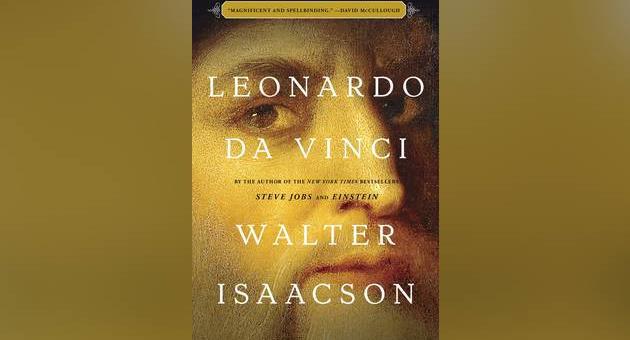
Leonardo Da Vinci by Walter Isaacson – Book

Leonardo horiz big the Malta Independent

If your eyes and heart were opened to a whole new world filled with oil paints, and tempura, gouache, symbolism, and the subject matter of artists you were probably in your first art history class. It was a revelation that you could watch slides and listen to a professor speak about them and come away with a head full of images that lit up your mind, slapped a smile on your face and made you long for the great museums of NYC and Paris.

This is the place that Walter Isaacson takes you to in his book Leonardo Da Vinci. He puts us back in that art history class as he walks us through the details of Da Vinci’s paintings. There are color plates (even on a Kindle).

However, Leonardo was not first and foremost a painter, although that is certainly one way we remember him. After all, he did paint the Last Supper and the Mona Lisa. Leonardo, it seems, was not in love with painting and left many works unfinished. His mind saw all the components of the physical world that needed to be comprehended at great depth in order to make someone a great artist. He spent years dissecting cadavers and made exquisitely detailed anatomy drawings. He wanted to see inside eyes, brains, hearts and he drew very sophisticated conclusions about how bodies work. He studied rocks, birds (to learn about flight) and, in excruciating detail, the movements of water. He studied optics and perspective.

Yes, all of these things relate to art, but they relate even more to physics and engineering. I will leave it to Isaacson to tell you some of the other unique things Da Vinci wanted to know. Leonardo also loved theatrics and building machines for special dramatic effects. In this way he entertained kings and rulers and participated socially in the entertainments of the times, while always searching for a patron to help support his activities, his household, and the students who came to work in his workshop. He was not wealthy, being the illegitimate son of a notary.

Sadly for us, Leonardo was so often enticed by ever newer areas of exploration that he never published his enormous treasure trove of notebooks and he left it to others to receive credit for his discoveries. Perhaps it was because he was left handed and all his notations were made in mirror writing (he wrote from right to left). The idea of ancient aliens who came to earth when men were still quite primitive is now the subject of the Ancient Aliens television series, but I remember running across it years ago. Several times as I read about Da Vinci I thought he might be a distant offspring of such a technologically advanced alien visitor. Walter Isaacson is a true academic though and he said no such thing. He does not deal in conjecture and gives attributions for almost every point he makes in a fairly extensive set of footnotes at the end to the text. There is also a useful index to take you back to sections you want to review.

Isaacson is both a biographer and an art critic, as well as a fan of Leonardo and his book is not at all difficult to read. He doesn’t get bogged down in academia and he clearly wants us to share his admiration for Leonardo Da Vinci. It is a book to read in quiet moments with a nice cup of something warm or on a park bench with your bottled water while taking a break in your daily walk. A chance to dawdle in the 14th and 15th century as Leonardo pursues his life and his art, while wandering Italian towns in his rose colored robes, is the gift that Walter Isaacson gives us.

Pachinko by Min Jin Lee – Book

There are not many family sagas that are non-European but Min Jin Lee has added Pachinko to the genre. Sunja Baek is the Korean woman that we follow to Japan. Hooni and Yongji are her parents, poor Koreans who carve out a viable economic space for themselves in the years just before the Japanese come to occupy the Korean Peninsula (in 1910, prior to Europe’s first world war). Hooni is born with a hair lip and does not expect to marry, but he has strength and personality. Yongji is old enough as a single woman to believe she will never marry. Sunja is their only living daughter. She is no great beauty but she has the allure of youth and she is pursued with some patient skill by Koh Hansu, who only visits Korea, but actually lives in Japan. When she tells him she is pregnant he offers to support her but tells her he cannot marry her.

Sunja and her mother run a boarding house for fishermen which is popular because her mother is a great cook. Izak Baek comes to their boarding house very ill, having just arrived in their village on the ferry. He is a Christian minister, going to Japan to take up a post in his brother’s congregation. He most likely has consumption (TB to us) and is not strong. When he learns of Sunja’s pregnancy he asks her to marry him and come to Japan with him. Sunja is reluctant to go because Koh Hansu lives in the very city where they will go to live but she has few options.

Sunja has a son, named Noah and another son named Mozasu (after Moses). Christians are outlawed in Japan and Koreans are looked upon as dogs so the family lives in what is basically the Korean ghetto. Sunja’s husband Isak is arrested and thrown in jail for preaching Christianity. His health problems make this particularly punitive for him. By the time he gets out of jail he is in very bad shape indeed. According to this author, the Japanese do not feel any foreign people are fine enough to be accepted by the Japanese people. This is the same attitude, seven decades later, that Sunja’s grandson Solomon encounters when he returns from school in America to work in Japan.

Noah, Sunja and Izak’s first child,  is actually the son of Koh Hansu. Hansu climbs the power ladder in Japan, but as a yakuza, so he is considered a criminal type, like a member of a mafia. Noah does not know this man is his father. Noah is very bright and longs to go to college in Japan. Hansu makes sure Noah is able to do as he wishes but there are repercussions and, in a sense, Sunja pays for her sins. The second son meets a Korean mentor who runs several Pachinko parlors. Pachinko is a game similar to pinball but it also involves gambling, so our equivalent of a Pachinko parlor is a casino. Many owners are criminals but Mozasu’s mentor runs his businesses cleanly. Eventually this second son owns three Pachinko parlors of his own and the family no longer has to worry about money.

This book covers the generations of this family growing up in Japan between 1910 and 1989. These Korean people never become Japanese citizens because, in fact, even if an immigrant from Korea does become a naturalized citizen, Koreans must carry passports from South Korea. The family may be fictional but the events they live through are not. This follows the form we are used to in most family sagas.

Sunja lives with Izak’s brother Joseph and his wife and it is the lives of the two couples and their offspring that we follow for seven decades and through two world wars. This novel requires an investment in time but the history covered is new to most of us and interesting because of it.

I listened to this book on Audible as I was able to use a credit to read it in that format without cost. The narrator had a clear voice but she was so sweet she did not always seem appropriate in times when life got bitter for the family. There is also some graphic sex in the last section of the book which seemed odd when read in the same tone as the rest. The sexual scenes were there for a reason but were quite jarring juxtaposed against the rest of the content. Even when Sunja had her illicit relationship with Koh Hansu the encounters were not at all graphic (of course Sunja’s experiences were in 1910 and Hannah’s experiences were in the 1980’s). Still I think if this was used as a book club selection readers would need to be forewarned about what to expect. Pachinko by Min Jin Lee is a book that is growing on me now that I have finished reading it. It is vivid enough to be memorable but has a sort of sparseness that makes it better as history than as literature.

Lincoln in the Bardo by George Saunders – Book


In a book peopled by many ghosts and few living people George Saunders writes a thoughtful book that reminds me of one of those black and white photographs with only one spot of color. Perhaps a splash of bright red or saffron yellow.

Abe Lincoln (and Mary Todd Lincoln) lost their son Willie Lincoln in 1862, probably from typhoid fever. Willie was eleven. The Lincoln’s had planned a grand party to show off the new White House décor. No expense was spared and hundreds of important people had been invited. In such a situation, do you go ahead and have the party with your little son so sick upstairs? If you are the President you must and you do, even though you know some people will think you made the wrong choice. Given that the Civil War had already begun, people’s reactions to the party were bound to be emotional even if guests did not know about the illness of Lincoln’s son.

Thus begins Lincoln in the Bardo, the first full length novel by George Saunders. On the night of the party we are introduced to one of the unusual literary devices used in this amazing book, a book that breaks new ground for fiction. The author begins quoting from some of the many Lincoln books. Each quote describes the sky on the night of the party. The descriptions are not at all consistent. Some describe a clear night with a brilliant moon. Others say the night sky was cloudy and there was no moon. Some actually recall that it was a stormy night.

The narrator uses actual quotes and avoids footnotes by telling the source, title and author as part of the story. If an author is quoted again, we get a name and an “op cit”. There are a lot of “op cit-s” in this novel, adding a sense of authenticity. You might worry that this would be deadly as a device in a novel, but somehow it isn’t, and that is part of the genius of this unusual book.

Willie Lincoln, history tells us, does not recover. He dies so young. His father is distraught.

But what is “the Bardo”? The internet tells me that in some forms of Buddhism this describes an existence between life and death. Saunders puts quite a Christian spin on this, almost like purgatory. Once Willie is laid to rest in a crypt at the cemetery his little body/soul comes forth to join the many other souls who are clinging to what they know (as much as the sort of half-life in that place bears any similarity to real life) because their human failings make them afraid to “go on”.

The Bardo is full of souls, of all classes, and all genders, all ages, and many professions. Many alliances are formed in the Bardo. Three souls in particular are our guides to the Bardo in this particular cemetery. But there are no children here. Children usually “go on” right away. However, Lincoln and Willie are so fond of each other that Willie cannot bring himself to go, and Lincoln cannot bring himself to let go.

Do souls in limbo have feelings? Is there still some sense of good and bad in the Bardo? The shades are genuinely worried about the fact that Willie is staying for his father’s sake. Bad things happen to children who stay in the Bardo. What duty do the shades take on and how does that work out? The reader gets to think long and hard about the nature of death and the after effects of decisions we make in our lives, although the denizens of the Bardo never use any words that might make death seem real. We also get to think about what might have happened if Lincoln had given in to his grief and had been unable to govern well in the critical situation of that moment in time.

I listened to the book on Audible, read by an enormous cast of some pretty well known people. This made the Bardo “come alive”. (Sorry for the double meaning.) I have to caution that not everyone in the Bardo is “quite the thing” so some of the language and the deeds get too inappropriate for children, the folks at the gym, or the neighbors to hear, especially out of context. Headphones might be a good option.

This is a unique book offering several more breaks from “life” in the Bardo to quote from the abundant Lincoln literature with plenty of “op cit-s”. If you sometimes give up on fiction because it seems there may be no new stories to tell or no new ways to tell stories, George Saunders’ book Lincoln in the Bardo will make you question that notion. Saunders book is poignant and profound; thoughtful and thought-provoking.

This site gives a list of characters and also a list of the cast on the Audible version of this book.

http://www.penguinrandomhouseaudio.com/lincolninthebardo

Artemis by Andy Weir – Book


Artemis by Andy Weir is the kind of book you want to read in one bite. It is just so much fun that the word yummy would apply if a book was a meal (which, in a way it is). Andy creates for us the small domed community of Artemis on the Moon. He describes it for us through the eyes of his irreverent narrator, Jas (Jasmine), whose Dad came to the Moon from Saudi Arabia when Jasmine was young. There are several domes, each named after the astronauts who first journeyed to the Moon. There are rich folks on the Moon who live in the nicest spaces in the nicest dome. There are poor folks who live in more crowded spaces in another dome. There are domes where businesses operate. Jasmine’s father is a skilled welder who owns a fairly large work space until Jas, in a teenaged misadventure, burns it down. Fire is one of the most feared elements in Artemis. There is nowhere to run to. Jas owes her father a lot.

Right now Jas has a pretty big chip on her shoulder, constructed of guilt, dumb gumption, immaturity, and ambition. We meet her when she is taking her test to qualify to lead groups of tourists in EVA’s (Extra Vehicular Activities) on the Moon’s surface. We see how her impatience to earn her own way and move out of the space that she is living in, which is described as a coffin, without a private bathroom, lead her to neglect a careful inspection of her EVA suit. She almost dies and, surprise, fails her test. Because her impatience makes her careless, people she has known since childhood are leery of trusting her with much responsibility. This doesn’t sound like fun, but Jas is telling the story and she is full of sarcastic humor and she is indomitable. She is unfazed by her screw-ups. She just resolves to push on to the next adventure.

Jas is not totally alone. She still can rely on her father who loves her, but she tries not to. She has had a longtime pen pal in Kenya. Kenya is in charge of Artemis, the KFC (irony, humor?) and most goods ship to Artemis from Kenya. Jas is a porter who delivers goods from shipments as they arrive. This is how she earns her meager living right now, along with a bit of smuggling. But Jaz wants to be rich. She wants to live in the best dome and have her own luxurious bathroom. So when Tran offers to pay Jas 1 million slugs (credits) to do something very destructive, for what seem to be very good reasons, the whole, almost-fatal comedy of Moony errors ensues. Jas does love Artemis and she loves her father and she enlists the help of some very reluctant friends who obviously care about her. In the end we guess that Jas will finally enter a somewhat calmer adult lifestyle and we learn that not all her ventures have been so convoluted as the one we enjoy in Artemis. She has actually found a niche in Artemis.

I bought a membership in Audible because I planned to start exercising and I wanted to be very efficient with my time. If I could read and exercise at the same time I would be one of those people who make every second of their life count. I am having a problem with Audible, though, because I cannot see the spelling of the character’s names. I don’t like to read any reviews before I write mine so you may see some very creative spelling from me sometimes. The Moon community is home to people from almost every nation on Earth and offers a real challenge to Rosario Dawson who reads the book to us (I can listen on my Alexa). There are lots of accents which help to differentiate characters and add character to whoever is speaking. After a while the accents sound too similar and some accents sound less authentic than others. Still Dawson’s reading is suited to the saga of Jas and Artemis and the accents add another layer of entertainment to this tale, which gives us a sort of Moon thriller, and a tutorial in space science. Science is not usually this much fun (except perhaps in The Big Bang Theory with its clever writers). Andy Weir also reminds us that our flawed human nature will go with us wherever we go.

Grant by Ron Chernow – Book


Grant by Ron Chernow is not a book; it is tome. He writes a very contemporary biography of Ulysses S. Grant, perhaps unclouded by the political passions and machinations of the 19th century. We often hear more that is negative about Grant than what was positive. We hear he was often drunk, that he headed one of the most corrupt governments in our history, that he was a gullible and simple man, without social graces or persuasive public speaking abilities. Writers in the past accepted, for the most part, that Grant had strong military successes, but opinions of his abilities range from a lazy leader to a military savant (which Chernow feels is much closer to the truth).

Prior to the Civil War, America was experiencing a time of great divisiveness (perhaps even worse that what we are seeing in the 21st century). Slavery and state’s rights were the issues that most passionately divided the nation (and they still are 151 years later). Strong abolitionist movements in the northern states enraged the South whose lifestyle and economy revolved around slave labor. The South claimed that the Federal government had no right to make laws in this matter. The verbal battles were bitter and the differences irreconcilable. Whatever you may feel is the reason for the Civil War (the GOP still cites the state’s rights issue; while Dems tend to cite the issue of keeping human beings as slaves), Grant evolved on the issue of slavery until he came to believe that it was an anathema and absolutely the point of the war. The Union considered the South to be traitors who wanted to dissolve the Republic. Although it may drive you crazy, you need to remember that in the 19th century Southerners were the Democrats and the abolitionists were Republicans.

Chernow does not sidestep graphic descriptions of the terrible tragedy of human destruction left in the wake of every victory and every defeat in the brutal Civil War. Grant, who seemed unable to be a successful businessman, proved to have a genius for warfare, a focus that seemed to appear only when battle loomed, and a broad and long view of the overall geography, scope, and strategy involved in any given battle. Since Grant was educated at West Point, he knew many of the officers on both sides in the Civil War and he had personal insight into how they would behave. Try not to read about these battles while eating.

I can never cover all of the information imparted in this biography. It is minutely comprehensive and still, somehow, eminently readable. It is long but well worth the investment in time. What I appreciated most about Ron Chernow’s tome is the attention he gave to what happened in the South after the war. Perhaps Grant was too sympathetic to the officers and men when the war ended at Appomattox. He did nothing to humiliate them. He let them lay down their weapons and leave without persecution to go home to their land and families. But perhaps this allowed the South to keep too much of its pride and they secretly kept alive the resentments that had caused the rift to begin with. Chernow does not skirt the details of the ways Southern slave owners took out their anger on freed Americans of African Descent.

According to Chernow and his exhaustive research Ku Klux Klan activity was far more prevalent and deadly in those years of Reconstruction than represented in the stories we tell ourselves today (and in our school history classes). Current events teach us that those feelings kept alive in the South and imported to the North still inform our politics, and the feelings of white supremacy that seem to have been resurrected, but which never actually left us. Grant earned the lasting respect of black folks by sending troops to try to stop the carnage and the total unwillingness of slave owners to accept the freedom of their former slaves. He supported programs to educate former slaves and the 13th, 14th and 15th Amendments were passed while he was President. Frederick Douglas remained a loyal acquaintance of Grant and expressed his gratitude again and again for the support Grant provided to back up freedom for all Americans. If Grant accomplished nothing else, what he accomplished in the arena of freedom and equality for formerly enslaved Americans should move him far above the rank he held until now in the pantheon of American presidents. He deplored the fact that Reconstruction did not end racial hatred in Southern whites.

Mr. Chernow does not buy the tales that make drunkenness a key trait in Grant’s life. He finds a pattern to Grant’s binges and gives him credit for fighting against the hold alcohol had for him when he was without the comforts of his family (as soldiers often are). He admits that Grant was connected to a number of corrupt schemes while he was President and later when he resided in NYC. But if you follow the money you find that Grant never was at all corrupt himself. He was guilty of being unable to see through people, especially when they were friends. Since many people had been his fellow soldiers he tended to give them credit for being loyal friends when they were actually involved in collecting payoffs in scams such as the whisky ring, and the Indian ring, and other scandals of the Gilded Age. Juicy, interesting, and deplorable stuff. Many government rules were different than they are today and corruption was easy if you valued money over morals. Probably a number of rules and protections in our current government were passed to fight the human impulse to corruption which exists, of course, to this day.

It’s a wonderful biography, well researched and full of quotes from primary sources and although it may put a crimp in your accounting of the number of books you get to read this year it will offer such in-depth quality that you will not mind the hit you take in terms of the quantity of books you get to read.


Little Fires Everywhere by Celeste Ng – Book

Celeste Ng writes about families. In her first novel, Everything I Never Told You, one of her characters, the family’s oldest child Lydia, who is found dead in a lake, takes us on an exploration of the dynamics in her mixed race (white mom “Oriental” dad) family. In her second book, Little Fires Everywhere Ng introduces us to two modern families, one that may look like a classic nuclear family (except for the fact that their house is on fire), and another that looks like anything but. In this second book we focus, in flashback, on Elena Richardson, her husband and their four children (Lexi, Tripp, Moody and Izzy). Elena is a mom who never realized her dream to be a famous journalist, a mom who may think that she limited her future by settling down and putting her family first and her journalistic goals second. But it is quite possible that it is her inability to untie herself geographically from the Shaker Heights neighborhood into which she was born (where the author also was born) that kept her in a position on the local paper instead of in a big city news room. Elena loves Shaker Heights because it is a neighborhood founded on principles of security and stability and community involvement that she finds comforting.

Elena is not a real hands-on mom, but her sort of distracted style seems to suit her first two children, at least until the decisions of puberty begin to challenge their judgment. Her style does not suit her two younger children quite as well, and, in fact, put her at odds with her youngest daughter Izzy, an impulsive and creative child who needs affection and approval, as opposed to the disapproval and dismissal she experiences from her mom. Izzy does not take her mom’s tempers and slights quietly as her brother Moody does; she acts out to make sure she gets attention, even if that attention is mostly negative.

When Mia Warren enters the lives of this geographically planted family she brings with her a whiff of a sort of gypsy existence, and she brings her daughter, Pearl, the fortunate recipient of her seemingly effortless warmth and affection. Elena hires Mia to help in the morning and cook dinners in the evening, and Elena’s children bask in the parental interest exhibited by Mia, while Pearl longs for the geographical stability of the Richardson family. Mia and Pearl have moved too many times, but this time Mia promised Pearl she would stay put. Eventually Elena becomes jealous of the attractions between her children and Mia. She sees a clue in a photograph in a museum, a photo of Mia with a baby and she uses journalistic research techniques, and resources she has not needed for years, to investigate Mia and to expose her secrets. Why does Mia seem to have no roots – a burning question to a woman to whom roots have seemed all important? Is Mia someone who could be a danger to Elena’s children?

We, as readers, also understand that Mia has a secret in her past and that even Pearl does not know what that secret is. We find Mia likeable but we don’t totally trust our judgment which is based on too little information. We don’t think her secret could be anything terribly bad, but we don’t know. Elena Richardson earns our censure for invading Mia’s life and our gratitude because she unlocks the secrets that Mia guards so carefully. Mia also gave up what could have been a successful career for her daughter but until we get the facts we are not sure why. (Can’t tell you.)

There is another story within this story about an Asian immigrant mom, befriended by Mia, who loses her job just after the birth of her baby. Since the father has bowed out of the relationship the mom, Bebe Chow, finds she cannot care for her baby. She leaves her at the local fire station. The baby is subsequently given to a long-time childless couple, friends of Elena Richardson and her husband. When Bebe gets a new job, she tries to get her child back and finds she must fight this affluent and loving couple in court. (Interesting note about Audible, it encourages creative spelling of characters’ names.)

We are asked to think about what makes someone a parent. Is blood stronger than any other bond? Are children ever born to the wrong parents? Should children sometimes get to pick their own parents? We see the supportive relationship that has developed between Mia and Izzy. What happens in this relationship is one event in this book that raises many questions in our minds and hearts, but I would spoil the book for you if I discussed it here. (Moody’s role in the family is another matter that we continue to contemplate after finishing Ng’s book.) I did find that I liked Celeste Ng’s second book, Little Fires Everywhere, better than her first one.


The Buried Giant by Kasuo Ishiguro – Book

I almost didn’t read The Buried Giant by Kazuo Ishiguro because it sounded childish and so I put it on my list of books-to-read, but it was a ways down. Then Ishiguro won this year’s Nobel Prize for Literature and I moved the book to the top of my list. I discovered that this is no child’s book, although it is a fantasy that reads a bit like a fairy tale, but more in the old Grimm’s brother’s mode than in the newer spirit of the culturally appropriate versions we tell our children these days.

There is a giant buried under Briton but no one remembers it’s there because a mist or spell has made people forget their past almost as soon as they have lived it. The Saxons live in complexes of interconnected caves and we find Axl and Beatrice in a cave, a lonely cave, set at the very end of such a series of caves. As punishment, perhaps for being elderly, they are no longer allowed to have a candle to get them through the long, dark night. In a snatch of memory that comes and goes they remember that they have a son and they think they remember that he went south to a new village. Perhaps the mist is getting less dense and that is why these thoughts slip through.

Beatrice and Axl seem a lovely, devoted couple. They hold hands. Axl hugs her quite a lot. He addresses her as Princess (does it seem after a while to resemble the “yes dear” uttered by some modern husbands?) Beatrice and Axl have talked many times about leaving their village and going to their son. On this particular occasion they finally make their departure. Beatrice has a pain in her side that will not go away but she keeps up with her husband. On their journey they also hope to find out what causes this infernal mist on their minds. They decide to take a longer route in order to consult some wise people about Beatrice’s pain and as a result they meet some surprisingly interesting people, and they become part of some very significant events.

But memory is not always as sweet as we think it will be. Sometimes, perhaps what is buried should remain buried. The giant that has been buried is all of the animosity that survived the invasion of the Britons into the Saxon lands. And the mist makes sure that these things stay buried. How do Beatrice and Axl come to learn of this? How does their journey turn into a quest? The Britons had an enlightened leader. He tried to stop his men from raping and pillaging, but battles release chemicals that leave men wanting rewards for their victories and the toll on the Saxons is as terrible as the toll in any war when the victors help themselves to the “spoils” of war.

Are there parallels in this for our times? I see some in the Pandora’s Box of ancient hatreds that were harbored in the hearts of various cultural/religious groups in Iraq and kept in check only by a ruler who used threats and tortures to keep these groups from each other’s throats. I see this in our own country which has buried the victory of the anti-slavery forces in order to keep our nation whole, an act which allowed the losers to act like the victors for far too long at the expense of Americans of African Descent and our future unity. This has implications for those who like to say that the Holocaust never happened.

While forgetting may keep the peace for a while the costs of forgetting may be great and the repercussions different than could ever be imagined. Forget or remember – is either a good choice as long as there is hate and war and “the other”? Now I don’t know if these parallels were all intended by Ishiguro in his book The Buried Giant, or if you will interpret the tale in similar ways, but the story is following me around like a bit of a nag and asking me to think about it some more, and that is a good thing.

The Golden House by Salman Rushdie – Book

The Golden House, by Salman Rushdie

The author of The Golden House, Salman Rushdie, and I have lived through the same decades, but his life has been global and large; mine provincial and small. Mr. Rushdie was born in Mumbai, however his influences were both British and Indian. Everyone remembers that he lived in fear of his life as a Muslim under a fatwa because of his book, The Satanic Verses.

In The Golden House, Rushdie writes as a New Yorker. He tells a tale of a Mumbai family, hiding with new identities, under a mysterious veil of danger in New York City. Our narrator is a young American man raised by professorial and loving parents on the edges of the MacDougal-Sullivan Gardens. (They’re real, look it up.) The Golden family lives at the other end of the Gardens and these recent arrivals are endlessly fascinating to René, the son of Gabe and Darcy.

The Goldens were “reborn” when they left Mumbai to live in America with their adopted Roman names. The father claimed the name of Nero, with all its end-of-empire symbolism. His first son took the name Petronius, the second chose Lucius Apuleius (Apu) and the third became Dionysus or D. The names were perhaps a bad idea.

René had always wanted to be a film maker but his life seems too prosaic until it becomes entangled in the low key, but rather tragic, lives of this family with no mother and, seemingly, no past. This novel is, among other things, an homage to great movies/films – European, Hollywood, Bollywood. Salman Rushdie, bursting still with crackling intellectual energy pulls into his story references to the movies he has loved, the same movies we love, except for a few so highbrow they may never have been available in the hinterlands I have inhabited. These movies still live vividly in his prodigious memory and in the minds of many a film buff.

As the Golden family comes apart, because you really cannot escape the past, a politician known as the Joker, guess who, a clownish grafter, is running for the American Presidency. (The parallels between American Democracy and the fall of Rome are hardly subtle.) As we know the Joker wins the election.

This is a very readable novel, without the Muslim/Indian baseline which is foreign to most Americans and makes some Rushdie novels seem somewhat dense. The Golden House is a tour de force by a man who is comfortable in cultures around the globe and does not mind splashing around in his literary bona fides for our enjoyment. Eliot’s “Prufrock” and Shakespeare get cameos among the films – “I grow old, I grow old, I shall wear the bottoms of my trousers rolled.” Not yet, Mr. Rushdie, not yet.

Those of us who are shell-shocked with worry for American Democracy can find some comfort in the decision this British/Indian man made to put on his New York/American persona in order to help us through these chaotic days (and nights, and months, and years). What began as a comedy could easily become a classical tragedy. However, I think you will read this tragedy with a great big old smile on your face (at least some of the time).

Notes on a Foreign Country by Suzy Hansen – Book

Suzy Hansen won a writing fellowship in 2007 from Charles Crane, “a Russophile and scion of a plumbing-parts fortune,” and it allowed her to go abroad for 2 years. She went to Turkey, much to the dismay of her family and friends. This grant was rumored to have been reserved for spies but Suzy was in Turkey as a journalist. The book she wrote is called Notes on a Foreign Country: An American Abroad in a Post-American World. Hansen goes off to Turkey believing that America is the exceptional nation that it claims to be. She had been taught, as we all have, to feel a certain smugness about being American, brought up in a can-do nation where freedom reigns. But the people of Turkey had not been indoctrinated in the American version of American history. They experienced the Turkish version of American interaction and they were not as enamored of America as some of us, in all our innocence, tend to be.

America has had a sort of missionary zeal about spreading the wonders of our Democracy to nations it has deemed might be tending towards Communism. The period after WWII was all about a sort of contest between Russia and America to divide the world’s nations like so many spoils of war, much the way England and Spain, in all their pride, divided up the world (something the world did not necessarily know about or agree to).  We tend to think of America as being different from those early imperialists, but what Hansen learned in Turkey, and then in Greece, and Afghanistan is that imperialism was still practiced by America, but in different forms.

America went on a tear after the Marshall Plan went into effect in the post-world war II years and aggressively wooed any nation that it thought might be susceptible to Communism. It offered “modernization” in the form of convincing nations to develop their resources and to welcome industry and business (Capitalism). It tempted citizens with luxury goods and pricey comforts. Before nations even realized what was happening they began to lose their individuality, their unique culture, even in some cases their language.

America tempted governments with weapons and military accessories like planes and ships and if they were reluctant America would even support political turmoil and install a new leader. All these meddlesome things were done in the arrogant belief that people wanted to live like everyone lived in America. If they even had to modify their Muslim faith to fit in these new tastes that it would turn out well for them (or for America anyway) in the end. According to Ms. Hansen, America, in its extreme hubris has wreaked havoc with cultures all over the world and we have a lot to answer for. She is not alone in this belief.

I was torn as I read this book. I have always respected the idea of democratic governance. I also knew that America had never, from its very beginnings, lived up to its creed. Our forefathers said that all men are created equal and they wrote it down for all to see, even though they kept slaves who were also human beings, and some of them even admitted that these slaves were human beings. The very fact that our Constitution was based on a lie may have doomed American democracy from its inception. That may be why we see ourselves in one rather glittery way and why others think that luster is quite tarnished.

I understand what Suzy’s European friends felt and I understand that they experienced America from a different perspective than we often do. I am rather ashamed of the America she describes in this nonfiction book based on her first-hand observations. Probably, although you may resist the message that Ms. Hansen brings us from our neighbors on this planet, you should still give this book your careful attention. She and her favorite author, James Baldwin, can help you readjust America’s halo.

I want America to face up to its flaws and do better. Although that seems quite impossible right now, I want America to eventually succeed in finding a balance between power and humility. If we cannot mend our ways in the world it is possible that the American culture, as many claim, will truly be in decline. I would hate to see the idealistic aims of our democracy disappear because we cannot contain our rapaciousness, which is often a sin that comes with power.

In the Epilogue Suzy Hansen talks about America after Trump:

“But I did believe that in at least one way Trump voters were little different from anyone else in the country. They, like all Americans, had been told a lie: that they were the best, that America was the best, that their very birthright was progress and prosperity and the envy and admiration of the world. I did not blame those voters for Trump’s election…I blamed the country for Trump’s election because it was a country built on the rhetoric and actions of American supremacy or ‘greatness,’ or ‘exceptionalism,’ … it had been built on the presupposition that America was and should be, the most powerful country on the planet.”

I have not given up on my country yet, despite all its flaws, although I have never been more tempted to become an American in exile, a lifestyle I cannot afford. It never hurts an individual to do some introspection and it never hurts a nation (made of individuals) to turn critical and honest eyes inward. Suzy Hansen’s book Notes on a Foreign Country was an emotional and an intellectual journey.