Steve Jobs by Walter Isaacson-Book

From a Google Image Search – CNN

In the Steve Jobs biography by Walter Isaacson, the author puts Jobs in a class with Einstein and Leonardo Da Vinci because Issacson also wrote about those great men. Was Steve Jobs a great man? He was certainly complicated. He loved perfection in design, but he knew that he was not perfect. Some people in Jobs’ life believed that the fact that he was adopted may have been at the bottom of some aspects of his personality. The author uses the adjectives “abandoned – chosen – special” to sum up the emotional impacts Jobs experienced as he wrestled with being given away by his actual parents. In fact, Jobs refused to meet his birth father. 

Steve had a daughter, Lisa, when he was very young, and he did not see her for years although he later tried to include her in his life. He also had a half-sister, Mona Simpson, a novelist. He did not have an easy-going personality, in fact he could be cutting and cruel, but he also had access to considerable charm. He raged at employees and suppliers, he sometimes cried when he was frustrated, and he had very bizarre eating habits (lots of fasting, mostly vegetarian or vegan). There were, however, saving graces.

He visited Japan and was very taken with the spareness and spirituality of Japanese design, and all things Japanese. He grew up with Bob Dylan, the Beatles, the Rolling Stones and many more rock stars, eventually meeting most of them. He had an interest in Eastern religion and philosophy, as many famous figures did in the 1960s and 70s.

Steve Jobs is the myth. Jobs did drop out of school to tinker with computers in his parent’s garage for a while (with friends). He envisioned a future for computers, a future where everyone had a computer of his/her own. The computers he wanted to design had to have that same spareness he loved in Japanese culture, but he wanted these computers to be proprietary machines, not sharing hardware or software with Microsoft computers or any of the other companies that were racing to produce popular computers. He was fired by his own company and went off unsuccessfully on his own to create other brands but when Apple was in trouble he went back to the company, and he stayed. Although Jobs eventually agreed to allow Apple computers to use Microsoft Office, it was a tough compromise for this purist.

Find out how Jobs named Apple. Find out how Jobs got involved with Disney and Pixar. Isaacson’s book is very readable and detailed. Find out how and when he met his wife Laurene Powell and about the family they made. Jobs loved to make deals during walks with suppliers and creators who interested him. Many deals were hammered out on these long walks. The weather in California colluded with him on this. Bill Gates, with his completely different personality, showed up in Jobs’ life from time to time. They were rivals, but Gates was not as mercurial as Jobs. They didn’t collaborate much, but they were contemporaries in a field that was exploding with innovation. 

Find out how Jobs made his very seductive ads, how he imagined the iPod, iPad, iCloud, and iTunes. Jobs made each roll out of an Apple product into a ‘magical mystery tour.” He kept new products shrouded in mystery until the magical reveal. He was not only a great product designer; he was an expert at marketing. 

It’s a very good book about a very interesting person and his too short life. It is a long book but spending all that time with Jobs and his A team, his family, his temperament, and his amazingly creative mind is time well spent. Unlike Einstein and Da Vinci, Steve Jobs lived in some of the same decades we have lived in. He is not a historical figure. He is a contemporary and we forgive him his bad behavior because his creative genius inspires us to believe that even flawed humans can accomplish great things. 

Walter Isaacson is one of our quintessential biographers. He gives us the real Steve Jobs, if that is possible to do in a biography. Credit is due to Steve Jobs also for allowing Isaacson to depict him honestly.

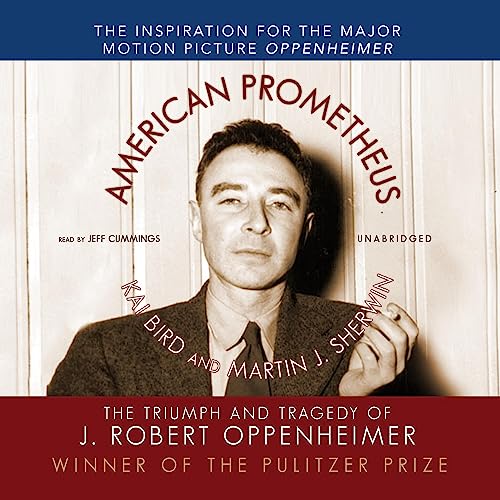
American Prometheus by Bird and Sherwin – Book

This image is from Amazon.com

I chose to read the book American Prometheus: The Triumph and Tragedy of J. Robert Oppenheimer by Kai Bird and Martin J Sherwin before I knew that it had been made into a movie. Cormac McCarthy’s book The Passenger led me to hunt for a book about Oppenheimer. McCarthy’s characters in The Passenger and in Stella Maris are Bobby and Alicia Western, a brother and sister whose (fictional) parents were part of the Manhattan Project that built the atomic bomb. These two knew the work of all the famous theoretical physicists of the era. Albert Einstein, J. Robert Oppenheimer, Enrico Fermi, Niels Bohr, and Paul Dirac are names shared by the Oppenheimer biography and McCarthy’s fictional story. 

Imagine learning that what your often missing-in-action parents were up to in your childhood was making a weapon that would be too powerful to use again after Hiroshima and Nagasaki. What would you think when you were grown and understood that this scientific product of a partnership between science and government would hang over the world and be used as a threat of total annihilation by any nation that happened to understand the physics, build the appropriate equipment, and collect the raw materials – the uranium and the plutonium – that could build such a bomb? 

The biography that Bird and Sherwin wrote is a voluminous and detailed story of Oppenheimer’s life, and it is a history text, as well as the story of this famous American physicist. Oppenheimer lived through several important eras in American history so as we learn about Oppy’s life, and as that life of science also becomes entangled in the world of government, we get an interesting spyhole into the events he lived through. 

Although Oppenheimer was born to a well-to-do family, he was slow to mature and had some worrisome quirks. One ill-considered action could have made him a murderer if the results had been different. In the various schools Robert’s parents sent him to and in college, Robert had problems with socializing. He also had similar problems in his early adult years in Germany where the predominant theoretical physicists were to be found at the time. By the mid 1930’s he was at the University of California at Berkeley where he felt at home. He was far more mature and consequently more productive and confident than previously. However, Berkeley is also where he and other intellectuals joined the Communist Party or at least attended meetings sponsored by the Communist Party,

Oppenheimer’s friendships with American communists (including his brother Frank who did join the Communist Party), the money he gave to local communist causes for humanitarian activities and because of his sympathies in the Spanish American War, all his actions before the Manhattan Project were used by a powerful enemy of Oppenheimer to destroy Oppenheimer’s reputation after his work at the head of the Manhattan Project. Oppenheimer was the director at Los Alamos, New Mexico where the first atomic bomb was built and successfully tested. While originally praised for his accomplishment in leading the project to a successful conclusion, Oppenheimer’s loyalty to America and his security clearance were soon under examination, and the possibly illegal proceedings that followed turned against him. 

Achieving the distinction of both conquering the physics of atomic fission and seeing the horrifying repercussions of its use as a weapon of war, it would seem normal to feel both celebratory and aghast at what your efforts had wrought. If you see the possible repercussions of some new knowledge, should you do all you can to keep that knowledge locked away from the world? Compare this to our present arguments about the ethical considerations of Artificial Intelligence (AI). Given the circumstances of Hitler in Germany and the bombing of Pearl Harbor it had seemed easy to justify making the bomb. Oppenheimer assumed, as did others in the project, that several nations were trying to make a working atomic bomb, and Oppenheimer believed that they would eventually make such a bomb. America needed to be first, everyone (the scientists, the military, the government) agreed. It was, as we know, a race to be armed. Oppenheimer won and he also lost. It’s a great and awful story. 

Isn’t it possible to believe that any Communist leanings Oppenheimer might have had were turned by circumstances into total loyalty to America and a dedication to winning World War II. But the things we do that we think are in the past can come back to haunt us. Although Joe McCarthy did not lead the case against Oppenheimer, America was soon to witness the Black Lists and the show trials that hounded anyone who ever expressed any sympathies that leaned too far to the left (at least anyone who was famous).

We are asked by the title to remember Prometheus, the god who gave fire to mankind against the wishes of the rest of the Mt. Olympus crew. Prometheus was tied to a rock in the Caucasus Mountains and everyday an eagle came and ate part of his liver. Then each night the liver would regrow, which meant he had to endure his punishment for eternity. (As Google tells it). The parallels are obvious. Revered scientist creates the bomb he is requested to deliver and then receives his punishment from someone he ticked off along the way. But Oppenheimer’s life does not end there, and of course, his liver was never attacked so he finds a new chapter in his life in which he learns to sail and spends part of his year on a harbor on St. John (Virgin Islands) and giving lectures at the invitation of admirers. 

My six degrees of separation moment with Oppenheimer – we both spent an entire week watching the TV coverage in the aftermath of the assassination of John F Kennedy. I was 19, Oppenheimer was 58. He was scheduled to be awarded a medal by President Kennedy; I was not. Oppenheimer won the Fermi Award, I, of course, did not. End of the degrees of separation saga.

There is no way that I can do justice to this incredibly detailed and readable book. There are just too many people mentioned to enumerate out of context without driving you to commit seppuku. There are the wives and lovers, surprising as Oppenheimer’s life focus was not sensual in the least. He tended to fall in love with intelligence in females, which most men felt intimidated by. I guess it made him quite lovable to those few smart women he singled out. There are his students, many who considered him a mentor for life. There are all the meetings, conventions, parties, and dinners. It’s amazing to immerse yourself in someone’s life with so much depth, but it’s not fodder for a brief commentary on the book. I understand the movie does an excellent job and I look forward to seeing it. As to my own love affair with all things physics and the physicists who understand the science, I haven’t a clue why I find the subject so enticing. I used to tell my students that physics is the science that explains the movement of nonliving things. That is what helped me understand how the inorganic sciences are related to each other. 

As I read this book, American Prometheus, I could not help going back to McCarthy’s book The Passenger, wondering if J. Robert Oppenheimer is the passenger missing from the mysteriously undisturbed aircraft sitting underwater that Bobby Western enters when his diving service is hired to investigate its disappearance. Everyone on the flight died, except one passenger who is not still aboard the plane. Who was that passenger? What did Bobby know about him? Was the FBI following Bobby because of the money he had found buried in his grandparent’s basement? Were they the tax men? Or was the government in possession of some secret about the passenger that they didn’t want Bobby to reveal? Bobby went back once to the site of the underwater plane, and he went beyond the plane and ended up on an island which showed signs of someone being dragged and of footprints. All signs ended abruptly. Weird. Oppenheimer died on the island of St John and was cremated, his urn buried at sea. Oppenheimer was hounded by the FBI and later by the AEC, the Atomic Energy Commission (he was a member of the board until Lewis Strauss had him thrown off). 

Oppenheimer ended up repeating a sentence from the Bhagavad gita, “Now I am become death, the destroyer of worlds.” The Passenger ended with Bobby Western telling anyone who will listen that neither math nor physics will give us the answer to life, the universe, and everything. Douglas Adams said that the meaning of life is 42. Mr. Natural said, “It don’t mean she-eit.” None of these sources bode well for anyone who likes to believe there is a prime mover and a plan and that we will either somehow end up with “the best of all possible worlds,” or at the apocalypse or the Rapture depending on the state of your spiritual side. This is a biography that inspires deep thoughts.

Note: I am having some problems with my eyes so I listened to this book on Audible.

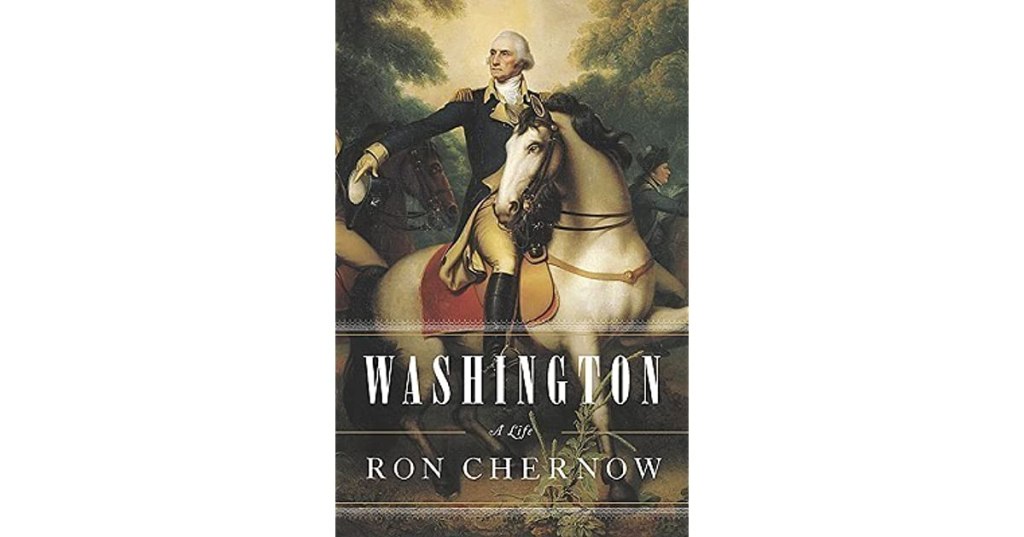
Washington: A Life by Ron Chernow – Book

From a Google Image Search – Goodreads.com

Ron Chernow has written biographies of historical figures such as Hamilton, Grant, and now George Washington, in Washington: A Life. Of course there are many biographies of these men, but his biographies are particularly valuable because Chernow has access to such a complete library of Washington papers and letters. Chernow has a talent for making material that could be dense and pedantic interesting and engrossing. He does not keep himself out of his writing. Whatever he concludes about these great men as he studies their documents informs his opinion of who they are and he shares that view with readers. Lucky is the age that has a chief biographer like Ron Chernow, although, of course, he has his critics.

In these days when we are so immersed in the roots of our nation, and whether we should try to be originalists and channel what the founders meant when they wrote our Constitution, in particular, and the Federalist papers which followed, or whether we should deal with the Constitution as we have lived with it and changed it, it seems appropriate to go back and study the roots of our nation. Although this book tells the story of our beginnings it does not necessarily help with our twenty-first century dilemmas regarding the Constitution. We do learn that political parties were not a part of our founders republic but they developed almost as soon as the government first convened under George Washington’s guidance as our first President.

The George Washington that Chernow presents us with is both heroic and human, with all his own flaws, often overshadowed by his assets. He paints a picture of a man with passions that he keep firmly under control. Washington is ambitious but not aggressively so, he is vain and often oversteps his finances to keep up his style. He is a Southerner who keeps slaves although he also professes to hate the practice. He loves owning property and he has a number of farms, or plantations. He has 200 slaves of his own and some as a dower from his wife, Martha. He could downsize his farming operations, which suffer terrible loses from his long absences and from bad soil and bad weather, but he could never imagine changing the lifestyle that he feels offers him privilege and social standing. He’s not comfortable with owning slaves but he cannot see a way to maintain a life without them. He does free them in his will but he cannot free the slaves that belong to Martha. Abolition was already an issue and Washington only scraped by without much pushback because he lead the Revolutionary War and we won it. He became a hero, recognized and celebrated everywhere, which is apparently not as much fun as it sounds. After the war people stopped in at Mount Vernon all the time and he extended hospitality and often feed and provided beds for favored guests. Washington worried constantly about money but he lived like a wealthy man.

Washington lost a lot of income during the eight years of the war. He started the war with rough men who were ragged troops. But he came to feel for his men and they for him. He knew that they suffered without proper uniforms or even proper clothing for the weather, without enough food, in winter shelters they had to build themselves and he often suffered with them, although not to the same extent. The colonies never sent enough money to support the soldiers and they had high expectations of the outcomes. These soldiers eventually became a regimented army. There were both black and white soldiers. Washington took no pay as Commander of the Revolutionary Army. He had to appoint relatives to oversee his farms and he always longed to go home but he felt so strongly about the need to be a free country that he persevered although often criticized as lacking in military strategy. Considering the trials of his army it is a wonder that America happened at all.

After Washington was persuaded to be the first President things were at first productive but soon the split between North and South became apparent. The Northerners were known as the Federalists, led by Hamilton, and the Southerners as the Republicans, led by John Adams, James Madison, and Thomas Jefferson. Although Washington was from the South, the programs designed by Hamilton for financing the new nation made sense to Washington even as they alienated the Republicans. The Republicans did not want strong central government because they were frightened that it would become a monarchy. Washington did want strong central government because he worried about fights between the colonies/states. Republicans did not like the idea of a central bank, but Washington feared that the new nation would always be in arrears without it. This did not just amount to squabbles in the legislature. There arose a press that was vehemently opposed to Washington. He served a second term when implored to do so, but it was a rough one.

It will be hard to leave the Father of our Nation and move on as I have spent so much time with him. Usually after I read such a long book I like to choose a few lighter books, some amuse bouche. What will serve as a chaser to Ron Chernow’s Washington: A Life I have not yet decided, but here I have only scratched the surface of the Washington depicted in Chernow’s book. Washington did not help much with the writing of the Constitution but he had clear ideas about how he felt it should be implemented. How different our nation might be now if Thomas Jefferson had been our first president we will never know. Washington set up the practical, everyday working bones of our government with his first Congress and Cabinet and that got the government off to a sound beginning. 

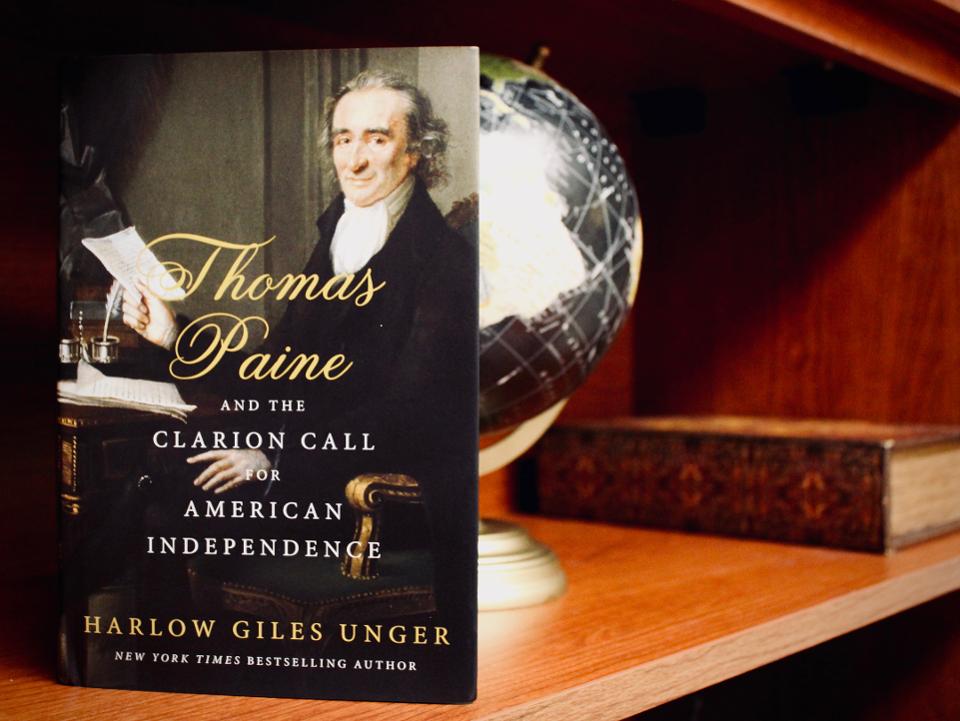
Thomas Paine and the Clarion Call for American Independence by Harlow Giles Unger – Book

From a Google Image Search – Forbes

Can you be a committed activist born at a moment of radical change and have a personal life that fulfills all the social goals. Thomas Paine’s life story as told by Harlow Giles Unger in his book Thomas Paine and the Clarion Call for American Independence teaches me the details of a life that I knew only as a heading lost in a textbook chapter. 

Thomas Paine was born in England but he argued that royalty was an elitist and bad form of government which kept citizens as subjects. The power of the King was backed by “divine right.” In other words, the King was chosen by God, so crimes against the King were sins against God and any person who slandered the King (in this case George III) was a traitor who could be burned at the stake, disemboweled, hung, or any two of the aforementioned horrific ways to die. Was it brave or foolish to argue against royalty as a viable form of government in 18 th century England?

Thomas Paine had to get out of town. He ended up in the American colonies just as the colonists were rebelling against the taxes levied by George III, the troops being quartered in their homes. This was a rebellion that Paine understood. This was a historical moment ripe for Paine’s ideas. He published an inflammatory pamphlet which opened with this famous line; “These are the times that try men’s souls” and he signed himself by the pseudonym ‘Common Sense.’ As the war ran into difficulties with recruitment he published more articles, also signed Common Sense. He knew George Washington and Thomas Jefferson and other founders. He was a Quaker, nonviolent, but he picked up a rifle and joined the fight. We know who won the Revolutionary War but I did not know how many setbacks Washington had on the way. Victory was a near thing until France got involved and that was in response to entreaties from Thomas Paine.

Sadly Thomas Paine was very poor and had to depend on kindnesses from friends. In his years in America he was considered good company. He was eventually given some properties. But Paine did not stay in America. He returned to England to try to see his mother before she died, but he was too late. He was still a wanted man in England and had to go to France. Not everyone knew he was ‘Common Sense,’ but important people did. Paine arrived in Paris in time for the beginnings of the French Revolution which , of course, he championed. But after being greeted as a hero his life went off track in France. While in a French prison he finished a new treatise, The Age of Reason, in which he managed to alienate almost everyone. I have to leave you something to uncover for yourselves, so I will end with Paine ill and imprisoned, but that is not the end of his life or the book. I will say that if people had talked about such a thing as work/life balance during Paine’s lifetime that might have been a message he needed to hear. He was a great man with ideas ahead of his times but apparently life is not always a lark just because you are famous. Activism has consequences.

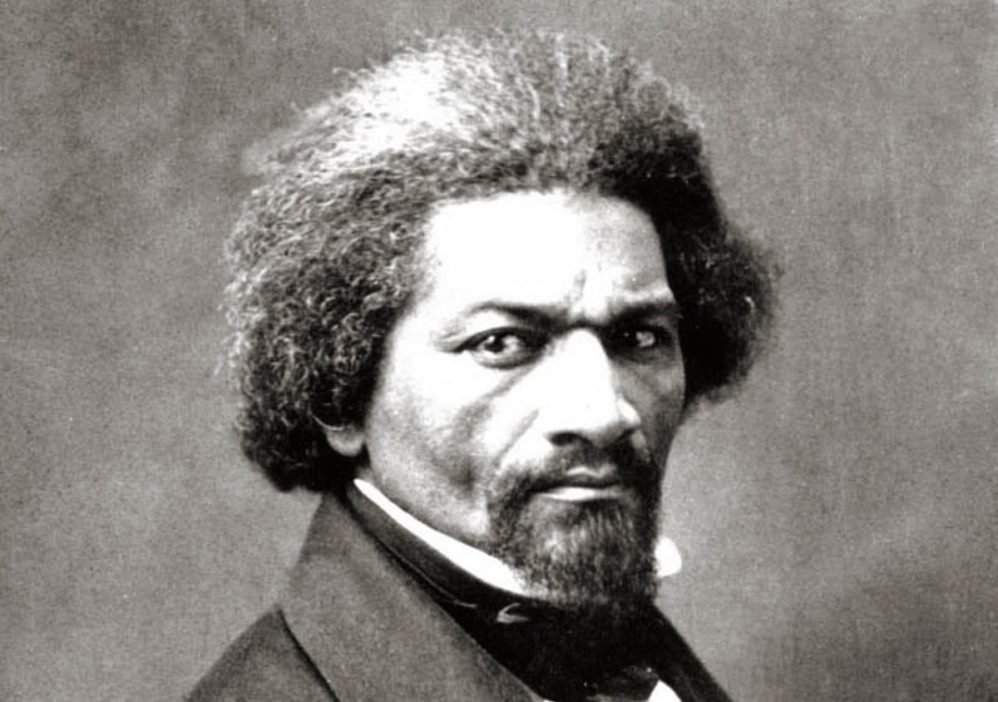
Frederick Douglass by David Blight – Book

From a Google Image Search – The Federalist

Frederick Douglass: Prophet of Freedom by David Blight has had me in thrall since December of last year. The author’s style is not to blame for the length of time I spent with Douglass. His style is not obscure, linguistically dense, or pedantic. Frederick Douglass’s life, however, was lived with a passionate density and a dedication to freedom and equality for all Americans of African Descent. It was a life richly lived and in no way ordinary. 

How did Douglass make his way from slavery to national fame, treasured by many and hated by some. He believed in the value of hard work and telling an important story, at even the cost of his own health sometimes. In the days before there were radios, getting out a message took more effort, more arduous travel, often by rail, in all kinds of weather, than we can even imagine. How did Frederick Douglass learn to read and speak to crowds? It was illegal to teach slaves to read. It was said that once a slave could read he became useless as a slave. These masters, who liked to argue that the Negro race was inferior in intelligence, were afraid to teach a slave to read and write, to make a hash of their white supremacy claims, which, as Blight admits, linger stubbornly to this day. 

Douglass, with some help from his master’s son’s wife, Sophie Auld in Baltimore, the Bible, some friendly white boys in Baltimore, and a book he poured over called The Columbian Orator, taught himself to read and speak, as an orator speaks, with power and effective rhetoric while he was still a slave. Eventually Douglass (born Fred Bailey) escaped north and fell into the helpful hands of some very active abolitionists, who dedicated themselves to speaking and writing against using any humans as slaves. He renamed himself after Clan Douglas from Walter Scott’s poem Lady of the Lake, because he liked their strength, and added an ‘s’ to make the name his own, says Blight. Late in the slave days of Douglass his master died and his estate was broken up. Since slaves were considered property all the master’s slaves were put on display and examined by other slave owners, purchased and hauled away like furniture, or tillers. While Douglass already understood that slavery was wrong, this atrocity imprinted graphically on his mind, along with a memory of being allowed in to visit his mother before she died. Frederick Douglass never knew his birth day and when slavery was done he went to see the Aulds who remained, but no one could enlighten him.

I will not tell you all the names of every abolitionist Douglass met because he knew all of his contemporaries. He was in demand as an orator who used Biblical cadences and even humor to insist that no man should be owned by any other man, that only freedom for all would suit the idealism of the American republic. There were often disputes among abolitionists about whether to advocate peaceful protest or a more robust activism so friends were made and lost and even Douglass changed his views on this, but, even so, Douglass’s focus on freedom and equality for all of the people being held as slaves propelled him through the next 6o years, with time out for a few jobs in the government after the Civil War. Douglass traveled and spoke constantly, first widely in the North and Midwest sections of America, passed from church to church and abolitionist to abolitionist for his own safety, in England, and Ireland, and Scotland (where slavery was already illegal), and again in America.

He spoke up before the Civil War, all throughout the Civil War when he also fought to have black soldiers who would fight for their own emancipation, and he could not rest in the disheartening aftermath of emancipation. He became owner/publisher/writer of a newspaper which included articles from most of the other activists in the anti-slavery movement. He wrote books, autobiographical in content, still in print today and still popular. He struggled constantly to support himself and his family. His wife Anna (Murray), who was born free, and his young children kept a home base that Douglass rarely got to enjoy. He was propelled by his mission and could not sit and rusticate. 

Many wealthy abolitionists contributed to keeping Douglass’s newspaper alive and in that way helped support his family. Eventually he moved his family to Rochester, NY. Anna’s garden in Rochester was extensive, productive, and apparently lovely. Some of Douglass’s best friends in the cause and financial supporters were female activists. At least two of these women spent time staying at the Douglass home in Rochester. Ottilie Assing a well-educated German woman, seemed to have been enamored of Douglass and spent summers at the Douglass homes in both Rochester and later in the family home near Washington, DC. Blight found no descriptions of any untoward intimacies that survived, although it is possible to imagine that there may have been some, perhaps when Douglass went to stay at times with Ottilie and her circle. Anna Douglass left no clues about how she felt about these visitors, but Ottilie sometimes complained about Anna.

There is such a wealth of detail in Blight’s biography that if you really want to know Frederick Douglass you need to read Blight’s well-documented book. I will say that I became very nervous about what would happen when Reconstruction was undermined by the assassination of Lincoln (who Douglass knew personally and who he was able to influence and educate about the true conditions of slavery) and the rapid acceptance of former slave states back into the Union. I knew what atrocities ensued and I dreaded watching Douglass’s heart break when emancipation became violent racism. But Douglass was a man of his times and more pragmatic than me. He hated the violence, but he tried to keep the nation on a path to granting equality to freed slaves. He celebrated the 15 th Amendment with a Jubilee even as he grieved the bloodshed, the terrorism, and the lynching that turned the South into a death trap for black folks who tried to exercise their new right to vote. So many battles still to be fought.

But in his final years, even as Frederick Douglass traveled and spoke as often as his health would allow, even as he faced the disapproval from both citizens and family when he married (after the death of Anna) a younger white woman, Helen Pitts, who he had worked with in Washington, even as he represented the federal government in Haiti, – he won the fame and reverence that he had earned in a lifetime of dedication to fighting for the freedom he did not have, for both himself and every black man. Douglass knew women who fought for the rights of women. He knew Susan B Anthony and Elizabeth Cady Stanton, but he was not distracted. The needs of slaves were more pressing in his mind and I don’t think most of us would argue with this focus. When Douglass died in 1895, “the Hutchinson Family Singers, who had many times appeared with Douglass, sang ‘Dirge for a Soldier’: ‘Lay him low, lay him low/Under the grasses or under the snow: /What cares he? He cannot know./Lay him low, lay him low.” – page 753.

I will say that I did not actually read this book; I studied it. The author’s words were so compelling and so impelling that I could not think of rephrasing them. The way the story is told is just as essential to understanding Frederick Douglass as the facts themselves are. It was a pleasure to spend these many hours with Mr. Douglass and the travails and joys of his life. I was told he was a great man, now I know why he was considered a great man. Frederick Douglass would possibly understand the refresher course we are experiencing in racism in America because it has never really been put to rest. But he was enough of an optimist to hope that this might be the last hurrah for white supremacy.

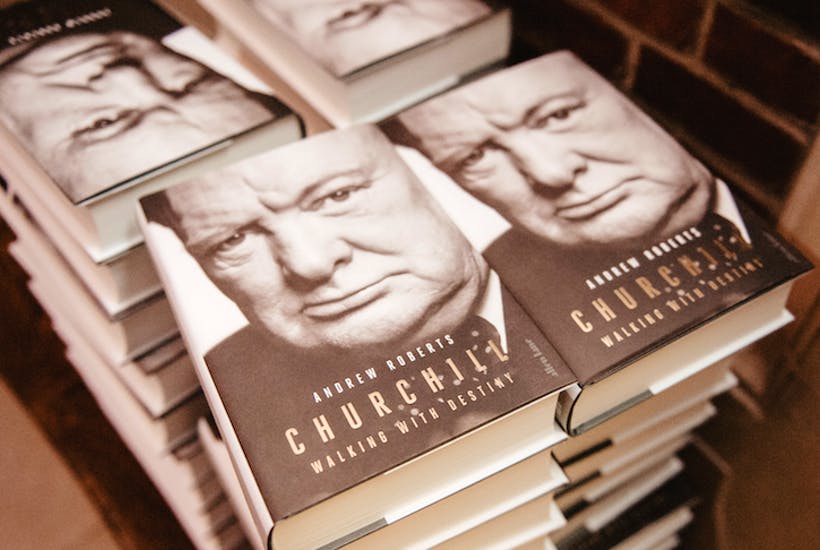
Churchill: Walking With Destiny by Andrew Roberts – Book

Churchill book cover The Spectator

Churchill: Walking With Destiny by Andrew Roberts – Book

Andrew Roberts, in his biography Churchill: Walking With Destinytells us that Churchill was not ubiquitously or universally beloved, until he was. As he tells it even Churchill’s detractors enjoyed his wit, his oratory, and his intelligence. Having just spent over a month in the company of Winston Churchill, and an enormous cast of famous cohorts, I am surprised and almost sorry to find myself back in the weird politics and tenuous peace of the 21 st century.

Churchill was born in Blenheim Palace into the family of the Duke of Marlborough, a family whose most famous member was known to have been an excellent military strategist. Randolph Churchill, Winston’s father was the third son of the 7th Duke of Marlborough. Churchill seems to have been born with an interest in military matters. He studied what was known about his ancestor and he wrote a book about him. In fact, Churchill was a prodigious writer and authored many books now considered classics. He also studied the life and battles of Napoleon. He was in the cavalry for his own military service and, on a hiatus from politics he served in the trenches in France in the Great War (which we call WW I).

Churchill was born at the end of the Victorian Age and lived until the 1960’s. The changes in politics and wars were dizzying and many of his contemporaries held onto the “old rules” they learned as children. Churchill was an unruly child, a challenge for the schoolmasters at the very aristocratic schools he attended. Roberts suggests that Churchill was an original who had no problems with the changes he lived through because he was never a rule-follower. He further marshalls the facts of Churchill’s life in such a way as to suggest that Churchill was born to lead the UK into war against Hitler. Churchill believed that he was safe from harm because he was destined for some greatness which made him seem almost fearless. The author suggests that Churchill could never guess what moment he was destined for so he tried to be a great man all his life. This occasionally ticked everyone off, especially some in both the Conservative and the Labor parties in Parliament. Churchill did not want to serve in the House of Lords. He never worried about not being a Lord like his parent, and he never accepted the title, because he would not have been able to serve in the Commons as he wished.

Roberts’ book is close to 1,000 pages long, longer if you count the photo section, the footnotes, the bibliography and the index. By the time Roberts, a respected and prize-winning British historical writer, tackled Churchill’s biography he had access to documents previous biographers never had. He had official papers but also the diaries of almost everyone who had known Churchill. I found myself interested in how British politics differs somewhat from our democracy, interested in Churchill’s political ups and downs, in his political and military successes and failures. Along with the public side of Churchill’s life, the diaries of his contemporaries, his secretaries and aides, his wife Clementine, and even occasionally his children give Roberts and us access to the private side of his life, even some gossipy bits.

If Churchill was destined for any one time it was 1939-1945, the World War that we call World War II. Truly the entire world was involved in this terrible conflagration with Hitler and his Germans, and the Japanese as instigators, and Russia under Joe Stalin as our rather frightening ally. Roberts makes us understand what we owe Winston Churchill, who almost single-handedly encouraged his Brits to stay in the war, a war they only believed they could win because Churchill kept telling them so. He had faith that America would eventually have to come into the war and, although he hated Communism, he set that aside so Russia would also be an ally. Although Russia gave everyone big headaches after the war, if millions of Russians hadn’t died to beat back Hitler, Churchill and all the British people could not have held Hitler off long enough for America to come into the war. Without Churchill and, indeed, without Russia, World War II could have been a tragic turning point for democracy and humanity, and Andrew Roberts makes that very clear.

Churchill - AZ Quotes

I have barely scratched the surface and the depth of Churchill’s life, but Andrew Roberts does. I say “bravo”. I highly recommend that reader’s spend some time with Churchill : Walking with Destiny. I doubt if it will take a month. I was dealing with some other challenges at the time. This is one of those books that becomes a part of you. I will make my highlighting public, but I will warn you it is voluminous. It might be easier just to read the book.

Please find me on goodreads.com as Nancy Brisson and on www.tremr.comas brissioni and at https://nbrissonbookblog.com/

Photo Credits: From a Google Image Search – The Spectator, AZ Quotes

Leonardo Da Vinci by Walter Isaacson – Book

Leonardo horiz big the Malta Independent

If your eyes and heart were opened to a whole new world filled with oil paints, and tempura, gouache, symbolism, and the subject matter of artists you were probably in your first art history class. It was a revelation that you could watch slides and listen to a professor speak about them and come away with a head full of images that lit up your mind, slapped a smile on your face and made you long for the great museums of NYC and Paris.

This is the place that Walter Isaacson takes you to in his book Leonardo Da Vinci. He puts us back in that art history class as he walks us through the details of Da Vinci’s paintings. There are color plates (even on a Kindle).

However, Leonardo was not first and foremost a painter, although that is certainly one way we remember him. After all, he did paint the Last Supper and the Mona Lisa. Leonardo, it seems, was not in love with painting and left many works unfinished. His mind saw all the components of the physical world that needed to be comprehended at great depth in order to make someone a great artist. He spent years dissecting cadavers and made exquisitely detailed anatomy drawings. He wanted to see inside eyes, brains, hearts and he drew very sophisticated conclusions about how bodies work. He studied rocks, birds (to learn about flight) and, in excruciating detail, the movements of water. He studied optics and perspective.

Yes, all of these things relate to art, but they relate even more to physics and engineering. I will leave it to Isaacson to tell you some of the other unique things Da Vinci wanted to know. Leonardo also loved theatrics and building machines for special dramatic effects. In this way he entertained kings and rulers and participated socially in the entertainments of the times, while always searching for a patron to help support his activities, his household, and the students who came to work in his workshop. He was not wealthy, being the illegitimate son of a notary.

Sadly for us, Leonardo was so often enticed by ever newer areas of exploration that he never published his enormous treasure trove of notebooks and he left it to others to receive credit for his discoveries. Perhaps it was because he was left handed and all his notations were made in mirror writing (he wrote from right to left). The idea of ancient aliens who came to earth when men were still quite primitive is now the subject of the Ancient Aliens television series, but I remember running across it years ago. Several times as I read about Da Vinci I thought he might be a distant offspring of such a technologically advanced alien visitor. Walter Isaacson is a true academic though and he said no such thing. He does not deal in conjecture and gives attributions for almost every point he makes in a fairly extensive set of footnotes at the end to the text. There is also a useful index to take you back to sections you want to review.

Isaacson is both a biographer and an art critic, as well as a fan of Leonardo and his book is not at all difficult to read. He doesn’t get bogged down in academia and he clearly wants us to share his admiration for Leonardo Da Vinci. It is a book to read in quiet moments with a nice cup of something warm or on a park bench with your bottled water while taking a break in your daily walk. A chance to dawdle in the 14th and 15th century as Leonardo pursues his life and his art, while wandering Italian towns in his rose colored robes, is the gift that Walter Isaacson gives us.

Grant by Ron Chernow – Book


Grant by Ron Chernow is not a book; it is tome. He writes a very contemporary biography of Ulysses S. Grant, perhaps unclouded by the political passions and machinations of the 19th century. We often hear more that is negative about Grant than what was positive. We hear he was often drunk, that he headed one of the most corrupt governments in our history, that he was a gullible and simple man, without social graces or persuasive public speaking abilities. Writers in the past accepted, for the most part, that Grant had strong military successes, but opinions of his abilities range from a lazy leader to a military savant (which Chernow feels is much closer to the truth).

Prior to the Civil War, America was experiencing a time of great divisiveness (perhaps even worse that what we are seeing in the 21st century). Slavery and state’s rights were the issues that most passionately divided the nation (and they still are 151 years later). Strong abolitionist movements in the northern states enraged the South whose lifestyle and economy revolved around slave labor. The South claimed that the Federal government had no right to make laws in this matter. The verbal battles were bitter and the differences irreconcilable. Whatever you may feel is the reason for the Civil War (the GOP still cites the state’s rights issue; while Dems tend to cite the issue of keeping human beings as slaves), Grant evolved on the issue of slavery until he came to believe that it was an anathema and absolutely the point of the war. The Union considered the South to be traitors who wanted to dissolve the Republic. Although it may drive you crazy, you need to remember that in the 19th century Southerners were the Democrats and the abolitionists were Republicans.

Chernow does not sidestep graphic descriptions of the terrible tragedy of human destruction left in the wake of every victory and every defeat in the brutal Civil War. Grant, who seemed unable to be a successful businessman, proved to have a genius for warfare, a focus that seemed to appear only when battle loomed, and a broad and long view of the overall geography, scope, and strategy involved in any given battle. Since Grant was educated at West Point, he knew many of the officers on both sides in the Civil War and he had personal insight into how they would behave. Try not to read about these battles while eating.

I can never cover all of the information imparted in this biography. It is minutely comprehensive and still, somehow, eminently readable. It is long but well worth the investment in time. What I appreciated most about Ron Chernow’s tome is the attention he gave to what happened in the South after the war. Perhaps Grant was too sympathetic to the officers and men when the war ended at Appomattox. He did nothing to humiliate them. He let them lay down their weapons and leave without persecution to go home to their land and families. But perhaps this allowed the South to keep too much of its pride and they secretly kept alive the resentments that had caused the rift to begin with. Chernow does not skirt the details of the ways Southern slave owners took out their anger on freed Americans of African Descent.

According to Chernow and his exhaustive research Ku Klux Klan activity was far more prevalent and deadly in those years of Reconstruction than represented in the stories we tell ourselves today (and in our school history classes). Current events teach us that those feelings kept alive in the South and imported to the North still inform our politics, and the feelings of white supremacy that seem to have been resurrected, but which never actually left us. Grant earned the lasting respect of black folks by sending troops to try to stop the carnage and the total unwillingness of slave owners to accept the freedom of their former slaves. He supported programs to educate former slaves and the 13th, 14th and 15th Amendments were passed while he was President. Frederick Douglas remained a loyal acquaintance of Grant and expressed his gratitude again and again for the support Grant provided to back up freedom for all Americans. If Grant accomplished nothing else, what he accomplished in the arena of freedom and equality for formerly enslaved Americans should move him far above the rank he held until now in the pantheon of American presidents. He deplored the fact that Reconstruction did not end racial hatred in Southern whites.

Mr. Chernow does not buy the tales that make drunkenness a key trait in Grant’s life. He finds a pattern to Grant’s binges and gives him credit for fighting against the hold alcohol had for him when he was without the comforts of his family (as soldiers often are). He admits that Grant was connected to a number of corrupt schemes while he was President and later when he resided in NYC. But if you follow the money you find that Grant never was at all corrupt himself. He was guilty of being unable to see through people, especially when they were friends. Since many people had been his fellow soldiers he tended to give them credit for being loyal friends when they were actually involved in collecting payoffs in scams such as the whisky ring, and the Indian ring, and other scandals of the Gilded Age. Juicy, interesting, and deplorable stuff. Many government rules were different than they are today and corruption was easy if you valued money over morals. Probably a number of rules and protections in our current government were passed to fight the human impulse to corruption which exists, of course, to this day.

It’s a wonderful biography, well researched and full of quotes from primary sources and although it may put a crimp in your accounting of the number of books you get to read this year it will offer such in-depth quality that you will not mind the hit you take in terms of the quantity of books you get to read.