Outline, Transit, Kudos: Rachel Cusk Trilogy – 3 Books

From a Google Image Search – Literary Hub

Rachel Cusk’s trilogy encompasses books entitled Outline, Transit, and Kudos. In every case Cusk presents character stories of people met in chance, or occasionally planned, encounters. In Outline, the author, Faye, (characters are typically unnamed or given only first names) is on a plane headed to a Book fair in Greece where she will sit on a panel and be asked to speak. Her seatmate on the plane gets in-depth treatment as we learn the story of his life and his marriage. Even at the book panel, the event runs out of time before the author speaks, but one outgoing male author has plenty to say.

Hardly any of the characters in these books have names, or they might have a first name, as already mentioned. This seems to be a new trend in fiction which probably has a purpose, as in allowing us to relate to the character, not wanting to create a character that jumps off the page and becomes an icon or to make it easier for the reader to imagine that s/he is the main character. The main character in this case is an author who has been through a crushing divorce. She and her husband have two sons. But her writing career is taking off, first literally to the Book Fair in Greece. 

Rachel Cusk has a talent for telling stories of the people who meet this author as she travels, renovates an apartment, and goes to a second writer’s convention where awards are being given. But we know little about the author or her book. We are treated to an in-depth exploration of all the people she sits next to or interacts with. She seems to have no close friends, but this story is not really about the author. It is about men and women and the difficulties of intimate male-female relationships, especially in marriages in the twenty-first century. 

Even as she fights off the bile of her new downstairs neighbors in Transit, she finds out the details of the life of the contractor who spends the most time on her renovation. Her neighbors are a nasty pair who knock on the ceiling with a broom as they follow her footsteps through her new flat. The downstairs couple seem to be bound together by their hatred for whoever lives upstairs, and they delight in intimidation. These are people I would want to run away from, but she stands her ground (without a rifle). When they realize that she is soundproofing the floor their hatred knows no limits but never gets physical. It is all bluster, an act to drive her away. The author has sent her sons to stay with their father while the reno is undertaken and although they beg and cry to come home to her, she encourages them to be independent. Is she a bad mother?

In the last book, Kudos, the author has obviously had some success and is attending a conference where she is supposed to be interviewed on television. Although she learns the life story of the interviewer, the technicians are never able to make the electrical hookups and the interview is called off. She meets another interviewer, a book critic, and he never learns a single fact about her, but we learn all about him. Almost all the people we meet are men and what they have to say about marriage is not encouraging. She also meets a wealthy woman who has given up on men and now invites writers and artists to come stay in her mansion where they can be warm all year long and enjoy more sun than the author has ever enjoyed in England where she lives with her sons in her redone flat over her miserable neighbors. Will she take Paolo up on her offer? Although this exploration of modern relationships is relevant this is a literary book than many readers are likely to skip. Rachel Cusk, however, has earned much praise from those critics who know and love well-written fiction.
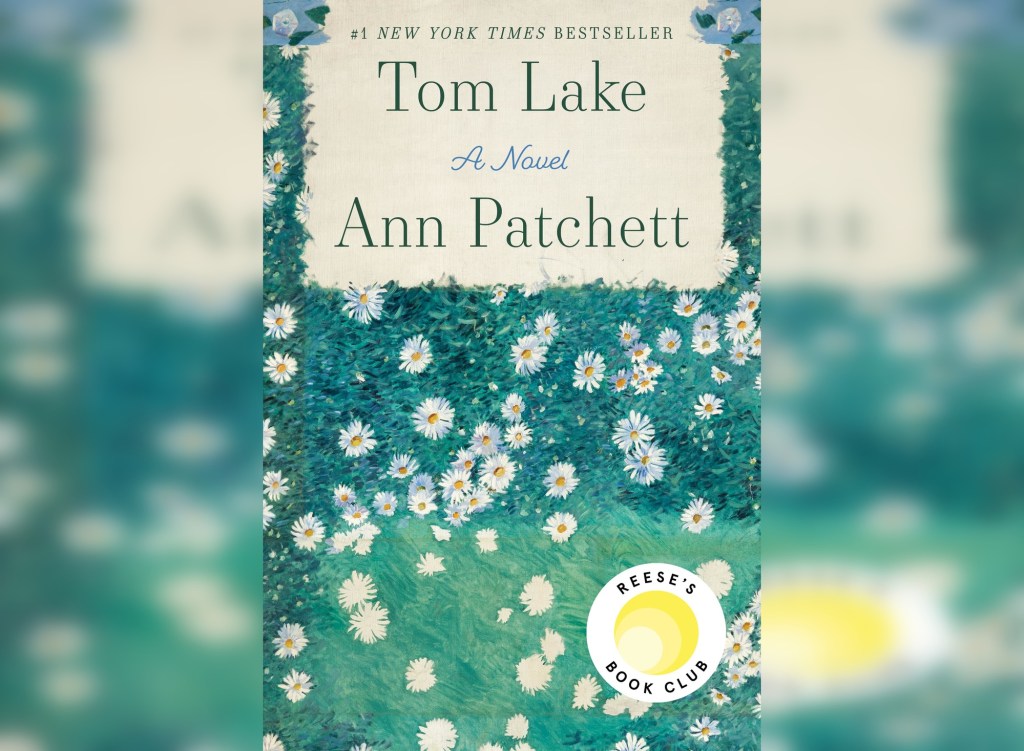
Tom Lake by Ann Patchett – Book

From a Google Image Search – The Harvard Crimson

Tom Lake by Ann Patchett is a pandemic book of sorts. Lara and Joe Nelson own a farm, rows of cherry trees, some plum trees, some pear trees. The cherries are the money makers. Sweet cherries must be hand-picked. The tarter cherries for pies and cooking can be shaken from the trees onto tarps and they can be frozen.

The pandemic has made it difficult for their usual pickers to arrive. Lara and Joe’s three daughters, all grown but not yet married, come home to ride out the pandemic and to help pick the cherries. When Lara’s daughters find out that she dated Peter Duke, a famous and handsome movie star, Emily, Maisie, and Nell enliven a tedious repetitive task by prying the story of their mom and Peter Duke out of their reticent mother.

Once upon a time a local presentation of the play Our Town finds Lara and her friend registering local actors for the upcoming production in their New Hampshire town where Lara’s mother and father live. Our Town is a big deal in New Hampshire. If you have read the play, you know why. If you haven’t read it, you should. After a failure to find an “Emily” to play that important role, Lara ends up trying out. Turns out she is a natural. Her Emily is so well done that she is invited to go to Hollywood to test for a movie. Lara feels a connection to the Emily character but is she a great actress she wonders. After she wins the part in the movie playing another Emily-style character the film is shelved for several years. Lara is packed off to play Emily in Our Town again, this time in a professional summer theater in Tom Lake, Michigan.

Lara’s daughters, picking cherries and prodding their mother to get to the part where she meets Peter, find that they are finally there. But they want more, they want details. Because these daughters did not come home to tend to their mom on her deathbed (as in some novels and movies), this is a far lighter novel with only a few tragic elements. It’s basically a book that would make a great Nora Ephron movie. Do we have a new Nora Ephron? If Ephron was a product of her times, then we may never have another Nora Ephron, nor another Ann Patchett. 

The challenges of being an independent farmer are braided through the other elements in the book and the specter of all those cherries which represent the farm’s income rotting on the trees with no one to pick them is a pressure as intense as our desire to hear about Lara and Duke and why Lara is a farmer’s wife rather than a movie star. Readers also get an interesting peek into what it’s like to work in a summer theater.

Tom Lake was a good read, but it’s also a trip to more carefree, innocent days even though it is during the COVID pandemic. Perhaps people envy America these days in the 21st century because some people still get to live such a life. How much longer? How many of us? Although it is a new novel it already feels nostalgic. The orderliness of a well-run farm, the lines of heavily laden cherry trees under blue, blue skies. You might enjoy spending some time in a place that seems so fragile so in danger of disappearing altogether. I borrowed this book from my local library.

The Secret Hours by Mick Herron-Book

From a Google Image Search – Audible

The Secret Hours by Mick Herron is a sort of spy story, but it’s not James Bond. No loveable Moneypenny or Q here. No clever devices that look ordinary but have magical abilities to save an agent in dire straits. In fact, half of the characters are not even spies, but their story begins when the Berlin Wall falls and an actual spy comes out of the East and meets a grieving wealthy man who lost his sister and who knows what happened to her and who did it. Who is Max and why is he being chased down the Green Lanes as the book begins by people who seem intent on killing him?

You will have to spend some time in the Regent Park Office in London where a group has been set up to find what kinds of unethical business the hired hands in the spy business have been up to. The committee’s remit is called Monochrome, which perfectly describes how Griselda Fleet and Malcolm feel about being assigned to this investigation. Both thought they were headed up the ladder to plum assignments and both are unhappy and worried to have been shunted sideways. They did not even have access to documents from Regent’s Park where actual scandals might have been expected to lurk. If you happened to read any bits from David Foster Wallace’s unfinished book, The Pale King, which takes place in the IRS, then you feel right at home in the home office.

Don’t get too bored because you are going to have all the action you can handle in Berlin (the spook’s zoo). They are a depraved bunch who have seen it all and are jaded and deep in the aftereffects of WWII. Myles has been embedded in East Berlin and has experienced the peak moments of postwar Soviet spying, the dossiers, the imagined crimes, the real crimes, the Stassi, the paranoia, the tattling, and the terrible repercussions of the tattling. Into this foreign office enters Allison, a young intelligent innocent who had expected to work at a desk and now finds herself pretending to complete assigned paperwork. At the same time, she does the real work assigned her which is to spy out what is going on in Berlin. However, the crux of this matter is personal, not professional. So, not about true spying at all, although it feels exactly the same. It’s about people, people who will surprise you. I can’t tell you; it’s a spy story, sort of.

Clearly wars do not end when treaties are signed, when spoils are divided, when horrendous war crimes are turned up, when revenge is planned and eventually taken. Names change, years pass, people age and disguise themselves and become unrecognizable. Justice gets done but not in a court. First Desk proves to be not all talk and no action. The author knows how to set a scene. Don’t you just love a good spy story. This one is very good while you are reading and great after contemplation. Don’t just move on to your next book until you have sat with this one for a bit. 

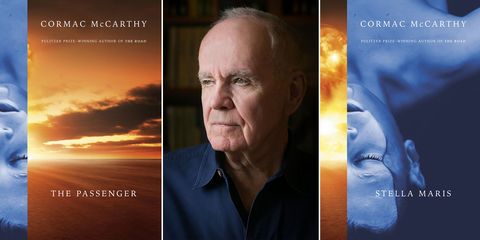
Stella Maris by Cormac McCarthy-Book

From a Google image Search – Alta Journal

Stella Maris by Cormac McCarthy is so immersive; it’s like having a conversation with that person you could talk to all night. It’s one of those conversations that discusses little that is trivial. It goes deep and explores the human condition, the universe, the meaning of life, the nature of families and love. Stella Maris – could that translate to sea of stars? Apparently, it refers to a saint called star of the sea. Stella Maris in this case is the name of the fictional mental institution that Alicia Western has checked herself into as the novel begins. 

Alicia is a genius who began college in her early teens. Her parents worked for the Manhattan Project and moved with it to Oak Ridge Tennessee. They helped produce the atomic bombs dropped on Hiroshima and Nagasaki. Her father was a physicist and her mother worked in a factory setting to separate U235 from U238.  There is guilt, lots of guilt. Alicia’s genius is in mathematics. Apparently true genius only occurs among mathematicians. 

Why did I so enjoy reading a book that I can’t pretend to totally comprehend? It made me feel both brilliant and sadly lacking in intellect at one and the same time. The names of famous physicists and mathematicians offer a fair bibliography of the work in these fields. 

Can mathematics solve the riddle of life and the universe? Does the pursuit of answers drive Alicia’s insanity, or just complicate it? It seems as if she was born to contribute to and expand on the work that comprises the field of math, but then why is she also born with a gene for schizophrenia and probably autism?

She spends her life in rare libraries and esoteric pursuits when her demons leave her periodically alone. She has no friends. She computes in notebook after notebook and in her mind when no paper is available. These are the things she discusses with her therapist, who seems able to follow her intellectually, although not mathematically. Having worked my way through advanced algebra with great difficulty, it is hard for me to imagine how math leads to so much philosophy but there it is, and its deep. You won’t like her conclusions about “life, the universe, and everything” as Douglas Adams put it, so I won’t tell you that part.

Alicia has a brother, Bobbie Western. He is the subject of the first book in this series (The Passenger). I believe that it helps to read them in order. Bobbie could not follow his sister to the heights (or depths) of her mathematical pursuits, so he studied physics and threw it all over for speed. He became a race car driver. 

Alicia is in love with her brother, despite society’s biological taboo against incest. He is the only one who understands her and loves her. He seems to also be in love with his sister, but he will not break the taboo on sexual intercourse. His sister’s broken heart contributes to her psychological burdens and to her worldview. 

If Cormac McCarthy is having his midnight conversation with his readers, which I think he is, then these books show unplumbed depths. But I warn you, at 89 his own worldview is perhaps not one that is designed to cheer you up, or even wake you up, as all human efforts seem to lead us to conclude that there is no powerful being or force watching out for us puny humans. I would still love to read both books, The Passenger and Stella Maris all over again and if I have the time I will. Is it that one book to take with you to a desert island? Not unless you also bring a math tutor. However, you can grasp the gist of this book without doing the math.

The Marriage Portrait by Maggie O’Farrell – Book

From a Google Image Search – Amazon

Maggie O’Farrell, of Hamnet fame, gives us a look at sixteenth century Italy, divided into various small Duchies, in her newest book, The Marriage Portrait. Her great talent is to bring eras and famous figures alive, much like the painting of her main character in this novel. She describes a restless young woman raised in a loving family who must leave her home to marry a young handsome man from Ferrara, a place across the mountains. It is fortunate that Lucrezia was not a biddable child, because the family she marries into is modeled on the De Medici family. Is it the fault of her beautiful mother whose mind wandered while her husband took his pleasure in the map room?

“Picture Eleonora in the autumn of 1544: she is in the map room of the Florentine palazzo, a chart held close to her face (she is somewhat short-sighted but would never admit this to anyone). Her women stand at a distance, as near to the window as they can get; although it is September, the city is still suffocatingly hot. The well of the courtyard below seems to bake in the air, wafting out more and more heat from the stone rectangle. The sky is low and motionless; no breeze stirs the silk window coverings and the flags on the palazzo’s ramparts hang limp and flaccid…Eleanora’s eyes rake over the silverpoint rendering of Tuscany: the peaks of hills, the eel-like slither of rivers, the ragged coastline climbing north. Her gaze pauses over the cluster of roads that knot themselves together for the cities of Siena, Livorno, and Pisa. Eleanor is a woman all too aware of her rarity and worth: she possesses not only a body able to produce a string of heirs, but also a beautiful face, with a forehead like carved ivory, eyes wide-set and deep brown, a mouth that looks well in both a smile and a pout. On top of all that she has a quick and mercurial mind. She can look at the scratch marks on this map and can, unlike most women, translate them into fields full of grain, terraces of vines, crops, farms, convents, levy-paying tenants.” (pg. 16)

Lucrezia is a painter. Painting techniques of sixteenth century artists play a big role in this story. The art of the underpainting is used by the painter of the time to record disparate truths; and it is used as a nice piece of symbolism by O’Farrell.

Lucrezia leaves Tuscany with her new husband and soon learns that he is not always the sanguine whimsical partner that he has pretended to be. He is desperate for an heir and Lucrezia’s mother is called by many La Fecundissima. She soon sees that her husband has two faces, and one is neither patient nor loving. When women did not produce children in the sixteenth century it was never the fault of the man. Lucrezia is not with child after nearly a year of marriage. Alfonso, Duke of Ferrara, her husband, takes her to a hunting lodge at the edge of a forest to have her marriage portrait painted. A kind act based on a piece of acquired knowledge may have a profound effect on Lucrezia’s fate. 

“Lucrezia is taking her seat at the long dining table, which is polished to a watery gleam and spread with dishes, inverted cups, a woven circlet of fir. Her husband is sitting down, not in his customary place at the opposite end but next to her, close enough that she could rest her head on his shoulder, should she wish; he is unfolding his napkin and straightening his knife and moving the candle towards them both when it comes to her with a peculiar clarity, as if some coloured glass has been put in front of her eyes, or perhaps removed them, that he intends to kill her.” (pg. 12)

Obviously, the rest of the story is told in flashback, a common element of story structure these days. The contrast between the lovebirds in Tuscany and the darker stuff of Ferrara gives scope to O’Farrell’s descriptive talents and offers a sense of real drama. I found the ending both satisfying and shocking, but I cannot tell you why without giving the outcome away. This quick read is also immersive, a way to spend a day half in light and half in shadow.

The Rabbit Hutch by Tess Gunty – Book

From a Google Image Search – Milwaukee365.com

Tess Gunty took me to The Rabbit Hutch. My first thoughts as I read the novel were how much novels have changed in the twenty-first century. The story structure wasn’t new. There have been stories about the tenants of apartment buildings in other books. But characters have changed a lot and the culture has changed a lot. Everyone seems to be more unhinged. The deep flaws in the characters are reflected in our real-world examinations of the deep flaws in our societies and in ourselves. Perhaps it is that we feel more crowded as population nears 8 billion souls on the earth and it is far easier to feel lost. At one time an apartment building may have been a small community, but the inhabitants of The Rabbit Hutch hardly exude communal spirit. 

We have Joan in C2, a woman who keeps to herself, has no friends except the people she knows at work. She scans the comments people make on obituaries and weeds out any negative content. That’s her job. When Elsie Blitz dies, the famous star of Meet the Neighbors, and her son writes scathing remarks, Joan eliminates them. The son of Blitz, now in his forties will soon pay her a luminescent and scary visit without violent intent.

In C8 we have a new mom named Hope who is afraid of her new baby’s eyes, obviously fighting post-partem depression. She has a loving and patient husband. Will that help?

And in C4 we have 3 teenage boys and one teenage girl, recently released from foster care to take part in an early release program, turned loose from woefully few role models, bad foster parenting, and without mentors. The teen girl in apartment C4 is our heroine, Blandine née Tiffany Watkins, a beautiful girl, abused in the way women are abused by someone who makes them believe they are loved, in this case her high school music teacher. Blandine refuses to accept a view of herself as a victim, although she cannot face going back to the private school where she was a scholarship student, and she gives up the promising future the school had opened to her. 

Blandine loves her hometown, Vacca Vale and one reason she loves it, and one reason for all the animals that appear in this story is that the town fathers had created a green space they call Chastity Valley. Developers want to build expensive homes in place of this park. The town of Vacca Vale is on a river which has 100-year floods that are not always 100 years apart. Chastity Valley protects Vacca Vale from the worst effects of this flooding. Blandine does not know this fact, she just wants her town’s best feature left alone. Blandine seems unaware of her beauty, but the boys and men around her are not unaware. 

When a load of dirt and bones and sticks falls out of the ceiling of the Vacca Vale Country Club during a meeting between the town and the developers no one knows who could have done such a thing. It is a statement of environmental activism and a sign to us that one young woman has not lost her sense of personal power and agency. Blandine has been studying the lives of the mystics.

However, back at The Rabbit Hutch, we have three teen boys with little education, access to social media, and too much time on their hands, living with a beautiful mysterious teen girl. These boys have made a wrong turn.

The flaws in our society are reflected in the tenants of The Rabbit Hutch in way that points out the lack of a center in our culture. Historical novels often  are centered on royalty or a hierarchical social order. War novels focus on ways that war is full of terror and uncertainty which tends to make humans closer and give them a purpose. We live in times where we seem to have lost our center, where individuals go it alone and where life does not offer people much satisfaction or many clear goals. Tess Gunty’s book reflects our times very well, but it is disconcerting to read new authors when your best reads are from the twentieth century. Don’t avoid modern novels. Although depressing they are quite honest. 

“…so Blandine exits herself – she is all of it. She is every tenant of her apartment building. She’s trash and cherub, a rubber shoe on a sea floor, her father’s orange jump suit, a brush raking through her mother’s hair. The first and last Zorn Automobile factory in Vacca Vale, Indiana, a nucleus inside a man who robbed her body when she was fourteen, a pair of red glasses on the face of her favorite librarian, a radish tugged from a bed of dirt. She is no one.” (pg 10)

Michael Connelly’s Bosch Books

I set a course to read all the Bosch books by Michael Connelly this summer. Well, I didn’t quite make it before fall set in but, except for the newest book, which is not available yet, I finished all of them. I did not review each book as I finished it because I decided to classify them as recreational reading, but characters like Bosch deserve a few words. Harry or Hieronymus Bosch is a police detective in the homicide division when Connelly’s series begins. He has a sad past as he was born to a single mother who did not share the name of his father with him. They lived in run-down apartments in poor neighborhoods and his mother sometimes prostituted herself to earn enough money to live. She was found murdered in an alley; a victim of a crime Bosch eventually solves. Bosch is sent to a home for orphaned children, a place that locked defiant children away in a dark cubbyhole in a time when there were no laws about such abuse. Bosch was a defiant child and a frequent runaway.

But Bosch developed an anathema to the evil side of people, people whose acts create the dark corners of our society, its dark hidden alleys, and the twisted actions of those who are damaged. So, despite Bosch’s obvious issues with authority and his contempt for the politics of policing he is a detective who doesn’t quit. He breaks rules only if they prevent him from pursuing a case using rules he deems trivial. If his current LT (Lieutenant) happens to be a stickler for rules or in cahoots with the big wigs on the tenth floor, he is likely to be suspended once he solves a case (sometimes even before he solves the case). In some of the Bosch books he is a private detective. In later books he works to solve cold cases or volunteers at the San Fernando police department, gets hired there, gets suspended from there and finally retires for good, but still mentors Renee Ballard, a smart young policewoman.

Bosch’s house, where he spends far too little time, is an oasis above the city, a legacy of a movie that was made about a case he solved. It sits high above the city cantilevered out over scrubland and coyotes with a wall of windows and outside an open deck with a convenient railing. Jazz music fills the space which is somewhat minimalist and rather shipshape as if floating in air is like floating at sea. It does have three bedrooms however, which is fortunate when Bosch discovers that he has a daughter from his only wife and only love, the former FBI agent and very successful gambler, Eleanor Wish. Wish and Bosch do not work as partners but their daughter, Maddie, is a great addition to the series. She plays a more prominent role in the TV series, but she and Harry have an easy and positive relationship even though or perhaps because Harry is hardly ever home. Maddie understands what drives her father and she finds herself driven by the same desire to rid the world of evil doers. She humanizes Harry.

Michael Connelly creates a thinking detective, not an action hero, and he takes us through cases that come out of the news of the moment. This gives his books a historical perspective on what different eras have brought to life in Los Angeles and to the world. 

I thoroughly enjoyed my summer of Bosch. It offered a nice break from the ever more chaotic politics of America and everywhere else. To go along as a hero follows the trail of a criminal murderer or rapist, an arsonist who burned up children to cover a crime, or people who committed ‘all the sins that flesh is heir to’, to use a “murder book” to catch a criminal, brought a sense of balance back into my life. Seeing wrongs righted offers satisfaction even if the heroics are fictional. I also find, whenever I read a book set in LA, that we are given lots of highway routes in case we ever want to follow in Bosch’s footsteps. Don’t bring a gun; bring some Charles Mingus and some good fast food. You won’t need a GPS. Just take the 405 to Mulholland

From an SNL skit:

Yes, Californians yak about traffic the same way Oregonians talk about the weather, effortlessly working it into conversations.

A hilarious example from jealous boyfriend Fred Armisen during Saturday’s SNL skit “The Californians”:

“I think you should go home now, Devin! Get back on San Vincente. Take it to the 10. Switch over to 405 North and let it dump you into Mulholland…where you belong.”

Thank you, Michael Connelly. You provided a great bridge to take me out of COVID isolation and sorrow, back to fighting the good fight to save democracy and enjoying life.

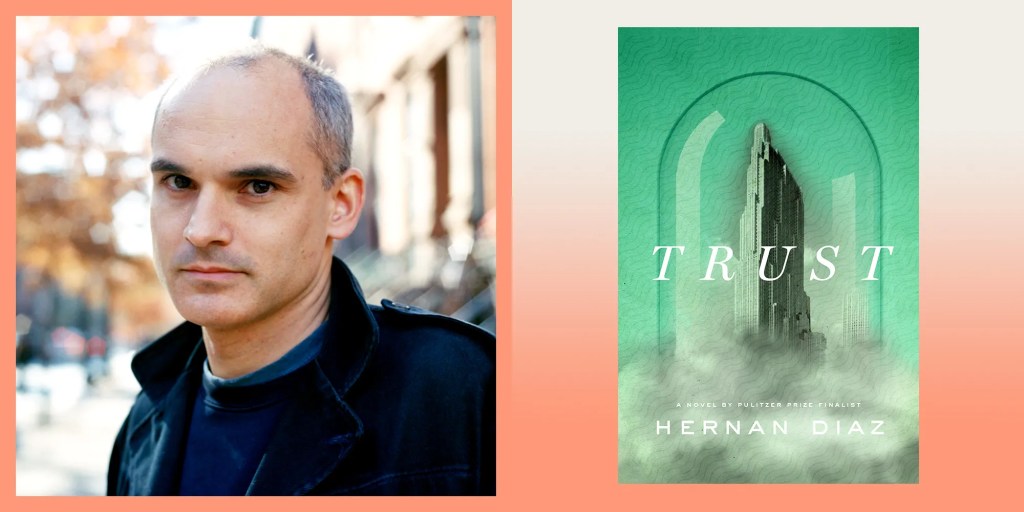
Trust by Hernan Diaz – Book

From a Google Image Search – Oprah Daily

This book is so unique that you might set it aside, but the departure from traditional story structure is an essential element of this novel of a man so private and yet so concerned with his legacy that just one version of his story will not suffice. Trust by Hernan Diaz will perplex you and engage you and deliver you up to an ending you will either love or hate.

This is a billionaire’s tale from before, during, and after the Great Depression. This is social commentary. It’s a glimpse into the roots of conservative American financial philosophy. It exposes the rationalizations for breaking financial rules for personal gains while assuaging guilt and, in fact, turning insinuations of crimes into a philanthropic set of actions that saved and preserved America. That’s some major league rationalizing. Andrew Bevel (aka Benjamin Rask) is practically on the autism spectrum with almost no social skills, but a clear understanding of markets, math, and the outputs of the ticker tape machine. We hear his story in four different versions from different fictional authors, Harold Vanner, Andrew himself, Ida Partenza, and Mildred Bevel. Similarly, we get four different views of Andrew’s wife, Mildred. 

The author does not say that Bevel’s stock shenanigans (short selling) may have contributed to (caused) the crash of the stock market in 1929, however it’s possible to draw such a conclusion. We see market machinations through Andrew’s eyes so any criticism is offered through tone or insinuation; commentary as dry as Andrew’s personality. There is also the contrast between Ida Partenza’s father, activist and typesetter, socialist/communist/lefty. Andrew’s contempt for American workers who became impoverished during the Great Depression is a subtle match for the “makers” and “takers” that are used to rationalize the financial rights of twenty-first century millionaires and billionaires.

Hernan Diaz’s novel Trust is both different; and good. If I say too much it will ruin all your fun.

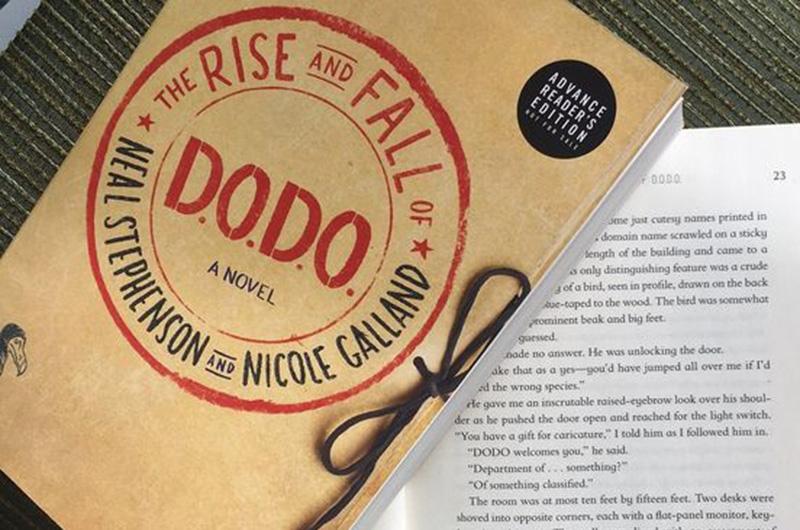
The Rise and Fall of D.O.D.O. by Neal Stephenson – Book

The Vineyard Gazette – From a Google Image Search

Do you believe in magic? (Did your brain sing this sentence?) In Neal Stephenson’s entertaining novel, The Rise and Fall of D.O.D.O., magic and physics partner up, with physics being used to bring back magic which has gone missing from the modern world. Triston Lyons literally bumps into Melisande Stokes outside the Harvard office of Dr. Blevins, the Head of Ancient Linguistics. Triston Lyons has figured out that magic died when photography was born, specifically when Berkowski, a daguerreotypist, took the first picture ever of a solar eclipse somewhere around the 1850’s. Melisande is fed up with Dr. Blevins, her Department Chair and boss, for good reasons. Triston has asked her bad boss Blevins to work on his D.O.D.O. project and has been turned down, so Triston takes Melisande for coffee and convinces her to join up. He can’t even tell Mel what DODO stands for; everything is “classified.” She makes a series of witty guesses such as, Department of Donuts, Department of Dusty Objects, Department of Deadly Observations, Department of Doing the Occult, and Department of Diabolical Observations, The interactions between these two suggest that they might “hook up” but Triston is a perfect boss for the “me too” era and is actually so obsessed with his science that he is oblivious to sexual undertones, to the amusement of most of the women and a few of the men he encounters as the project progresses. 

Melisande is introduced to Dr. Frank Oda and his wife Rebecca East-Oda. Frank is a retired physicist who has designed a time machine. The only thing missing is that it is necessary to use a combination of magic and physics to send someone back in time. It’s a big hiccup because there is no magic left in the modern world. Time travel is something that must be approached cautiously as there are rules to follow. If you don’t insert someone gently into the past; if you don’t carefully limit interactions, then you can cause a diachronic shear that obliterates everything in the path of the shear, causes mayhem and death, and changes history. While they build the first ODEC or time machine, under the auspices of a government department called The Department of Diachronic Operations they advertise for witches. One persistent person keeps calling them to insist that she is a witch, but they are skeptical until they finally meet her. Erzebet is a witch stranded in modern America without being able to use her magic to get her back to her home in Hungary in 1851 so she can spit on the graves of her ancestors. Magic works in an ODEC.

You can begin to see that this is the kind of story that Neal Stephenson excels at; a complex plot, a huge cast of characters, a scope that embraces time and space, and lots of cutting-edge science that may or may not ever be useful. The inclusion of magic is new, but it gives Stephenson and his partner who writes the follow-up book, an interesting way to talk about the multiverse and quantum mechanics. It seems that witches have for centuries used primitive style “abacuses” to keep track of different strands in the multiverse, although that is not the name they use. They can move sideways across these strands to affect events in the real world. Witches understand the danger of diachronic shear but have different names for the catastrophe. Erzebet knows it as lomadh, or perhaps that’s Gráinne, a witch who lives in London in 1850, around the time that the first photo is taken of the eclipse.

As with any scientific project that becomes a matter for national intelligence the military soon gets involved and complications multiply. The loosey-goosey early structures of DODO get whipped into shape with layers and layers of bureaucracy. And sad to say, they hire Mel’s old boss, the arrogant, clueless Dr. Blevins to be the head of the project. Triston, our oblivious dreamer, keeps his eye on the target and as he is in the army is unfazed by the hierarchy. Others are not so blithely unaware of the danger of an administration that doesn’t understand the project. In fact, the military would not be involved in this endeavor at all if other nations were not working on similar projects, making this a possible issue of national security.

The first mission of DODO (or the first DEDE), once the ODEC is up and running and Erzebet understands and reluctantly agrees to her limited magical role as a “sender,” is to steal a valuable first edition of a religious book published in Massachusetts when it was still the Bay Colony, to hide it in what will be the garden of Frank Oda’s wife Rebecca East-Oda, and then dig it up in modern day Massachusetts and auction it off for funds for their project. This is far more complicated than you would expect and leads to travels back to Shakespeare’s London and that’s how the bankers get involved, the Fuggers, who seem to have the ancestral memories of insects or birds. These bankers are not magical but find a way to crop up in almost every diachronic operation. By the way the real meaning of DODO is – the Department of Diachronic Operations. 

I always find Neal Stephenson books to be delicious nerd-romps in truly imaginative spaces and, since they usually involve plenty of speculative science, are intriguing to real scientists and dabblers alike. The book is intended to be fun, and it is, but it also tries to make complex knowledge understandable. Of course, ironically, if Triston succeeds in wiping out photography, he will also wipe out computers and almost all of modern technology. Just another little hiccup.

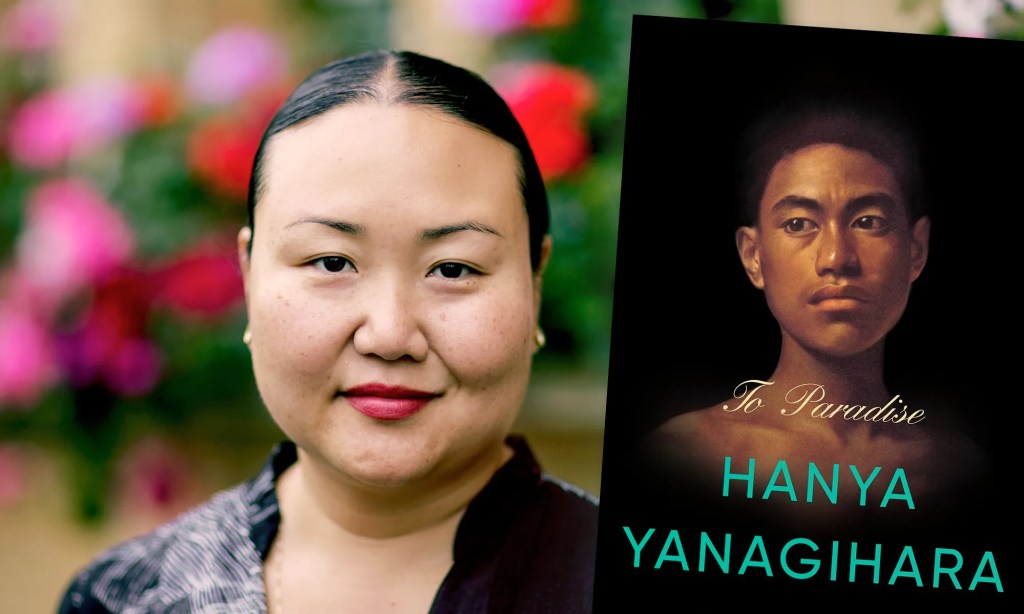
To Paradise by Hanya Yanagihara – Book

Vanity Fair from a Google Image Search

To Paradise by Hanya Yanagihara begins with an America that is hard to recognize and yet unsurprising, given recent exposés of our historical and current prejudices, works as an obvious device for a novel of social commentary and is smack in the middle of Yanagihara’s wheelhouse. The Northeast section, NYC is called the Free States. Then there are the Colonies which include Southern states and Texas and Oklahoma. The current states east of the Rockies, north of the Colonies and including the Midwest are called America, the west coast is known as the West. You can find copies of the maps on Google Images. The social mores of Americans have been changed along with Hanya’s changes in the map of America. 

Although it is only the end of the nineteenth century same sex marriages are totally legal and acceptable if you live in the Free States. Same sex relationships are illegal elsewhere. There are also male-female marriages but the relationships we are concerned with for the most part involve two men, and these are not casual relationships, they are marriages, and these couples adopt children to become families. These relationships are hardly perfect; same sex couples experience the same challenges all marriages present. Couples may stay compatible for their entire lives or may drift apart because their partner is not who he seemed to be, or because of infidelity, or just from plain disappointment. 

This is a family saga with a time-travelling family tree that has some large gaps and, at the end, a big leap forward into the future. The Bingham family is wealthy, and the family is given credit for the founding of the Free States, so they are famous. They live in a mansion on Washington Square. The children live with their grandfather because both parents died. John, Eden, and David are grown now. John’s partner is Peter, Eden’s partner is Eliza. Learn the names because they come up in every era to mark characters in the Bingham family line. Charles Griffith has been matched with David Bingham, but David meets Edward Bishop and falls in love. He does not want to settle down on Washington Square, or in a stodgy marriage. Edward offers love and adventure although he is a slightly louche character. Remember those names also because there will be several incarnations of Charles and a few of Edward. Adams pops up over and over as the butler. It’s a very interesting and unique way to connect stories that could be lacking in continuity.

Book II involves a sojourn in Hawai’i, a colony, once a kingdom, that lost its culture to mainland invaders. Our next David is a member of the sidelined royal family. He is known by the native name Kawika. All the David’s have difficulty with social adjustments. Perhaps they would be placed on the autism spectrum today or diagnosed with Asperger’s. They just do not have a grip on their own life or identity. David does not know that he might be a homosexual in this future story. He meets Alice and she has a son who he becomes responsible for. For the most part the son is raised by the grandmother. He is called Wika. Then Edward, a young man Kawika went to school with arrives in his life as a grown man with a fire in his gut to return Hawai’i to its former glory. There is a Charles Griffith; he’s the family lawyer. Here the family blood line adds Asian-Hawaiian genes to its DNA.

In Book III we pop up in Zone Eight and travel back and forth in time between 2050 and 2094. Zone Eight centers on Washington Square in the same mansion where the story began. The Bingham family still owns the house for a while. Nathaniel and Charles are married and have just moved to Zone Eight from Hawai’i. Nathaniel, who studies and collects artifacts of his homeland is not at all happy to be in Zone Eight. Charles has an important job at a Research Center. The world has been rocked by one virus after another, and in what used to be New York and Washington, DC plans to contain diseases as they arise are changing America beyond recognition. So is climate change which is making cities so hot that people must own cooling suits to go out-of-doors at times. 

We focus on Charlie, a child who recovered from one of these viruses but with cognitive damage. Charles is protective of her and when he realizes that he will be arrested by the state, he finds her a husband and teaches her how to be a wife. Charles writes to the man he loves in New Britain whose name is Peter. It is so friendly to meet these familiar family members as we time travel through a culture like ours with this family. Many of these family members have dark skins so racism is not the issue in this book, but homosexual relationships become illegal once again. Hanya Yanagihara has a sort of mission to normalize LGBT+ relationships and make them as acceptable as heterosexual relationships or even staying single. 

In the future the author subtly suggests that the government of the once Free States is somehow now ruled from Beijing, so we can only assume that Beijing has taken over as the world’s most powerful nation. The Free States are no longer free. The fear of viruses that repeated in 2050, 54, 70, and now in 94 has allowed the government to control the population by promises to cure the viruses as they spread if the people will do as they are told. It may sound like residents have a choice, but their choices dwindle as new viruses continue to threaten. All is done in the name of keeping people healthy and safe. Since so many people are dying or being removed to containment areas or rehab centers, there is a big push for relationships to produce offspring. Homosexuality still exists but it must be kept secret and can lead to arrest. Fortunately the David in this timeline is focused and sure of himself.

“There were some people who thought the scientists were creating the sicknesses in our labs, because they wanted to eliminate certain kinds of people or because they wanted to help the state maintain control of the country, and these were the most dangerous people of all.” Pg. 383 “Back then, the Square (Washington Square) had been planted with trees and covered with grass, and the pit in the center had been a fountain, where water erupted in bursts and then fell back into the pit again. Over and over the water exploded and fell, exploded and fell, for no other reason than because people liked it. I know it sounds queer, but it’s true; Grandfather showed me a photograph of it once.” Pg. 388 

Is Hanya against mandates, is she an antivaxxer, or does she think that the temptation towards authoritarian solutions to problems that affect the lives of everyone must be considered very carefully to balance freedom and health measures? Clearly the world did not solve climate change. Are there still places in the world that have handled things in better ways with less disruption of normality while holding on to freedom and human rights? Clues suggest there are. I would have liked to go to New Britain to see what they did differently. You will have to decide where Yanagihara stands and even where you stand on these matters, but whatever you decide you will most likely agree that To Paradise is another Hanya Yanagihara tour de force.