

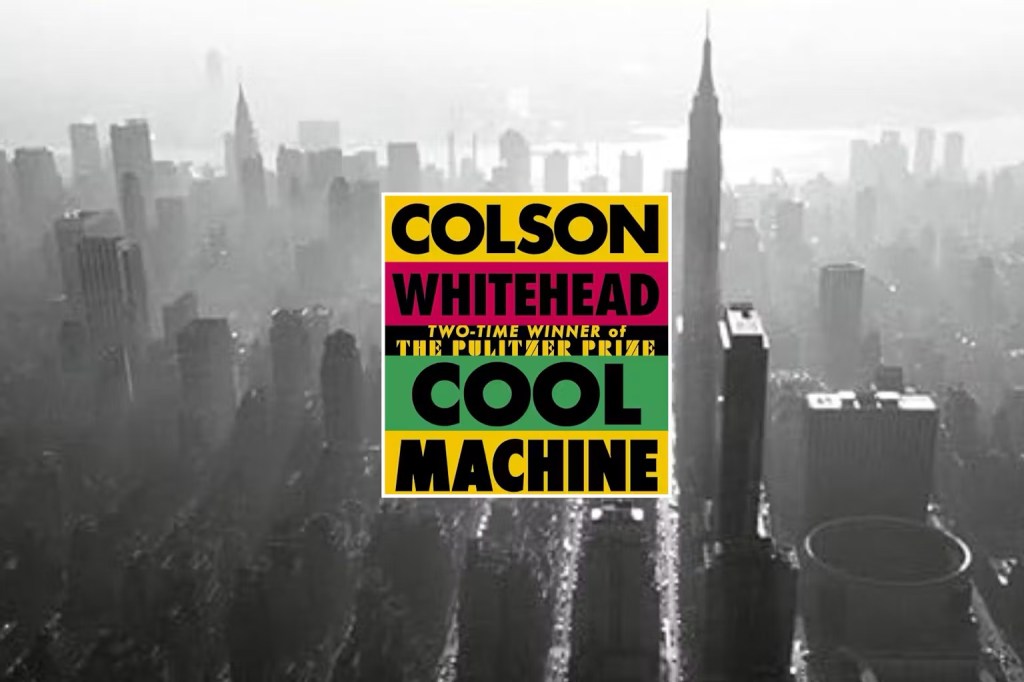
From a Google Image Search – The Conversation
Cool Machine is the last book in the trilogy by Colson Whitehead giving us glimpses of Harlem in the 70’s and 80’s, fifty or so years after the Harlem Renaissance. Ray Carney, his main character, has his feet in two worlds. Ray owns a furniture store, and he knows the names of every furniture line that he carries. He is also a “fence” who accepts stolen merchandise from crooks he knows and sells it to safe but crooked buyers.
In Cool Machine we follow “Pepper,” now old and sick with gut problems being treated by an ersatz doctor who “prescribes” his meds by pill colors. Pepper may not be at his best, but he is a loyal friend of Ray Carney and his wife Elizabeth and he is still formidable. Elizabeth, who runs a travel agency, is being harassed by a customer about an art object he wants to buy, a stolen art object. Pepper agrees to act as a bodyguard for the buyer. But plans go wobbly and they keep changing. Pepper is guided through the many players in this bizarre art auction by a young black woman known as LJ. She represents a different buyer of this Ngil mask once worn by a Fang artist from Gabon. African art is having a moment, and the bids are up to $80,000 dollars.
Pepper feels even older when he encounters a counterculture of musicians and graffiti taggers where deals get completed (or not) in noir clubs. When the money and the mask go missing and the Melancholy Hitman gets involved, Pepper, swilling Pepto and losing consciousness, manages to capitalize on the instincts of a lifetime to survive the new bohemian bizarro world.
The second half of the book belongs to Ray and Elizabeth. In his straight world Ray has been named the furniture store owner of the month. Elizabeth is running into more competition in travel business. They are imagining retirement. Their efforts have paid off, and their two children are launched and doing well. They don’t have to have their feet in two worlds. Ray’s father had his feet in only one world. He was a criminal. Can a tendency towards criminal behavior be passed down? Ray accepts both sides of his nature but often finds himself in tense situations. He keeps things from Elizabeth.
Colson Whitehead is a very talented writer. He brings the Harlem of that era to life and ties the dreams of his characters in with the dreams of all who come to New York City and who meet their fate there. Ray and Elizabeth are at a restaurant on the 106th floor celebrating their business successes.
” From the 106th floor, the teeming boroughs and all those who lived and bled in them were turned into a vast, scrabbling miniature–insignificant, pitiable even–and ennobled at the same time, because you could make out the true breadth of their striving, extending as far as you could see. They were completely hopeless out there, and unstoppable. Broke-ass, chasing jackpots, cooking schemes, pushing through. The nameless heroes of an asphalt romance. Like everyone else in the restaurant, Carney suspected that they had thrown up these two monster buildings for his benefit, just so he could sit there today and see these things.
Sunset shook out a brilliant layer of orange-pink across the grimy grid below, powdering over the day’s crimes. When the dark crept in, the skyline turned itself on one switch at a time, the million lights in the million buildings, in the row houses and prewars and corporate megastructures, heckling the deathless stars above. Think you’re hot stuff? Get a load of this. As if to give the very universe the finger.”
Read it for the prose, the insights, the characters, and the audaciousness.


