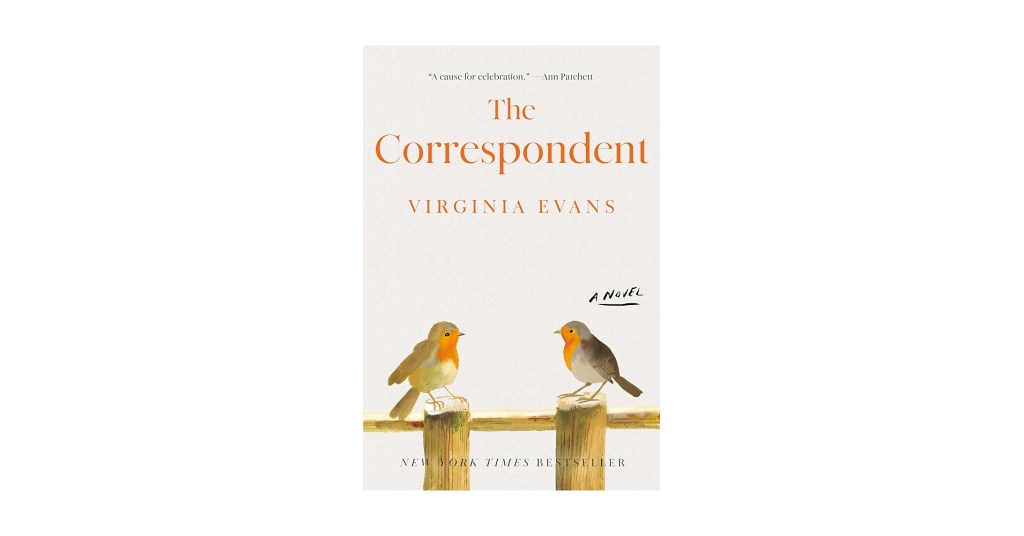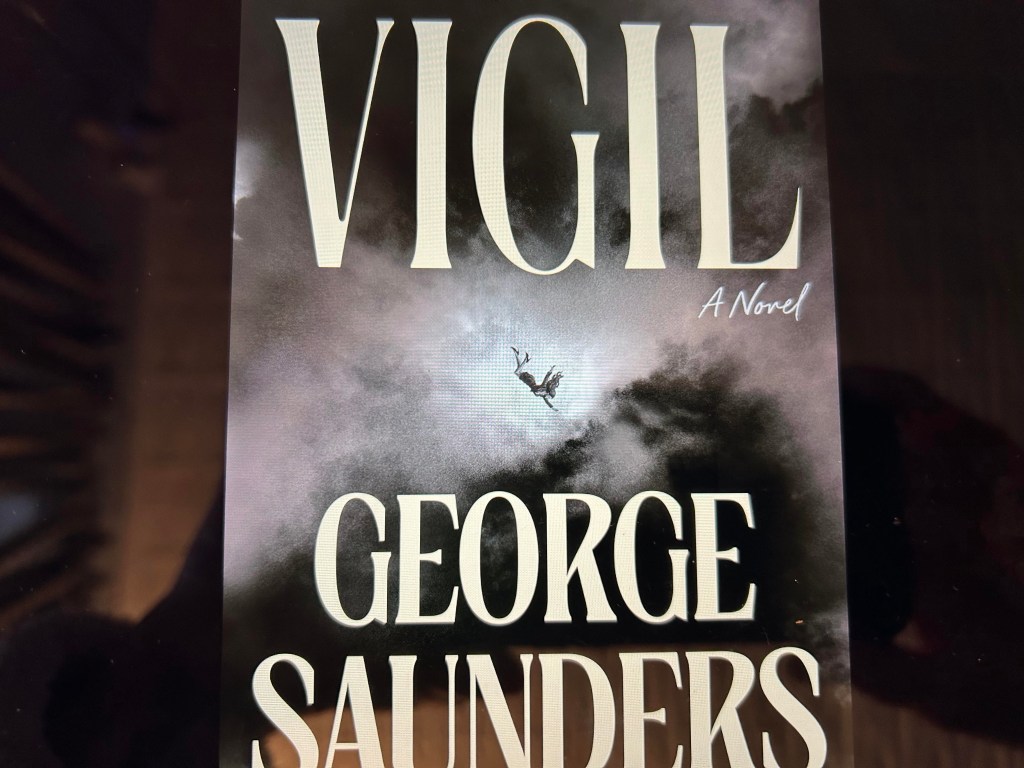
David Szalay’s main character Istvan, in his Booker Prize (2025) winning book, Flesh, is an exploration of “contemporary masculinity” according to Esquire. Esquire also describes the writer’s style as spare. Okay. If you read the book, you might be tempted to count the number of times the response “okay” appears in the dialogue. It could be argued that English is not Istvan’s first language, he is Hungarian, one of the most difficult languages to learn, we are told.
Istvan’s vapidity does not seem to be related to being Hungarian, however. He is not the only character to respond with just the one word “okay”. Perhaps his lack of verbal content reflects the emptiness of his mind, or his soul. And perhaps other characters copy his laconic way of speaking.
He must be handsome because women seem to like him, especially women with older husbands. His first sexual experience happens with a middle-aged neighbor woman when he is fifteen. It ends badly (an understatement). He does not seem to carry around a burden of guilt. After subsequently serving in the Hungarian army, Istvan goes to England. He works as a bouncer until he has the good fortune to meet a mentor (male) who hires him to serve as a driver for wealthy families. As his bank account gets healthier, he leaves his mentor’s company, and he becomes a permanent driver for Helen, Karl and Thomas. His life gets more complex, but his feelings are as opaque as ever and the dialogue is still monosyllabic.
The author allows us to know some of the inner workings of Helen’s mind and some of the details of her married life, but no insight into Istvan’s mind. Helen’s son Thomas assigns nefarious motives to Istvan, but Istvan seems to be unworried about whether his actions might be considered immoral and criminal. It all just happens. (Okay.) Istvan accepts Thomas’ hostility, perhaps remembering his own sullen behavior from his younger days. He makes a few feeble attempts to connect with Thomas, but he lacks any real motivation.
It’s not easy to write a book so lacking in emotional depth and to make it a great read. One day, Istvan may become one of those classic characters who we refer to as if he’s a real person. He is so passive that when he could be accused of murder, or theft he shakes it off, he doesn’t own that any repercussions of his actions might rebound on him. The way he handles grief also exposes a coolness bordering on coldness. I get what Szalay has done. At least I think I get it. After all I am just a girl.
Gabriela Rose is the newest Janet Evanovich main character. She pursues stolen art, jewelry, and other insured items as a recovery agent. Gabriela began her career in The Recovery Agent and is now entertaining us in the second novel, King’s Ransom. Perhaps you’re familiar with Evanovich’s Stephanie Plum books which are laugh-out-loud, share-with-friends-and -family fun, and as tasty as any amuse bouche in the world of fiction. Gabriela is just as fearless as Stephanie, although she inhabits a more sophisticated world. But, like Stephanie, Gabriela does not forget her old friends.
In the first chapter we find her working for an insurance company to recover jewelry. Since husband and wife are involved in a contentious divorce she decides to look close to home, the home the husband now occupies. She waits until the husband holds a public event at the house. While everyone is distracted, she rappels into a well on the husband’s property.
“She kicked around and felt something solid under her foot. Her heart skipped a beat. She put her hand into the muck and pulled out a plastic ziplock gallon freezer bag filled with jewelry.”…
“What’s going on? Luis called down. Everything okay?”
…
“In less than a minute she was out of the well with the bag tucked into her tights.”
“What were you in a previous life?” Luis asked. “Marine commando? Where’d you learn to climb like that?”
She peels off her muddy clothes and is left in her La Perla underwear. The peacock did it.
This is exactly the dashing way that Gabriela goes about solving high stakes crimes for the rewards insurance companies pay. There are references to The Thomas Crowne Affair (two of my favorite movies). Gabriela finds she has some unusual, and less-than-welcome, participants in her newest endeavor, the one that involves a “king’s ransom”.
When she arrives home from the jewelry case (home is an apartment in Soho, NYC) she finds her ex-husband, Rafer Jones singing in her shower and his cousin Harley Patch passed out on her sofa. There are proper embellishments offered which I will let you read for yourself. This is where the real fun begins. These three have been friends since school days and Rafer has been Gabriela’s ex for long enough that they can relate by sarcasm (and the familiarity of old friends) rather than anger. Rafer and Harley have not been trained to investigate thefts for insurance companies, but this case is personal. Their lack of training gets them, Gabriela included, in one pickle after another.
Harley has been working for a bank which is starting to look a bit shady. Now he’s being blamed for crimes he did not commit. And for some reason people are getting shot (double tap style). Several valuable items have been stolen including the Rosetta Stone, but the most valuable one of all is a gold coffin of a newly unearthed Egyptian king, King Tut’s brother.
Would Gabriela be better off without these two? Indubitably. But what fun would that be. And then there is Ahmed El Ghaly, who Gabriela doesn’t quite trust.
Evanovich’s books are perfect to snuggle down with on a quiet weekend or a snow day. She always knows how to combine the genres of thriller and comedy in delicious ways. A bit of sexual attraction adds to the fun without being overly graphic. I believe I have read almost every one of her books, although I may have missed one or two because I got distracted by politics. Sometimes reading should be fun.
From a Google Image Search – Shortlisted for the Booker Prize, 2025
Sonia Shah is in her junior year at a college in Vermont and she is lonely. She cries on the phone to her parents in India. Thus begins the story by Kiran Desai, The Loneliness of Sonia and Sunny. It’s an excellent story of two upper middle-class families in India experiencing the injections of modernity into their traditional lives. There is the traditional reliance on arranged marriages, for example, while all the younger people seem to believe that it is better to marry for love.
Sunny Bhatia’s father died young so Babita, his mother, is left to fend for herself. Her father (the Colonel) happens to play chess with Sonia’s Papa, Manav, and he suggests an arranged marriage between his daughter, Sonia, and Sunny. A letter is sent to Sunny in NYC and to Sonia in Vermont. The timing is bad, as these are two of those modern children who want to marry for love.
Sonia, in her loneliness, becomes involved with an older man, an artist, with a personality that wavers between charming and mentally abusive. Ilan de Toojen Foss, is a strange man given to magical imagery and manipulation. He’s a painter and very ambitious. The relationship of these two has a Haruki Murakami vibe.
Sunny is living with an American woman from the Midwest, Ulla. They travel together to meet her parents in Kansas, which Ulla thinks will be a disaster. It isn’t a great success, but it isn’t terrible. When they return to NYC, Sunny goes home to visit his family in Delhi. He’s working as a reporter-at-large for the Associated Press and he plans to write and publish articles as he travels. When he arrives back in New York, he finds that Ulla has left him, moved out with all her possessions.
Sonia, who wants to write a book, is still with Ilan when his wife arrives and eventually evicts Sonia. Sonia’s mother keeps a cache of jewelry at an Indian bank, intended for her daughter’s dowry, but she gives Sonia an amulet in a silver case carved with Tibetan clouds and dragons holding a little demon figure. The demon is a talisman called Badal Baba, or Cloud Baba. When Sonia leaves Ilan he keeps her amulet.
Is this why Sonia and her family have a run of bad luck? Is this why a fierce ghost dog keeps chasing Sonia and disappearing. Is this why she almost drowns in Goa.
Sonia and Sunny do not realize that their parents have arranged their marriage, although they give them a choice in the matter. These two meet entirely by chance in India on a train. Sunny likes her right away because of the title of the book Sonia is reading. They have a few conversations in India, and when Sunny’s friend Satya gets married, Sunny convinces him to go to Goa where he also plans to meet Sonia. Goa is on the ocean and the two of them encounter the terrifying ghost dog who, fortunately, disappears into thin air.
Sunny returns to NYC, and Sonia stays in India with her family. Sonia’s mother and father live separate lives. Her mother lives in the cloud cottage in the mountains, full of magical visions and fantastical imaginings. There are eyes everywhere in this story.
Sometimes the story turns very informative, revealing aspects of Indian life, relationships with servants, the tensions between Hindus and Muslims. Parents are aging and need care, so Sonia becomes the caregiver for her father. Sunny’s mom faces a crisis that forces her to sell her home. Her families’ ties to corruption are revealed. She ends up in Goa.
It’s a long time before Sunny and Sonia meet again after a disastrous trip to Venice. Read the book. It’s wonderful, but I can’t tell you all the reasons why. I listened to the book on Audible because I had built up credits. The voice of Sneha Mathan, the woman who read the story made the story even better. Then I bought the book so I could get all the names straight.
Ian McEwan’s new book What We Can Know is a non-dystopian view of how human indifference might change world geography, it’s a celebration of nature, the humanities and poetry, and it’s a mystery. Any story that begins in the Bodleian Library generally offers us a kind of magic. I guess we can blame that on Deborah Harkness and on the academic glamor of Oxford University.
It takes a while to place everything in the correct historical time and to adjust to bouncing back and forth across a century. Tom Metcalfe is living in 2119, but he is a historian whose interest lies in the period from 1990 to 2030. He is trying to find a poem that was written by a writer named Francis Blundy for his wife Vivien. Blundy read it aloud on her fifty-fourth birthday at what came to be called “the Second Immortal Dinner.” Then he gave Vivien the poem, and no one ever saw it again. There are secondhand reports of what was said in the poem, but the poem itself vanished.
The poem was written in a very lengthy and difficult form called a corona. Blundy’s corona consisted of 14 Petrarchan sonnets and a fifteenth which had to repeat the first line of each of the 14 and that had to make sense. A Petrarchan sonnet had 8 lines that rhyme ABBAABBA and 6 lines that rhyme CDECDE. The literary world held its breath, but after almost a century the poem was still missing. Tom has taken on the task of finding the “Corona”. As he searches, we get glimpses of what neglecting to deal with climate issues has done to the planet. There are allusions to Nigeria, although they are rather vague. Tom seems to live in what is left of England, now a series of archipelagos and islands. The Bodleian library has been moved to higher ground making it problematic to travel there.
Apparently, the humanities academics have always been a rather randy bunch, with all kinds of sexual adventures and affairs causing ruffled emotions that are often hidden under polite exteriors (and sometimes not). Vivien was apparently a charming and beautiful woman who had a few adventures before she married Percy Green and a few while she was married to him. She loved her husband very much but only enjoyed his company for a few years as he developed early onset Alzheimer’s. He had been a craftsman making classical-quality violins. Alzheimer’s disease worsens over time and requires extended and intense caregiving. Percy’s Alzheimers was already advanced by the time Vivien met Francis Blundy, although she had already ended an affair with his editor, Harry.
Tom, in an off again, on again relationship with Rose is somewhat in love with Vivien although she has been gone from his world for a hundred years. He loves the property she lived in with Francis, after Percy died and they married. The property was known as The Barn and Vivien had her own office in the dairy building nearby. Everything had been carefully renovated, and since the “Derangement” (wars, and flooding) had not happened yet much of nature was still intact. Tom gets a valuable clue from a colleague about the possible place where the Corona might be buried. What he finds out says more about human nature than it does about poetry. It’s a book to love and ponder about, but it does not mince words about the human condition.
Atmosphere by Taylor Jenkins Reid is a novel that has several themes. It begins in the 1950’s in America, but it mainly takes place in the 1980s. Joan Goodwin grew up loving the stars in the sky. She watched when Americans first walked on the moon in 1969. As a grownup she earns degrees in astronomy and is teaching at a college, but she dreams of going to space. When the space-shuttle-years begin an era of multiple space launches and flights, Joan, in a hopeful moment, fills out an application for NASA. The space program is hiring women for the first time. Since Joan is an expert in the field of astronomy, since she knows the constellations, knows the myths by which the ancients delineated them, and can steer by the stars, she is hired by NASA.
The people she meets at NASA become her co-workers and her social cohort. Eventually they learn to accept each other’s eccentricities, and they bond, some better than others. Everyone wants to be included in a shuttle mission and there is some competition and even some backstabbing. Joan’s calm demeanor and social common sense are important assets at NASA.
Joan’s sister, Barbara, is a hot mess. She got pregnant too young, and she is a reluctant single mother to Frances. Barbara’s selfish lifestyle keeps Joan involved in Frances’s live and they grow close. Frances can rely on Joan. She visits her at her NASA apartment often. Circumstances arise that make Joan escalate her involvement in Frances’s life.
Joan, who has never been in love before, falls in love with fellow astronaut, Vanessa Ford. It’s a relationship they must hide because it isn’t accepted anywhere, but especially not at NASA. It’s a love story that shouldn’t make any reader uncomfortable.
I recently read Orbital by Samantha Harvey which took me to the space station. It gave me a detailed view of a place I will never go, but that I value as a place that today’s risk-takers go to support tomorrow’s space adventures. However, Reid’s book, Atomosphere is peopled with emotional connections, human interactions, and historical realities that are more important than the mere technology of space flight, and more universal. These human interactions enrich the experience of NASA but do not put you right in space as Orbital does. Both are fine books about human space adventures, but offer different experiences. I enjoyed reading both books. You might also enjoy this pair of space odysseys.
We live in times when women’s rights are once more in question. LGBTQ+ folks just won the right to love who they love in the 21st century. Now those rights are in danger of being overturned by conservatives and evangelicals. Since Atmosphere takes place when women were just being accepted as astronauts, NASA expects women to match their exacting moral standards which are not like women’s rights outside the program. Women in the program feel that they must outperform their male counterparts. There are parallels here with Bonnie Garmus’ book, Lessons in Chemistry. Sadly the rights of women are once again being targeted, giving this book currency in 2025.
From time to time, I have checked in with Lucy and her now ex-husband, William. In Lucy by the Sea by Elizabeth Strout we meet these two again. Lucy is a writer; William is a scientist. They were married for twenty years and have now been divorced for 20 years. They have two daughters, Chrissy and Becka, both grown and married. It’s the time of the COVID pandemic. Lucy cancels a book tour. She is sheltering in place in her apartment in New York City. She’s getting older and is considered high risk. She can wear a mask to shop if she can find a place that’s open.
New York seems deserted except for near the hospitals. People celebrate nurses, doctors, and hospital staff with cheers, and bang pots and pans to express gratitude. Refrigerated trucks are no longer full of frozen food. Those who died of the virus are kept there until they can be buried, without ceremony, in mass graves.
William learns of an empty house by the sea in Maine. He whisks Lucy away, as soon as she agrees, from the dark pandemic days in the city. She is somewhat reluctant to go as these two are divorced and she is grieving the recent loss of her husband, David, with whom she had a good relationship. William, whose third wife recently left him, is not convinced that monogamy comes naturally to men (or even to women).
In the last Strout book where we caught up with William and Lucy, William finds out that he has a half-sister. When he decides that he would like to meet her, she doesn’t want to meet him. Lucy meets Lois and reports back to William. Lois lives in Maine.
Lucy has found William to be a rather preoccupied partner. She thinks he is rather unengaged. She always has. He is not attentive and often seems to be elsewhere in his mind while Lucy is trying to communicate with him. Is it because he is a scientist, a jerk, or just very self-involved? As they live together once again in Maine, she still sees his limitations but is not as bothered by them. Still, being alone with him in a house in Maine is awkward at first.
Lucy worries that she no longer has a role in her daughters’ lives. For several reasons this turns out not to be the case. It’s an intimate story although it seems rather unemotional. The story line seems to go nowhere because it’s a story about family feelings, relationships, judgments made, and lessons learned. Strout’s writing has a pleasing spareness.
It’s quite an enjoyable episode in a series of books reminiscent of the TV series that we binge watch these days. It’s similar to a memoir, but involving two people rather than one, although the story is told from Lucy’s point-of-view.
In this cold, dark winter, The Secret Life of Sunflowers by Marta Molnar called to me because sunflowers are so sunny and all I could see from my windows was white snow and gray skies. I did not immediately associate sunflowers with Vincent van Gogh because they had become a symbol of Ukraine, a nation defending itself against invasion. But this is a story about Theo van Gogh’s wife Johanna Velar, married name Johanna van Gogh-Bonger born in 1862. It is also the story of Emsley, with the author flashing back and forth between Emsley’s fictional modern life and Johanna’s real 19th century life.
Emsley’s life is changing in ways she seemingly has no control over. Her beloved and flamboyant grandmother, Violet has died. Emsley’s business, an auction house in LA which auctions donations from Hollywood celebrities to raise money for politics is in trouble. Her boyfriend and business partner Trey switched his affections to her friend (and roommate) Diya and the three of them have been living uncomfortably together. Violet lives in New York City and after the funeral Emsley has to stay in NYC to clear out Violet’s brownstone. While sorting through Violet’s life as a NY bon vivant, Emsley finds a small green book and some papers written in Dutch.
As Emsley tries to unravel her business difficulties and mourn the loss of her beloved grandmother, she reads through what appears to be the diary of Johanna van Gogh-Bonger, wife of Theo van Gogh. Both Theo and Vincent die, and Jo is left with all of Vincent van Gogh’s paintings and no income.
How both women cope with the disastrous events in their lives should inspire women living through life’s setbacks to hope that through their own choices they can reboot their lives. Both women struggle to succeed in the face of opposition and must find ways to support themselves. Although it wasn’t the sunny infusion I expected, I have my own ambitions, and I am a woman, so it did set me back on a productive path that the winter blues had interrupted.
From a Google Image Search – Chicago Review of Books
Sally Rooney wrote Intermezzo, a story of two brothers, the Kubek brothers. An intermezzo is an intermission. We meet the younger Kubek brother first. Ivan is in his twenties, and he considers himself socially awkward. All his previous encounters have not gone well. He would become filled with anxiety and unable to approach social situations with an acceptable level of poise. He used his alone time, and it was considerable, to become an expert chess player. When he goes to a small town to play some chess against amateur players, he meets a beautiful 36-year-old woman, and he becomes involved with her. She does not find him the least bit awkward.
Peter is Ivan’s brother. He’s 35 and dating the 20-something Naomi. Peter is also involved with Sylvia, who he intended to marry. She was in a terrible accident, and although he still loves her, she can’t be there for Peter as a wife because she lives with constant pain.
Ivan and Peter recently lost their father and have not yet dealt with the pain of their loss. Their parents were divorced when Ivan was quite young, and the boys lived with their father. Since Peter is so much older than Ivan, he soon went off to college. There is that dynamic of who did Dad love best. Losing their father throws them temporarily off balance. Does the title refer to the time spent adjusting to this major change in their lives?
Rooney add in some Wittgenstein, a physicist I find quite abstract (pg. 399). Schrödinger’s box makes an appearance. Conversations between Sylvia, a professor, and Peter were too esoteric for me, a reflection, I imagine, of their level of intellectual sophistication, and a contrast to Naomi, who is needy, pretty, good company and surprisingly wise for someone so young but no intellectual. I usually like brain puzzles to unravel but this time I will have to go back over that part of the book to see if it is worth trying to grasp what these two characters are saying, or if the author is just showing off her erudition. (Sally Rooney wouldn’t do that.)
“Something about fascism he says, and they go on walking, talking about fascist aesthetics and the modernist movement. Neoclassicism, obsessive fixation on ethnic difference, thematics of decadence, bodily strength and weakness. Purity or death. Pound, Eliot. And on the other hand, Woolf, Joyce. Usefulness and specificity of fascism as a political typology in the present day. Aesthetic nullity of contemporary political movements in general. Related to, or just coterminous with, the almost instantaneous corporate capture of emergent visual styles. Everything beautiful immediately recycled as advertising. The freedom of that, or not. The necessity of an ecological aesthetics, or not. We need an erotics of environmentalism.” (pg. 393)
Since the story takes place in Dublin and small towns nearby, the odd sentence structure may reflect local dialect. Sentences often seem to be written backwards to avoid the use of conjunctions. Is this a Rooney thing or an Irish thing. I do not know. I found it interesting but not annoying.
“Terribly childish wish he feels once in his life to do as he’s told.” (pg. 410)
Sally Rooney gives us characters who seem like real people we could meet and know. Ivan and Margaret, Peter, Sylvia, and Naomi could be friends of ours. How they deal with traumas in their lives, how they deal with nontraditional relationships, how they come of age, regardless of their age in years; these are the interactions that hold our interest. If the ending seems a bit too happy, I don’t mind.
Spies make for what is often edge-of-the-seat reading. Spy novels often offer references to obscure historical activities that may not have been universally covered by the media and which may have only been uncovered long after the actual events. John le Carré has long been considered the master of spy stories involving classic spy craft methods which may not work as well in our age of high tech. This may be why so many books about spying refer to WWII and its aftermath in the Cold War and the times when a wall divided East and West Berlin. The end of wars often leaves loose ends which reveal themselves much later. Now spying usually happens on a grand scale, as portrayed by events like China’s recent hacking of the US Treasury Department, and classic up-close and personal spying is out of fashion.
John le Carré has passed the torch to Nick Harkaway, his son. In Karla’s Choice Harkaway takes us to the Circus in London with all the quirky characters who help keep the world safe from the forces which oppose democracies. Harkaway also gives us George Smiley, called back from retirement to unravel a situation involving death and a man who is on the run. Smiley may lose his wife over this one.
Harkaway does a good job of capturing le Carré’s style, and the novel takes us back to post-war days. We tune into events happening behind the Iron Curtain as the runner, Róka, who left London leaving a dead man behind, is a Hungarian national with connections to Communism. The backstory of Róka is perhaps a bit too complicated. I found myself tuning some of it out. Harkaway’s inclusion of Szusanna, Roka’s secretary, lent complications to the operation which added value. Szusanna gave us a reason to stay interested enough to get to the real focus of this tale, Karla. Karla is an agent of Russia and has a reputation for being both brutal and ruthless. Smiley offers Karla a choice. Will he take it? Has the Circus lost some of its effectiveness since the end of the war? This is a good legacy book, but not a great one. It may not be due to the author’s skills as a writer but rather to all the ways the world of spying has changed. Still, we are lured on to solve the mystery of Róka.
Did you know that fish go to cleaning stations under the ocean and other sea creatures vacuum them and clean their teeth? I didn’t. Did you know that fish and other sea denizens like to play, even sometimes with humans if they come around often enough. The ocean/s come alive in Richard Powers book Playground. The enormous variety of sea life, the bioluminescence divers see that we landlubbers don’t, the coral reefs, the way sea critters turn human trash into new coral reefs-it’s all fascinating and beautiful as Powers describes it.
But what antics creatures get up to underwater is not the only thread in this novel. Playground is also the name of a social media platform designed by Todd Keane that allows users to play and chat online, for a fee. And with the arrival of AI, the site gets more popular until Todd Keane is a billionaire.
But, before Keane earns his billions he meets Rafi Young in school. Rafi is a young black man. Both are from Chicago. Both love games. At first, they play chess. When they discover Go, the infinite variety of moves, the complex strategies lead them to replace chess. They play for hours and years before gaming even begins on the internet.
Todd Keane’s father worked in the pit at the Chicago Board of Trade:
“…a warrior of the open-outcry system, he stood in the heart of the octagon as the furious waves of capitalism crashed all around him.” (pg. 9)
Since Todd’s parents fought and made up loudly and often, he sought solace under Lake Michigan. “When I was young, I could breathe underwater.” (pg. 12) Todd and his father played a series of classic games until they got to Backgammon. Eventually Todd could beat his father every time. Todd came from a wealthy family.
Todd’s father lets him choose a book. He chooses “Clearly It Is Ocean” by Evelyne Beaulieu. Eva’s dad helped invent the first aqualung and he had his daughter take it for a test in the pool. Eva learns to dive, even meets Jacques Cousteau, and travels to coral reefs until she ends up on Makatea.
Rafi Young’s father was a Chicago firefighter. When his mom worried about him walking to school through a tough neighborhood, she made him wear a bright orange coat and hat which solved the mom’s problem but made Rafi’s life worse. When his father heard about all this, he punched Rafi’s mother in the face. Divorce followed, and poverty.
While Todd pursues a degree in math and excels with computers, Rafi earns a PhD in educational psychology. They meet Ina Aroita, born in Honolulu to a Navy family and raised on naval bases in Guam and Samoa. For a while it seems that both men fall in love with Ina. It is Rafi who marries her and becomes a teacher on the island of Makatea where he and Ina adopt two orphaned children and Ina becomes an artist. Todd is the only character not living on Makatea. In fact, Todd and Rafi have had a falling out and Rafi doesn’t speak to Todd. Will there be a reunion? My lips are sealed.
Here’s what Todd has to say about the picture book, “Clearly It Is Ocean.” “Thirty thousand kinds of fish. Fish that migrated their faces across to the sides of their bodies as they grew. Fish whose barrel heads were transparent, revealing their brains. Fish that changed from male to female. Fish that grew their own fishing rods out of their heads. Fish that lived inside the bodies of other living creatures.” (pg. 24)
Makatea, a French colony, was found at one time to be a major source of phosphates, most often used in fertilizer. The discovery of phosphates multiplied the amount of food farmers could produce. Given the exploding population on Earth, the demand was huge and the island was exploited for years. Then the mining companies left, and the island’s population fell to 82 humans. Two of these humans were Rafi and Ina. Evelyne Beaulieu, now 92, lives there also, still diving.
Now, a mysterious company wants to build a “seasteading” community at Makatea, throwing the residents into a panic because they remember what happened in the phosphate situation. It will bring jobs, a new clinic, and a high school. What will it do to the reefs around Makatea? How will the people vote? Is constant growth necessary and healthy for our societies and our planet? Here we have a mashup between AI and the health of Earth’s oceans and the whole wonderful, barely experienced, watery environment and all the living creatures in it. What will it be like to live on a planet whose oceans are no longer teeming with life, a dead ocean? What choice does the island make, and how is Todd Keane involved? What choice would you make?
“In the last chapter (of “Clearly It Is Ocean”), the woman I crushed on with all my ten-year-old heart told of a research trip she had made off the coast of Eastern Australia. She stopped one day in the middle of a dive to watch a giant cuttlefish near the mouth of its den. This tentacled mollusk, kin to squid and octopus, was performing a long wild color dance for no one.” (pg. 34)
It is not easy to talk about extinctions and the destruction of biomes when everyone is madly striving to be a millionaire or billionaire. Taking care of declining habitats and populations of creatures that are basically invisible to us and are dying off doesn’t get much viral attention on social media. Powers’ book does a good job of focusing on our choices between capitalism’s drive to perpetual growth, which is pursued mostly to feed people’s greed, and the importance of play to all living things. He reminds us that the oceans surrounding us are full of fascinating life forms and that we need to help them stay that way. This is not a preachy book. It’s especially great when Eva is underwater.