

From a Google Image Search – Kenyan Library – not all these books are in the series and not all the titles in the series are present
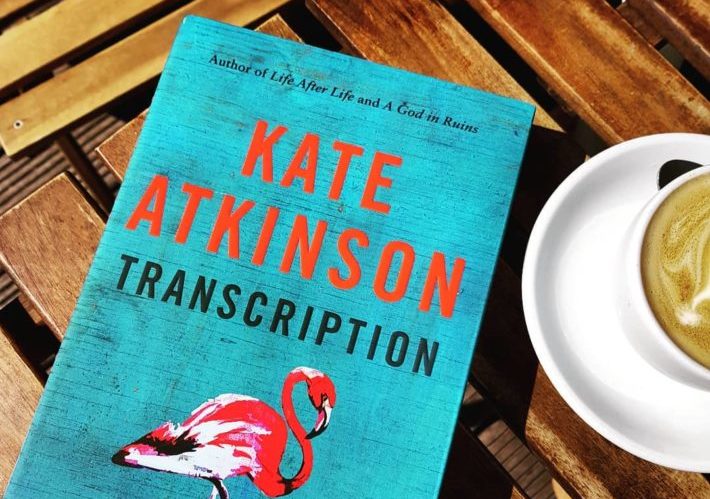
It is Kate Atkinson’s fault that I haven’t been able to do my housework. It’s her fault that my sleep schedule has been upended. I’m not resentful. Bingeing on a great series of books can be just as satisfying as bingeing on those made-for-TV series. More even. Kate Atkinson has written a series of six mystery books featuring the semi-enlightened, always striving for full enlightenment, Jackson Brodie. Her plots are unique and offer some interesting variety. Brodie’s personal friends and family members stay with us throughout the series once they make an appearance. The thread that holds the series together is Atkinson’s passion to raise awareness of the vulnerability of girls and woman in a world where many men embrace male dominance or outright exploitation of women.
The women in this series are shot, stabbed, beaten, kidnapped, and used. There are also strong women who may have once been downtrodden but will no longer tolerate abuse. Jackson Brodie often falls in love with these women and occasionally marries them. Don’t be frustrated if it takes a while for Brodie to appear. All the threads come together in astonishing and very satisfying ways, except for when Jackson thinks he might have stumbled upon the best relationship of all.
In order, Atkinson offers us 1. Case histories, 2. One Good Turn, 3. When Will There Be Good News, 4. Started Early Took My Dog, 5. Big Sky, 6. Death at the Sign of the Rook.
Case Histories: Victor meets Rosemary – “Women seemed to him to be in possession of all kinds of undesirable properties, chiefly madness, but also a multiplicity of physical drawbacks–blood, sex, children–which were unsettling and other. Yet something in him yearned to be surrounded by the kind of activity and warmth so missing in his own childhood, which was how, before he even knew what had happened, like opening the door to the wrong room, he was taking tea in a cottage in rural Norfolk while Rosemary shyly displayed a (rather cheap) diamond-chip engagement ring to her parents.” (p. 23) You can probably guess that this doesn’t end well.
One Good Turn: An incident of road rage involving a timid mystery author escalates due to mistaken identity to reveal a Russian sex trafficking ring hiding behind a maid service. Jackson is married to Julia, an actress he met under sad circumstances, although Julia doesn’t do sad. Atkinson gets to have fun giving us the fantasies of our sensitive mystery author. Jackson is in Scotland with Julia, so he is having a tough time navigating his way through the arts festival that is making for crowds everywhere. As he explores one tourist site, he comes across a beautiful dead woman who drowned but when he tries to pull her back to land, she disappears. He reports the incident, but the police have a hard time believing him. Chaos ensues and Jackson ends up bruised, battered, briefly jailed, and almost killed.
When Will There Be Good News: Gabrielle, Joanna, younger daughter Jessica, and baby Joseph are violently attacked while walking home along a country lane. Joanna is the only survivor. We meet Joanna again, all grown up, now Dr. Hunter, with a feckless husband and child of her own. Reggie (Regina) Chase is Dr. Hunter’s mother’s helper and babysitter. When Dr. Hunter and her baby are kidnapped, it is Jackson Brodie to the rescue.
Started Early Took My Dog: Clearly the Jackson Brodie mysteries are not happening in America. We are in Great Britain in this series of books. What happens to women in America is just as bad though. This we know. Jackson is in Leeds now but we, the reader, are briefly in 1975. We meet Tracy Waterhouse of the police force. Years later, near retirement, on impulse Tracy pays a wayward mom, probably a hooker, and probably on drugs to sell her the child the mom is dragging through the mall, berating the child as they go. Back at the beginning of her career (in 1975) she talks to her partner. “Tracy Waterhouse pressed her thumb on the doorbell and kept it there. Glanced down at her ugly police-issue regulation black lace-ups and wriggled her toes inside her ugly police-issue regulation black tights. Her big toe had gone right through the hole in the tights now and a ladder was climbing up toward one of her big footballer’s knees. ‘It’ll be some old bloke who’s been lying here for weeks,’ she said. “I bloody hate them.”
“I hate train jumpers.”
“Dead kiddies.”
“Yeah. They’re the worst,” Arkwright agreed. Dead children were trumps, every time.” (p.5)
It will be a long time and many side trips before Jackson catches up with Tracy Waterhouse.
Big Sky: Jackson is renting a place by the sea, but as they say, death takes no holidays. Jackson learned he had fathered a son with Julia, who tried to hide the child’s paternity. Nathan, the son, is staying with his dad, Jackson, but he is a teenager and not a happy one. We have crooked cops and ex-cops, money laundering, comics and drag queens. Eventually we have Reggie Chase and Jackson working reluctantly together to solve the mystery of a woman killed by a golf club. The crooked cops are all members of an elite golf club, and they are acting dodgy. The sky may be big and the view beautiful, but humans (especially men) are still up to no good.
Death at the Sign of the Rook: This mystery proceeds like a classic Agatha Christie mystery with all the possible murderers trapped together in a nearly bankrupt estate where they are holding a murder mystery weekend during an unexpected raging snowstorm. What brutal body injuries will Jackson suffer this time. What horrific things will or won’t happen to the women in the story.
You should read these, but just remember they are almost impossible to put down once you start. Kate Atkinson’s point about the vulnerability of women and girls is a good reminder that regardless of how accomplished and powerful women get they still need to take care. She reminds us that we need to work on creating societies where women are not victims.
 So Many Books, Choose Wisely