Atmosphere by Taylor Jenkins Reid – Book

From a Google Image Search – ABC News

Atmosphere by Taylor Jenkins Reid is a novel that has several themes. It begins in the 1950’s in America, but it mainly takes place in the 1980s. Joan Goodwin grew up loving the stars in the sky. She watched when Americans first walked on the moon in 1969. As a grownup she earns degrees in astronomy and is teaching at a college, but she dreams of going to space. When the space-shuttle-years begin an era of multiple space launches and flights, Joan, in a hopeful moment, fills out an application for NASA. The space program is hiring women for the first time. Since Joan is an expert in the field of astronomy, since she knows the constellations, knows the myths by which the ancients delineated them, and can steer by the stars, she is hired by NASA.

The people she meets at NASA become her co-workers and her social cohort. Eventually they learn to accept each other’s eccentricities, and they bond, some better than others. Everyone wants to be included in a shuttle mission and there is some competition and even some backstabbing. Joan’s calm demeanor and social common sense are important assets at NASA.

Joan’s sister, Barbara, is a hot mess. She got pregnant too young, and she is a reluctant single mother to Frances. Barbara’s selfish lifestyle keeps Joan involved in Frances’s live and they grow close. Frances can rely on Joan. She visits her at her NASA apartment often. Circumstances arise that make Joan escalate her involvement in Frances’s life.

Joan, who has never been in love before, falls in love with fellow astronaut, Vanessa Ford. It’s a relationship they must hide because it isn’t accepted anywhere, but especially not at NASA. It’s a love story that shouldn’t make any reader uncomfortable.

I recently read Orbital by Samantha Harvey which took me to the space station. It gave me a detailed view of a place I will never go, but that I value as a place that today’s risk-takers go to support tomorrow’s space adventures. However, Reid’s book, Atomosphere is peopled with emotional connections, human interactions, and historical realities that are more important than the mere technology of space flight, and more universal. These human interactions enrich the experience of NASA but do not put you right in space as Orbital does. Both are fine books about human space adventures, but offer different experiences. I enjoyed reading both books. You might also enjoy this pair of space odysseys.

We live in times when women’s rights are once more in question. LGBTQ+ folks just won the right to love who they love in the 21st century. Now those rights are in danger of being overturned by conservatives and evangelicals. Since Atmosphere takes place when women were just being accepted as astronauts, NASA expects women to match their exacting moral standards which are not like women’s rights outside the program. Women in the program feel that they must outperform their male counterparts. There are parallels here with Bonnie Garmus’ book, Lessons in Chemistry. Sadly the rights of women are once again being targeted, giving this book currency in 2025.

Steve Jobs by Walter Isaacson-Book

From a Google Image Search – CNN

In the Steve Jobs biography by Walter Isaacson, the author puts Jobs in a class with Einstein and Leonardo Da Vinci because Issacson also wrote about those great men. Was Steve Jobs a great man? He was certainly complicated. He loved perfection in design, but he knew that he was not perfect. Some people in Jobs’ life believed that the fact that he was adopted may have been at the bottom of some aspects of his personality. The author uses the adjectives “abandoned – chosen – special” to sum up the emotional impacts Jobs experienced as he wrestled with being given away by his actual parents. In fact, Jobs refused to meet his birth father. 

Steve had a daughter, Lisa, when he was very young, and he did not see her for years although he later tried to include her in his life. He also had a half-sister, Mona Simpson, a novelist. He did not have an easy-going personality, in fact he could be cutting and cruel, but he also had access to considerable charm. He raged at employees and suppliers, he sometimes cried when he was frustrated, and he had very bizarre eating habits (lots of fasting, mostly vegetarian or vegan). There were, however, saving graces.

He visited Japan and was very taken with the spareness and spirituality of Japanese design, and all things Japanese. He grew up with Bob Dylan, the Beatles, the Rolling Stones and many more rock stars, eventually meeting most of them. He had an interest in Eastern religion and philosophy, as many famous figures did in the 1960s and 70s.

Steve Jobs is the myth. Jobs did drop out of school to tinker with computers in his parent’s garage for a while (with friends). He envisioned a future for computers, a future where everyone had a computer of his/her own. The computers he wanted to design had to have that same spareness he loved in Japanese culture, but he wanted these computers to be proprietary machines, not sharing hardware or software with Microsoft computers or any of the other companies that were racing to produce popular computers. He was fired by his own company and went off unsuccessfully on his own to create other brands but when Apple was in trouble he went back to the company, and he stayed. Although Jobs eventually agreed to allow Apple computers to use Microsoft Office, it was a tough compromise for this purist.

Find out how Jobs named Apple. Find out how Jobs got involved with Disney and Pixar. Isaacson’s book is very readable and detailed. Find out how and when he met his wife Laurene Powell and about the family they made. Jobs loved to make deals during walks with suppliers and creators who interested him. Many deals were hammered out on these long walks. The weather in California colluded with him on this. Bill Gates, with his completely different personality, showed up in Jobs’ life from time to time. They were rivals, but Gates was not as mercurial as Jobs. They didn’t collaborate much, but they were contemporaries in a field that was exploding with innovation. 

Find out how Jobs made his very seductive ads, how he imagined the iPod, iPad, iCloud, and iTunes. Jobs made each roll out of an Apple product into a ‘magical mystery tour.” He kept new products shrouded in mystery until the magical reveal. He was not only a great product designer; he was an expert at marketing. 

It’s a very good book about a very interesting person and his too short life. It is a long book but spending all that time with Jobs and his A team, his family, his temperament, and his amazingly creative mind is time well spent. Unlike Einstein and Da Vinci, Steve Jobs lived in some of the same decades we have lived in. He is not a historical figure. He is a contemporary and we forgive him his bad behavior because his creative genius inspires us to believe that even flawed humans can accomplish great things. 

Walter Isaacson is one of our quintessential biographers. He gives us the real Steve Jobs, if that is possible to do in a biography. Credit is due to Steve Jobs also for allowing Isaacson to depict him honestly.

The Secret Life of Sunflowers by Marta Molnar – Book

From a Google Image Search – Wrote a Book

In this cold, dark winter, The Secret Life of Sunflowers by Marta Molnar called to me because sunflowers are so sunny and all I could see from my windows was white snow and gray skies. I did not immediately associate sunflowers with Vincent van Gogh because they had become a symbol of Ukraine, a nation defending itself against invasion. But this is a story about Theo van Gogh’s wife Johanna Velar, married name Johanna van Gogh-Bonger born in 1862. It is also the story of Emsley, with the author flashing back and forth between Emsley’s fictional modern life and Johanna’s real 19th century life. 

Emsley’s life is changing in ways she seemingly has no control over. Her beloved and flamboyant grandmother, Violet has died. Emsley’s business, an auction house in LA which auctions donations from Hollywood celebrities to raise money for politics is in trouble. Her boyfriend and business partner Trey switched his affections to her friend (and roommate) Diya and the three of them have been living uncomfortably together. Violet lives in New York City and after the funeral Emsley has to stay in NYC to clear out Violet’s brownstone. While sorting through Violet’s life as a NY bon vivant, Emsley finds a small green book and some papers written in Dutch. 

As Emsley tries to unravel her business difficulties and mourn the loss of her beloved grandmother, she reads through what appears to be the diary of Johanna van Gogh-Bonger, wife of Theo van Gogh. Both Theo and Vincent die, and Jo is left with all of Vincent van Gogh’s paintings and no income. 

How both women cope with the disastrous events in their lives should inspire women living through life’s setbacks to hope that through their own choices they can reboot their lives. Both women struggle to succeed in the face of opposition and must find ways to support themselves. Although it wasn’t the sunny infusion I expected, I have my own ambitions, and I am a woman, so it did set me back on a productive path that the winter blues had interrupted.

Intermezzo by Sally Rooney – Book

From a Google Image Search – Chicago Review of Books

Sally Rooney wrote Intermezzo, a story of two brothers, the Kubek brothers. An intermezzo is an intermission. We meet the younger Kubek brother first. Ivan is in his twenties, and he considers himself socially awkward. All his previous encounters have not gone well. He would become filled with anxiety and unable to approach social situations with an acceptable level of poise. He used his alone time, and it was considerable, to become an expert chess player. When he goes to a small town to play some chess against amateur players, he meets a beautiful 36-year-old woman, and he becomes involved with her. She does not find him the least bit awkward.

Peter is Ivan’s brother. He’s 35 and dating the 20-something Naomi. Peter is also involved with Sylvia, who he intended to marry. She was in a terrible accident, and although he still loves her, she can’t be there for Peter as a wife because she lives with constant pain.

Ivan and Peter recently lost their father and have not yet dealt with the pain of their loss. Their parents were divorced when Ivan was quite young, and the boys lived with their father. Since Peter is so much older than Ivan, he soon went off to college. There is that dynamic of who did Dad love best. Losing their father throws them temporarily off balance. Does the title refer to the time spent adjusting to this major change in their lives?

Rooney add in some Wittgenstein, a physicist I find quite abstract (pg. 399). Schrödinger’s box makes an appearance. Conversations between Sylvia, a professor, and Peter were too esoteric for me, a reflection, I imagine, of their level of intellectual sophistication, and a contrast to Naomi, who is needy, pretty, good company and surprisingly wise for someone so young but no intellectual. I usually like brain puzzles to unravel but this time I will have to go back over that part of the book to see if it is worth trying to grasp what these two characters are saying, or if the author is just showing off her erudition. (Sally Rooney wouldn’t do that.)

“Something about fascism he says, and they go on walking, talking about fascist aesthetics and the modernist movement. Neoclassicism, obsessive fixation on ethnic difference, thematics of decadence, bodily strength and weakness. Purity or death. Pound, Eliot. And on the other hand, Woolf, Joyce. Usefulness and specificity of fascism as a political typology in the present day. Aesthetic nullity of contemporary political movements in general. Related to, or just coterminous with, the almost instantaneous corporate capture of emergent visual styles. Everything beautiful immediately recycled as advertising. The freedom of that, or not. The necessity of an ecological aesthetics, or not. We need an erotics of environmentalism.” (pg. 393)

Since the story takes place in Dublin and small towns nearby, the odd sentence structure may reflect local dialect. Sentences often seem to be written backwards to avoid the use of conjunctions. Is this a Rooney thing or an Irish thing. I do not know. I found it interesting but not annoying.

“Terribly childish wish he feels once in his life to do as he’s told.” (pg. 410)

Sally Rooney gives us characters who seem like real people we could meet and know. Ivan and Margaret, Peter, Sylvia, and Naomi could be friends of ours. How they deal with traumas in their lives, how they deal with nontraditional relationships, how they come of age, regardless of their age in years; these are the interactions that hold our interest. If the ending seems a bit too happy, I don’t mind.

The Queen’s Fool by Philippa Gregory – Book

From a Google Image Search – Flickr – (C)KIM BECKER

A friend gave me the book The Queen’s Fool by Philippa Gregory for Christmas. I had read several Philippa Gregory books, but not this one. Gregory writes period fiction, usually about English history, especially royalty. These books are very readable and immersive. In The Queen’s Fool Gregory focuses on the short reign of Edward, too young to be king and too ill to rule for long and the sisters who followed him on the throne of England. 

Many readers know this story well because two half-sisters were waiting to be queen. Mary was first in line. Mary was the daughter of Henry VIII’s first wife, Catherine Parr. He divorced her mother to marry Anne Boleyn. Elizabeth was the child of this marriage. Although she was declared illegitimate when Anne Boleyn was executed, she was later declared legitimate.

Mary was not the queen most of the English people wanted. Henry, her father left the Catholic church (and the authority of the Pope) when he wanted a divorce, and the church would not grant it. England was turned upside down as Henry closed the monasteries, took the riches that had been amassed, and executed formerly powerful church officials. He eventually founded the Church of England which was closer to Protestantism. Mary was a devout Catholic who, once she became queen, turned England upside down again by restoring the Catholic church and punishing prominent Protestants. Subjects who wanted to stay alive had to return to behaving like loyal Catholics. Mary’s half-sister was not old enough when Edward died to be queen, but she was a Protestant who had no fixed ideas about God or the Church. 

The Queen’s Fool, threading her way through all this religious upheaval, was Jewish, a religion that was unwelcome in almost every nation at the time. Jews had to pretend to be Protestants when that was expedient and Catholics when nations were loyal to the Pope. Hannah became the queen’s fool because she had the “sight.” If you remember your history of Mary and Elizabeth, then you remember that Lord Robert Dudley and Elizabeth were an item for a while. Hannah Green once saw Robert Dudley in the street and behind him she saw the angel Uriel. Dudley was the one who recommended her to be a fool for the Tudors. Lord Dudley’s protection kept Hannah alive through many tense moments.

Reading books about royalty is a guilty pleasure that I don’t often indulge anymore but I was happy to enjoy this book. Adding the Jewish faith into this mix, at this time when religions were matters of life and death, was a new twist. Hannah lived with her mother and father in Spain until her mother was burned at the stake by the Inquisition. Hannah and her father kept moving around Europe trying to find somewhere they could live in safety. It was dangerous for Hannah to be involved with the Catholic reign of Mary. 

The Jewish people have been hunted throughout history until they found safety in America and Israel, but they realize that this safety could be ephemeral once again. We all live with some religious uncertainties in the twenty-first century, but no people have been as consistently hounded as those of the Jewish religion. Exploring a historical moment we have explored in other books, as seen through the lens of religious turmoil and of one Jewish girl at the mercy of fate, kept me reading and reminded me of how fraught the Jewish diaspora has been for believers in the Jewish faith. Gregory took a timeless story we are familiar with and added another layer.

This book may be out of print.

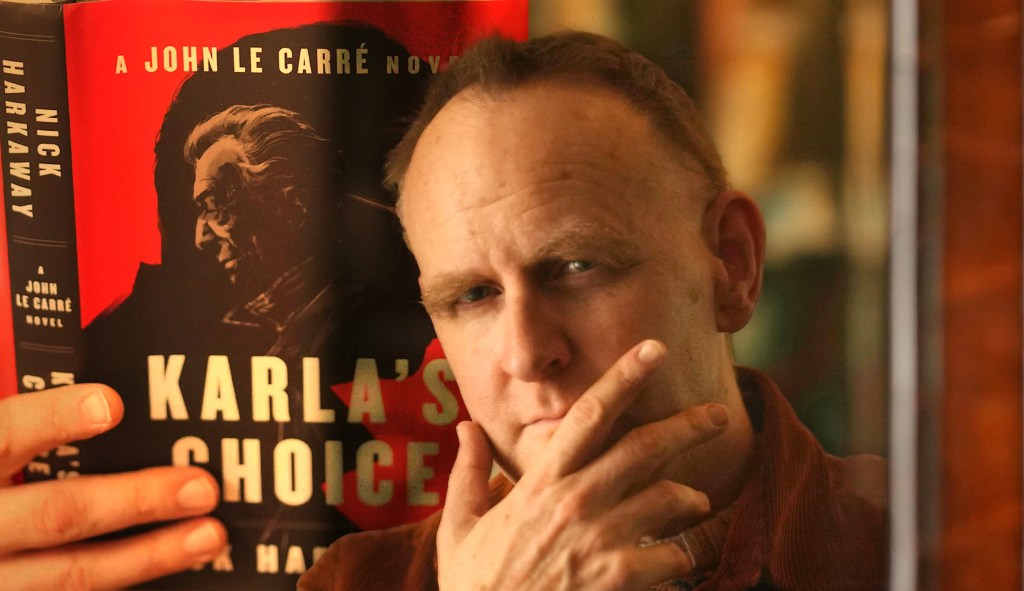
Karla’s Choice by Nick Harkaway-Book

From a Google Image Search – Washington Examiner

Spies make for what is often edge-of-the-seat reading. Spy novels often offer references to obscure historical activities that may not have been universally covered by the media and which may have only been uncovered long after the actual events. John le Carré has long been considered the master of spy stories involving classic spy craft methods which may not work as well in our age of high tech. This may be why so many books about spying refer to WWII and its aftermath in the Cold War and the times when a wall divided East and West Berlin. The end of wars often leaves loose ends which reveal themselves much later. Now spying usually happens on a grand scale, as portrayed by events like China’s recent hacking of the US Treasury Department, and classic up-close and personal spying is out of fashion. 

John le Carré has passed the torch to Nick Harkaway, his son. In Karla’s Choice Harkaway takes us to the Circus in London with all the quirky characters who help keep the world safe from the forces which oppose democracies. Harkaway also gives us George Smiley, called back from retirement to unravel a situation involving death and a man who is on the run. Smiley may lose his wife over this one.

Harkaway does a good job of capturing le Carré’s style, and the novel takes us back to post-war days. We tune into events happening behind the Iron Curtain as the runner, Róka, who left London leaving a dead man behind, is a Hungarian national with connections to Communism. The backstory of Róka is perhaps a bit too complicated. I found myself tuning some of it out. Harkaway’s inclusion of Szusanna, Roka’s secretary, lent complications to the operation which added value. Szusanna gave us a reason to stay interested enough to get to the real focus of this tale, Karla. Karla is an agent of Russia and has a reputation for being both brutal and ruthless. Smiley offers Karla a choice. Will he take it? Has the Circus lost some of its effectiveness since the end of the war? This is a good legacy book, but not a great one. It may not be due to the author’s skills as a writer but rather to all the ways the world of spying has changed. Still, we are lured on to solve the mystery of Róka.

Jackson Brodie Mysteries by Kate Atkinson

Version 1.0.0

From a Google Image Search – Kenyan Library – not all these books are in the series and not all the titles in the series are present

It is Kate Atkinson’s fault that I haven’t been able to do my housework. It’s her fault that my sleep schedule has been upended. I’m not resentful. Bingeing on a great series of books can be just as satisfying as bingeing on those made-for-TV series. More even. Kate Atkinson has written a series of six mystery books featuring the semi-enlightened, always striving for full enlightenment, Jackson Brodie. Her plots are unique and offer some interesting variety. Brodie’s personal friends and family members stay with us throughout the series once they make an appearance. The thread that holds the series together is Atkinson’s passion to raise awareness of the vulnerability of girls and woman in a world where many men embrace male dominance or outright exploitation of women.

The women in this series are shot, stabbed, beaten, kidnapped, and used. There are also strong women who may have once been downtrodden but will no longer tolerate abuse. Jackson Brodie often falls in love with these women and occasionally marries them. Don’t be frustrated if it takes a while for Brodie to appear. All the threads come together in astonishing and very satisfying ways, except for when Jackson thinks he might have stumbled upon the best relationship of all.

In order, Atkinson offers us 1. Case histories, 2. One Good Turn, 3. When Will There Be Good News, 4. Started Early Took My Dog, 5. Big Sky, 6. Death at the Sign of the Rook.

Case Histories: Victor meets Rosemary – “Women seemed to him to be in possession of all kinds of undesirable properties, chiefly madness, but also a multiplicity of physical drawbacks–blood, sex, children–which were unsettling and other. Yet something in him yearned to be surrounded by the kind of activity and warmth so missing in his own childhood, which was how, before he even knew what had happened, like opening the door to the wrong room, he was taking tea in a cottage in rural Norfolk while Rosemary shyly displayed a (rather cheap) diamond-chip engagement ring to her parents.” (p. 23) You can probably guess that this doesn’t end well.

One Good Turn: An incident of road rage involving a timid mystery author escalates due to mistaken identity to reveal a Russian sex trafficking ring hiding behind a maid service. Jackson is married to Julia, an actress he met under sad circumstances, although Julia doesn’t do sad. Atkinson gets to have fun giving us the fantasies of our sensitive mystery author. Jackson is in Scotland with Julia, so he is having a tough time navigating his way through the arts festival that is making for crowds everywhere. As he explores one tourist site, he comes across a beautiful dead woman who drowned but when he tries to pull her back to land, she disappears. He reports the incident, but the police have a hard time believing him. Chaos ensues and Jackson ends up bruised, battered, briefly jailed, and almost killed. 

When Will There Be Good News: Gabrielle, Joanna, younger daughter Jessica, and baby Joseph are violently attacked while walking home along a country lane. Joanna is the only survivor. We meet Joanna again, all grown up, now Dr. Hunter, with a feckless husband and child of her own. Reggie (Regina) Chase is Dr. Hunter’s mother’s helper and babysitter. When Dr. Hunter and her baby are kidnapped, it is Jackson Brodie to the rescue.

Started Early Took My Dog: Clearly the Jackson Brodie mysteries are not happening in America. We are in Great Britain in this series of books. What happens to women in America is just as bad though. This we know. Jackson is in Leeds now but we, the reader, are briefly in 1975. We meet Tracy Waterhouse of the police force. Years later, near retirement, on impulse Tracy pays a wayward mom, probably a hooker, and probably on drugs to sell her the child the mom is dragging through the mall, berating the child as they go. Back at the beginning of her career (in 1975) she talks to her partner. “Tracy Waterhouse pressed her thumb on the doorbell and kept it there. Glanced down at her ugly police-issue regulation black lace-ups and wriggled her toes inside her ugly police-issue regulation black tights. Her big toe had gone right through the hole in the tights now and a ladder was climbing up toward one of her big footballer’s knees. ‘It’ll be some old bloke who’s been lying here for weeks,’ she said. “I bloody hate them.” 

“I hate train jumpers.”

“Dead kiddies.”

“Yeah. They’re the worst,” Arkwright agreed. Dead children were trumps, every time.” (p.5)

It will be a long time and many side trips before Jackson catches up with Tracy Waterhouse.

Big Sky: Jackson is renting a place by the sea, but as they say, death takes no holidays. Jackson learned he had fathered a son with Julia, who tried to hide the child’s paternity. Nathan, the son, is staying with his dad, Jackson, but he is a teenager and not a happy one. We have crooked cops and ex-cops, money laundering, comics and drag queens. Eventually we have Reggie Chase and Jackson working reluctantly together to solve the mystery of a woman killed by a golf club. The crooked cops are all members of an elite golf club, and they are acting dodgy. The sky may be big and the view beautiful, but humans (especially men) are still up to no good.

Death at the Sign of the Rook: This mystery proceeds like a classic Agatha Christie mystery with all the possible murderers trapped together in a nearly bankrupt estate where they are holding a murder mystery weekend during an unexpected raging snowstorm. What brutal body injuries will Jackson suffer this time. What horrific things will or won’t happen to the women in the story.

You should read these, but just remember they are almost impossible to put down once you start. Kate Atkinson’s point about the vulnerability of women and girls is a good reminder that regardless of how accomplished and powerful women get they still need to take care. She reminds us that we need to work on creating societies where women are not victims.

Autocracy, Inc. by Anne Applebaum, Ch. 3, National Security and Government Control

From a Google Image Search – Politico

Anne Applebaum’s book has a subtitle, The Dictators Who Want to Run the World. From her perch in Poland, she has a nearer view of all the players, Russia, China, Syria, Iran, and Africa. Nations that are run by autocrats are using new technologies not only to spy on other countries (especially democracies) but also to spy on their own citizens. You might argue that nations need to know what their enemies, both foreign and domestic, are up to but there are more sinister motives at work here too. Chapter 3 in Autocracy, Inc. has the title, “Controlling the Narrative”. 

The author begins by reminding Americans that our NSA is collecting data about US citizens as we were informed by Edward Snowden, a whistleblower or traitor, depending on your point of view, who is living as an exile in Russia. She also mentions Pegasus spyware in Poland which was eventually exposed and investigated. 

“If no parallel scandal has ever unfolded in China, Russia, Iran, or North Korea, that’s because there are no legislative committees or free media that could play the same role.” (p. 71)

Applebaum reasons that when democracies use spyware it helps autocracies justify their abuse. If there are fewer objections to using spyware outside of China, then there will be fewer objections to using it inside of China. 

In fact, we all expect that surveillance inside nations, even democracies, will escalate as new tech advances are developed. Why develop spyware if you won’t use it.  Americans objected to the intrusions of the Patriot Act after the attacks on 9/11 but were so shaken by these brazen attacks on America that we accepted these rules while also believing that they would be temporary. They have been replaced by the USA Freedom Act which curtailed the government’s authority to collect data in 2015. Democrats in Congress strongly objected whenever Trump wanted to collect names of people in a group he wanted to target. 

In China, objections can be deadly, as in Tiananmen Square in 1989. China, says Applebaum, first tried to eliminate the activists (people), then set out to eliminate the ideas such as the rule of law, the separation of powers, the right to free speech and the right to assemble which are described as “spiritual pollution”. (p. 66)

While Americans still believe, or say they believe that the internet would lead to a cultural renaissance, Applebaum predicted in 2012 that the internet would become a tool of control. China was designing “the Great Firewall of China” (p. 67) which used an “elaborate system of blocks and filters to prevent users from seeing particular words and tools. She tells us that foreign companies rushed into the new security market in the same way companies had rushed into the post-Soviet financial market. (Yahoo, Microsoft, Cisco Systems all made software that complied with China’s rules.) These companies were eased out once China had access to their software. (p. 68)

The security network was expanded by combining online tracking with tools of repression such as security cameras, police inspections and arrest. Other tools might include “nanny apps” on phones, monitoring book purchases, picking up on unusual behaviors, voice recognition, and even DNA swabs. All these tools have been used on the Uighur population in China. Now add in facial recognition and AI and you have a state that can truly control the narrative.

Anne Applebaum did not just write her book to expose state surveillance tactics. Perhaps she felt we needed to understand what might be coming to a place near you. These systems can be copied and have been copied by many nations including Pakistan, Brazil, Mexico, Serbia, South Africa and Turkey. 

“The more China can bring other countries’ models of grievance into line with China’s own,” argues Steven Feldstein, an expert in digital technology, “the less these countries pose a threat to Chinese hegemony.” (Am I nervous about writing these words without a powerful husband such as Applebaum’s to make her a public figure and hard to attack – yes, I am sometimes paranoid.) 

Russia plays a different game says Applebaum. Lie constantly and blatantly and when exposed offer no counterarguments. (p. 78) Blame everyone but yourself. This “fire hose of falsehoods” makes citizens question how you can possibly know what really happened and so they avoid politics altogether. Autocrats spread hopelessness and cynicism because it works to their advantage. This is not Russia’s only game. Russia is also a surveillance state.

Surveillance was a thing we worried about in the post-WWII world. We had all read Orwell’s 1984. We expected our freedom to include privacy. After the events of 9/11 we saw the need for some spying, both domestic and foreign, but we still hoped to not invade the homes of private citizens. Now, we are in an age where we live with hacking, with having our data stolen regularly, and with who knows how much surveillance because we can’t imagine our lives without the internet and cell phones. 

Many American fully believe that if Trump and the right-wing MAGA’s win in 2024 all aspects of surveillance will be expanded and private citizens may be pursued because of the things they think and what they write or have written. Even without the MAGA’s in power, surveillance will most likely expand given all the autocracies that have cropped up everywhere. We may not be able to keep it focused on only foreign countries. This is one of our great fears of AI that it will be used by our government to control our behavior, regardless of what party you are registered with or the fact that you choose to not belong to a party. 

“In seeking to create, these new propagandists, like their leaders, will reach for whatever ideology, whatever technology, and whatever emotions might be useful.”…Only the purpose never changes, Autocracy, Inc. hopes to rewrite the rules of the international system itself.” (p. 97)

Chapter 3 also goes into, in some detail, the changes in print and social media that are accompanying this rise in “spying”. Project 2025 will give MAGA carte blanche to spy on all Americans. Anne Applebaum’s book is a warning. Soon she will offer some remedies.

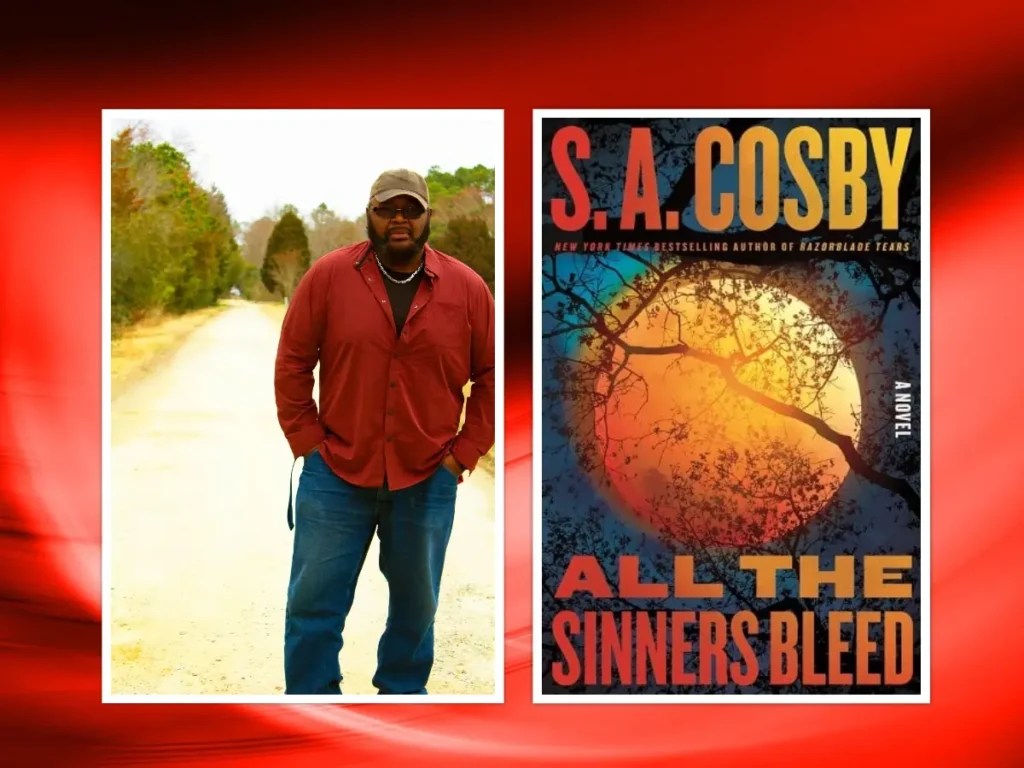
All the Sinners Bleed by S. A. Cosby – Book

From a Google Image Search – LitStack

Listening to All the Sinners Bleed by S. A. Cosby comes with the bonus of the reader’s accents, all Southern dialects that vary according to which character is speaking. The accents all share similarities since one reader is speaking but it works and adds flavor to the story. I am listening to books again temporarily because I saved up credits from before my cataract surgery when I couldn’t read print books easily. After briefly subscribing to Audible + I ended up with 6 credits to spend – a dream scenario for a reader.

Charon County (Virginia) has been associated for decades with dark deeds and evil events, perhaps a negative karmic gift that resulted from the mythical reference it was saddled with, and because it was founded in bloodshed against indigenous people, “sown with generations of tears.” “The South doesn’t change” says the author.

Titus is, by some miracle, the first black sheriff of Charon County. Dressing for his day is described with ritualistic echoes of warriors preparing for battle. It’s a good thing Titus is prepared because this is no ordinary day in Charon County. Just as he finishes dressing with his bulletproof vest underneath and his gun belt strapped to his waist, his radio squawks and the news is that there is a school shooting in progress at the high school.

Although mass shootings are right out of the headlines of the moment, it turns out that only one person has been killed. This was a targeted hit. The shooter is a local guy, Latrell (hard to get spelling right from listening to a book). He has killed a very popular teacher of 9th grade geography who has a reputation for going out of his way to help needy students, Mr. Spearman. Why? Titus had hoped to find out by questioning Latrell, but Latrell committed suicide. 

What follows is an investigation that uncovers some grisly, hateful, and secretive actions that will weigh heavily on this town for many years to come. These activities do not speak kindly of the darkest bits of human nature, but the author addresses legitimate concerns about real world events. However, this is a mystery novel and not a book that attempts to sort out the human dilemma.

While not for the squeamish, readers will read on to find out the identity of a man who wears a wolf mask to commit heinous acts that act out his deep psychological pain. Titus, an ex-FBI agent, has a warm relationship with his father Albert and his brother Marquis. He has a current girlfriend (Darlene) and an ex-girlfriend (Kelly). These are the core characters showing us a sheriff who is well-adjusted, dedicated to justice, and a bit clueless when it comes to women. Good characters make good books better. If you like mysteries this one is well worth reading.

The Armor of Light by Ken Follett-Book

From a Google Image Search – Lit Stack

Ken Follett’s fifth book in the Kingsbridge series is The Armor of LightThe Pillars of Earth is the most famous book in the series covering the era when the cathedral was built in Kingsbridge in fascinating, if fictional, detail. Reading this book enticed me to finish the rest of the books. Although not quite as good as The Pillars of Earth, all the books in this series tackle different eras in British history. The Evening and the Morning tells a story of the Middle Ages. World Without End brings readers to Kingsbridge two centuries after the building of the cathedral. A Column of Fire immerses us in the period of the Reformation. The Armor of Light focuses on the ways progress in the textiles trade affected the residents of Kingsbridge along with the involvement of England in the war against Napoleon Bonaparte. 

In each case Follett writes about the injustices that arise from having only two classes, the wealthy who control government, laws, and the courts, and the worker class at the mercy of the rich who show little or no compassion. He uses real historical moments and peoples them with fictional characters we can relate to. In Part I, The Spinning Engine, 1792-1793 we meet Sal Clitheroe, her unfortunate and beloved husband, Harry, and their son Kit. They are picking turnips and loading a cart under the watchful eyes of the Squire’s son Will Riddick, a coldly entitled and incompetent overseer. They are serfs who are paid tiny wages for hard physical labor. The workers can see that the cart is overloaded and not safe, so they are not surprised when a wheel breaks and Harry is trapped underneath. When Harry dies a distraught Sal has to fight for Poor Relief, she has to let her six-year-old son go to work polishing boots at the Manor House. Sal’s challenges are unending because she must stick up for herself and Kit, usually unsuccessfully as employers would rather fire injured workers than pay them, and the courts are manned of the powerful aristocrats or church officials. One church official says, “I’m not in the business of feeding other people’s children.” (An Anglican church leader talking of Methodists) (p. 49) 

Here we have the moment when cottage industries must give way to machines, in this case a spinning jenny that spins 8 threads at a time, and right on its heels, a machine that spins 48 threads at a time. Housewives in cottages tend to produce 3 threads per day.

In Part 2, The Revolt of the Housewives, 1705, when inflation arrives because of war with France bread becomes very expensive. Eventually, the housewives who don’t have enough grain to make their own bread become an angry crowd when they find that Kingsbridge has not bid high enough to stop their grain from going to another town. Local bread will be costly, and supplies will run out quickly. The housewives do not want the flour to go to another town when they will be left with no grain. Again, there is Poor Relief, but it is difficult to get enough to live on as Harry’s widowed wife Sal learns. Bread has become unaffordable just as people are losing jobs because of the new machines at the mills, a conjunction of events that can lead to social pandemonium. The militia is called to stop the insurrection of the housewives, but these local boys won’t fire on their neighbors. Steam machines are more reliable than those that run on the water from the river so workers must adjust to new methods and new job insecurities once again.

In Part 3, when workers try to form groups to be able to force owners and gentry to inform workers when more efficient machines continue to replace workers Parliament passes The Combination Act in 1799 which makes it illegal for workers to gather to try to get protections from owners who tend to keep advances in technology secret (to unionize). One owner imported “scab” workers from Ireland when workers tried a strike. In Part 4 we meet The Press Gang, 1804-5. As the war escalates England needs more and more soldiers. “My guess is that about fifty thousand men have been forced into it (the military),” Spade (David Shoveller) said. “According to the Morning Chronicle there are about one hundred thousand men in the Royal Navy and something like half of them were impressed. Part 5 finds Britain at war with the French led by Napoleon Bonaparte and most of the men and older boys from Kingsbridge go off to war. Wars are often social levelers. When the war is won Parliament passes workers’ rights reforms begin to create fairer conditions.

There are plenty of characters whose lives intertwine with the events related to the workers’ rights battles exposed in Follett’s book. Some marry, have affairs, have children, and form same-sex pairs which must be kept secret. Some run afoul of the gentry or the factory owners and suffer out-sized consequences because the same people that own and run the factories also control the courts. If you like to learn history while enjoying the literary presentation of fictional characters affected by that history, Ken Follett is someone who does a great job with both.