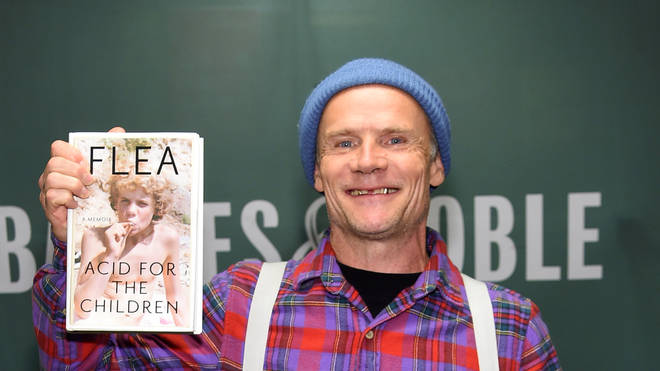
Rock stars, punk stars, even hip hop stars are being pressured to write memoirs. Patti Smith has sort of taken the literary world by storm – she’s next on my list, but Flea’s book called to me first because it was on the reader that didn’t need to be charged. Ridiculous way to pick reading priorities and likely to make you feel like your brain has experienced whiplash, but I can no longer cart around heavy piles of books, and library waiting lists are long. Besides writers make their living when we buy their books, so I like to buy books to show my respect for writers.
Michael Balzary, the bassist in the Red Hot Chili Peppers wrote Acid for Children. His fans know him as Flea. He’s actually quite a good writer whose words do not get in the way of his story. It seemed like I was sitting in a circle of his friends on an adjoining mattress on the floor of the Wilton Hilton as he told the story of his early years, before he became famous. He told the most distressing things as if they were normal events, although he was aware that his childhood was anything but normal. It began in a fairly normal way in Australia, living with mom, Patricia, and Dad, Mick, sister Karyn. In Australia Michael’s pleasures involved enjoying the riches offered by nature in Australia; a boy and his dog. When he was about eight his Dad was offered a great job in the US and the family moved to an upscale suburban home.
Michael’s mother rebelled. She left to live with Walter, a musician/artist who knew many jazz greats and jammed with them, but who could not make a living. He had a substance abuse problem and what was probably a mental illness. He was though, when sober, a far more affectionate person than Michael’s birth father, and when not sober he raged and became abusive and fought with Michael’s mom, driving Michael out of the house. Michael’s birth father and his sister went back to Australia.
Patricia and Walter had no house rules. Michael was free to run and became basically a wild young kid, shoplifting what he wanted or needed, making friends with other young men who liked to take crazy risks, all the while feeling unloved, and sometimes unlovable. Michael and his friends tried every drug, swam in every beckoning empty pool, and partied constantly. I do not know how Michael stayed out of jail or why he didn’t have a long rap sheet of petty crimes. He seemed to make it through a very tumultuous coming-of-age and to arrive safely in adulthood, still somewhat messed up, but with a career as a famous musician right ahead of him.
Michael became Flea when he became the bassist for Fear. He finished high school thanks to a love of music he had learned from the jazz he loved and all the fine jazz musicians he met at Walter’s shabby house. Michael played the trumpet in high school and his love of music kept him in school long enough to graduate. Michael and his friends lived in Hollywood which might explain how they stayed under the radar of law enforcement as they used the city as their acid-fueled playground. Eventually Flea learned to play the bass, and it became his ticket into fame and fortune.
Balzary is quite honest in telling his story; he does not hide the chaos of his early years and he obviously enjoyed much of the chaos, which suited something untamed within him. Looking back he counsels that children should not do any of the drugs he did, that it does damage to young brains. He explains that he eventually became enlightened enough to not try so hard to constantly self-soothe. Readers may find Michael Balzary’s young life too profane for their tastes. While appreciating the honesty Flea offers and his easy style of writing, I agree with his adult self, that children can be neglected by self-absorbed adults when they need oversight the most. Is a chaotic youth necessary to mold a creative spirit? Perhaps creative development does not require quite this level of free range parenting.
999: The Extraordinary Young Women of the First Official Transport to Auschwitz by Heather Dune Macadam
If you decide to read 999: The Extraordinary Young Women of the First Official Transport to Auschwitzby Heather Dune Macadam, read it with a whole box of tissues handy. This is not because, as in fiction, authors know how to engage our emotions; this is a nonfiction book and the tears will be real. Despite all the times authors have written about the Holocaust, this story still has the power to horrify us, to remind us of the heroic efforts it took to survive this unimaginable cruelty and brutality, to make us wonder if we would have been a survivor, and to force us to accept that the right set of circumstances could possibly turn any one of us into a monster.
Macadam was studying the first transports to Auschwitz in 1942. She learned that a notice went out in Slovakia that spring requiring 999 young teen girls to pack a bag and report for a physical exam. The notice said that they were going to be employed somewhere just outside Slovakia and would return home in 3 months. A few parents tried to hide their daughters because they could not understand why the government was taking girls. But in the end 997 girls were collected and parted from their parents and from all they knew. Macadam made extensive use of the USC Shoah Archive and the official records in Israel to track down the girls who survived this first transport. Although rumor had it that the girls were going to a shoe factory, they actually were taken to occupy the first buildings at Auschwitz. Their small suitcases were confiscated and they were given the uniforms of dead soldiers to wear and some were given black and white striped dresses. On their feet they had homemade clumsy sandals which they called clackers.
Some of the survivors could not talk about their experiences, some could not remember the details because their minds had blocked them, but there were survivors who felt it was important to tell people what had happened in those camps. How anyone survived I cannot say. The treatment of these girls was insane and inexplicable, apparently only possible because the Nazi’s were convinced that Jewish people were less than human. But they did what they did under conditions of great secrecy, so clearly they knew well how the world would judge them. After these girls, transport after transport of young Jewish women were delivered to Auschwitz, and they, in fact, cleared the ground for the entire concentration camp by hand, without coats in winter, in those awful homemade sandals, and thousands died.
This is the most authentic book I have read so far about Auschwitz and the ‘Final Solution’ given that Macadam spoke with people who had lived there and experienced that nightmare. The slightest small misstep, a bout of illness, an injury could result in death. Eventually the girls with the lowest numbers were given indoor work in Canada, which was the name given to the buildings where confiscated Jewish belongings were sorted. This decision may have been the only reason some of these girls survived. The thing that saved their lives put them right next to the crematoriums which had now been built and operated day and night when transports arrived, eventually leaving people off almost at the entrance to the ovens. The girls could see their relatives and neighbors lined up to be killed. The ashes of other Jews filled the air they breathed. Even the comfort of an indoor job held horror.
When I read The Tattooist of Auschwitz by Heather Morris, I was skeptical of the things the author recounted. I also tended to see Jewish people in the camps who had light duty as possible collaborators. The girls who survived have a lot of guilt about things they did in the camps, but most of them offered a kindness when they could without putting their own life or their own survival in jeopardy. There were girls who were given power as a building supervisor, and some of these girls were dangerous and mean, but the things the girls on this first transport out of Slovakia felt guilty about were unavoidable. Now I believe that Heather Morris was just recounting a story that a survivor told her and that it was most likely as trustworthy as memories of such trauma can be. I read books about the Holocaust because it is the least I can do to honor those who lived through those inhuman camps. But also, so I will always remember that if one deranged human could decide to commit mass murder based on hate or jealousy, or some pathological construct, then it could happen again.
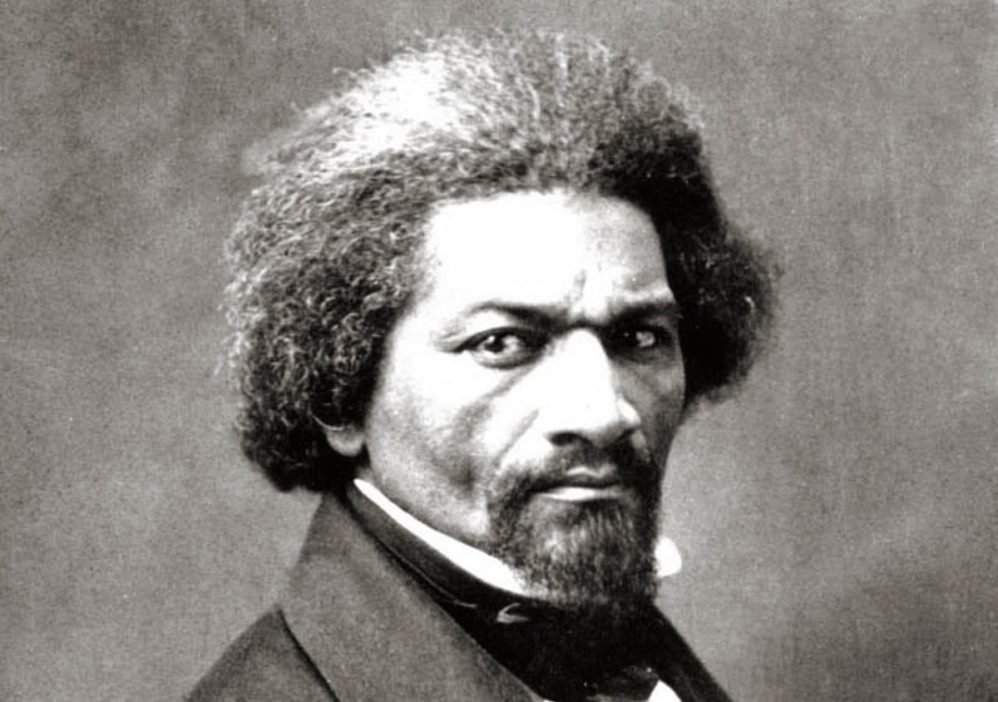
Frederick Douglass: Prophet of Freedom by David Blight has had me in thrall since December of last year. The author’s style is not to blame for the length of time I spent with Douglass. His style is not obscure, linguistically dense, or pedantic. Frederick Douglass’s life, however, was lived with a passionate density and a dedication to freedom and equality for all Americans of African Descent. It was a life richly lived and in no way ordinary.
How did Douglass make his way from slavery to national fame, treasured by many and hated by some. He believed in the value of hard work and telling an important story, at even the cost of his own health sometimes. In the days before there were radios, getting out a message took more effort, more arduous travel, often by rail, in all kinds of weather, than we can even imagine. How did Frederick Douglass learn to read and speak to crowds? It was illegal to teach slaves to read. It was said that once a slave could read he became useless as a slave. These masters, who liked to argue that the Negro race was inferior in intelligence, were afraid to teach a slave to read and write, to make a hash of their white supremacy claims, which, as Blight admits, linger stubbornly to this day.
Douglass, with some help from his master’s son’s wife, Sophie Auld in Baltimore, the Bible, some friendly white boys in Baltimore, and a book he poured over called The Columbian Orator, taught himself to read and speak, as an orator speaks, with power and effective rhetoric while he was still a slave. Eventually Douglass (born Fred Bailey) escaped north and fell into the helpful hands of some very active abolitionists, who dedicated themselves to speaking and writing against using any humans as slaves. He renamed himself after Clan Douglas from Walter Scott’s poem Lady of the Lake, because he liked their strength, and added an ‘s’ to make the name his own, says Blight. Late in the slave days of Douglass his master died and his estate was broken up. Since slaves were considered property all the master’s slaves were put on display and examined by other slave owners, purchased and hauled away like furniture, or tillers. While Douglass already understood that slavery was wrong, this atrocity imprinted graphically on his mind, along with a memory of being allowed in to visit his mother before she died. Frederick Douglass never knew his birth day and when slavery was done he went to see the Aulds who remained, but no one could enlighten him.
I will not tell you all the names of every abolitionist Douglass met because he knew all of his contemporaries. He was in demand as an orator who used Biblical cadences and even humor to insist that no man should be owned by any other man, that only freedom for all would suit the idealism of the American republic. There were often disputes among abolitionists about whether to advocate peaceful protest or a more robust activism so friends were made and lost and even Douglass changed his views on this, but, even so, Douglass’s focus on freedom and equality for all of the people being held as slaves propelled him through the next 6o years, with time out for a few jobs in the government after the Civil War. Douglass traveled and spoke constantly, first widely in the North and Midwest sections of America, passed from church to church and abolitionist to abolitionist for his own safety, in England, and Ireland, and Scotland (where slavery was already illegal), and again in America.
He spoke up before the Civil War, all throughout the Civil War when he also fought to have black soldiers who would fight for their own emancipation, and he could not rest in the disheartening aftermath of emancipation. He became owner/publisher/writer of a newspaper which included articles from most of the other activists in the anti-slavery movement. He wrote books, autobiographical in content, still in print today and still popular. He struggled constantly to support himself and his family. His wife Anna (Murray), who was born free, and his young children kept a home base that Douglass rarely got to enjoy. He was propelled by his mission and could not sit and rusticate.
Many wealthy abolitionists contributed to keeping Douglass’s newspaper alive and in that way helped support his family. Eventually he moved his family to Rochester, NY. Anna’s garden in Rochester was extensive, productive, and apparently lovely. Some of Douglass’s best friends in the cause and financial supporters were female activists. At least two of these women spent time staying at the Douglass home in Rochester. Ottilie Assing a well-educated German woman, seemed to have been enamored of Douglass and spent summers at the Douglass homes in both Rochester and later in the family home near Washington, DC. Blight found no descriptions of any untoward intimacies that survived, although it is possible to imagine that there may have been some, perhaps when Douglass went to stay at times with Ottilie and her circle. Anna Douglass left no clues about how she felt about these visitors, but Ottilie sometimes complained about Anna.
There is such a wealth of detail in Blight’s biography that if you really want to know Frederick Douglass you need to read Blight’s well-documented book. I will say that I became very nervous about what would happen when Reconstruction was undermined by the assassination of Lincoln (who Douglass knew personally and who he was able to influence and educate about the true conditions of slavery) and the rapid acceptance of former slave states back into the Union. I knew what atrocities ensued and I dreaded watching Douglass’s heart break when emancipation became violent racism. But Douglass was a man of his times and more pragmatic than me. He hated the violence, but he tried to keep the nation on a path to granting equality to freed slaves. He celebrated the 15th Amendment with a Jubilee even as he grieved the bloodshed, the terrorism, and the lynching that turned the South into a death trap for black folks who tried to exercise their new right to vote. So many battles still to be fought.
But in his final years, even as Frederick Douglass traveled and spoke as often as his health would allow, even as he faced the disapproval from both citizens and family when he married (after the death of Anna) a younger white woman, Helen Pitts, who he had worked with in Washington, even as he represented the federal government in Haiti, – he won the fame and reverence that he had earned in a lifetime of dedication to fighting for the freedom he did not have, for both himself and every black man. Douglass knew women who fought for the rights of women. He knew Susan B Anthony and Elizabeth Cady Stanton, but he was not distracted. The needs of slaves were more pressing in his mind and I don’t think most of us would argue with this focus. When Douglass died in 1895, “the Hutchinson Family Singers, who had many times appeared with Douglass, sang ‘Dirge for a Soldier’: ‘Lay him low, lay him low/Under the grasses or under the snow: /What cares he? He cannot know./Lay him low, lay him low.” – page 753.
I will say that I did not actually read this book; I studied it. The author’s words were so compelling and so impelling that I could not think of rephrasing them. The way the story is told is just as essential to understanding Frederick Douglass as the facts themselves are. It was a pleasure to spend these many hours with Mr. Douglass and the travails and joys of his life. I was told he was a great man, now I know why he was considered a great man. Frederick Douglass would possibly understand the refresher course we are experiencing in racism in America because it has never really been put to rest. But he was enough of an optimist to hope that this might be the last hurrah for white supremacy.
Book lists around Christmas and the New Year are not always typical in terms of content with regard to book lists from the rest of the year. This month you should look for the book lists that offer up the Best Books of 2019. Every site that reviews books usually has such a list. When you look over the offerings from the NYT you will find the suggestions at the beginning of December were quite lengthy. Since books make wonderful gifts for many readers the list is rounded out with appealing suggestions for books as presents. It is now past Christmas but it’s never to late to give a great book to a book lover and you will find some books for art lovers and those who love the dance world
.Amazon
Literature and Fiction
The Long Petal of the Sea: A Novel by Isabel Allende
Small Days and Nights: A Novel by Tishani Doshi
Show Them a Good Time by Nicole Flattery
Dear Edward: A Novel by Ann Napolitano
American Dirt by Jeanine Cummins
Little Gods: A Novel by Meng Jin
Topics of Conversation: A Novel by Miranda Popkey
The Black Cathedral: A Novel by Marcial Gala and Anna Kushner
Processed Cheese: A Novel by Stephen Wright
Hitting a Straight Lick with a Crooked Stick by Zora Neale Hurston
Mysteries and Thrillers
The Vanishing (Fogg Lake) by Jayne Ann Krantz
The Tenant by Katrine Engberg
The Missing American (An Emma Djan Investigation) by Kwei Quartey
The Better Liar by Tanen Jones
No Fixed Lines (22) (A Kate Shugak Investigation) by Dana Stabenow
Lost Hills by Lee Goldberg
The Rabbit Hunter by Lars Kepler
House on Fire: A Novel by Joseph Finder
The Wife and the Widow by Christian White
First Cut: A Novel by Judy Melinek, MD, TJ Mitchell
Biographies and Memoirs
Consider This: Moments in My Writing Life after Which Everything was Different by Chuck Palahniuk
Race of Aces: WW II’s Elite Airmen and the Epic Battle to Become Masters of the Sky by John R. Bruning
Father of Lions: One Man’s Remarkable Quest to Save the Mosul Zoo by Louise Callaghan
Will: A Memoir by Will Self
Imperfect Union: How Jessie and John Fremont Mapped the West, Invented Celebrity, and Helped Cause the Civil War by Steven Inskeep
Building a Life Worth Living: A Memoir by Marsha M Linehan
We Will Rise: A True Story of Tragedy and Resurrection in the American Heartland by Steve Beaven
Uncanny Valley: A Memoir by Anna Wiener
The Magical Language of Others: A Memoir by E J Koh
Nonfiction
Hill Women: Finding a Family and a Way Forward in the Appalachian Mountains by Cassidy Chambers
Leadership Strategy and Tactics: Field Manual Jocko Willink
Tiny Habits: The Small Changes that Change Everything by B J Fogg, PhD
The Third Rainbow: The Long Life of a Double Murder in Appalachia by Emma Copley Eisenberg
The Passion Economy: The New Rules for Thriving in the Twenty-first Century by Peggy Orenstein
Tightrope: Americans Reaching for Hope by Nicholas Kristof, Sheryl Wu Dunn
Why We Can’t Sleep: Women’s New Midlife by Ada Calhoun
Humble Pi: When Math Goes Wrong in the Real World by Matt Parker
History
999: The Extraordinary Young Women of the First Official Jewish Transport to Auschwitz by Heather Dune Macadam and Caroline Moorehead
Black Wave: Saudi Arabia, Iran, and the Forty-Year Rivalry that Unraveled Culture, Religion, and a Collective Memory in the Middle East by Kim Grattas
Overground Railroad: The Green Book and Roots of Black Travel in America by Candacy Taylor
Wilmington’s Lies: The Murderous Coup of 1898 by David Zucchino
Information Hunters: When Librarians, Soldiers, and Spies Banded Together in World War II Europe by Kathy Peiss
Mengele: Unmasking the “Angel of Death” by David G Marwell
Transcendence: How Humans Evolved through Fire, Language, Beauty, and Time by Gaia Vince
Science Fiction
The Vanished Birds by Simon Jimenez
The Secret Chapter (The Invisible Library Novel) by Genevieve Cogman
NYT Book Update
12/9/2019
Fiction
Mary Toft: or The Rabbit Queen by Dexter Palmer
The Second Sleep by Robert Harris
10 Best Crime Books of 2019
The Bird Boys by Lisa Landlin
The Chestnut Man by Soren Sviestrup
Conviction by Denise Mina
The Good Detective by John McCain
Heaven My Home by Attica Locke
The Never Game by James Deaver
The New Iberia Blues by James Lee Burke
The Night Fire by Michael Connelly
The Old Success by Martha Grimes
Sarah Jane by James Sallis
Nonfiction
Still Here by Alexander Jacobs (Bio of Elaine Stritch)
Listening for America by Rob Kapilow
Life Isn’t Everything: Mike Nichols, as Remembered by 150 of His Closest Friends by Ash Carter and Sam Kashner
A Month in Siena by Hisham Matar (Art)
Art Books
Climbing Rock By Francois Lebeau
Silent Kingdom by Christian Vizl
Light Break – Photos of Ray DeCarava
The Sound I Saw – Photos of Ray Cavara (Harlem Photographer
Nonfiction
Novel Houses by Christina Hardyment
The Seine: The River that Made Paris by Elaine Sciolino
Art Books
The Lost Books of Jane Austen by Janine Barchas
Nonfiction
The Europeans by Orlando Figes
The Life and Loves of E. Nesbit by Eleanor Fitzsimons
It’s Gary Shandling’s Book edited by Judd Apatow
Irving Berlin by James Kaplan
Texas Flood by Alan Paul and Andy Aledort (Stevie Rae Vaughn)
A Pilgrimage to Eternity by Timothy Egan
I Used to Be Charming: The Rest of Eve Babitz, Ed. By Sara J Kramer
Vanity Fair’s Women on Women, Ed. By Radhika Jones with David Friend
Parisian Lives by Deirdre Bair (Beckett and Beauvoir)
Disney’s Island by Richard Snow
Art Book
Rihanna (Memoir)
Nonfiction
Infused: Adventures in Tea by Henrietta Lovell
Life in a Cold Climate by Laura Thompson (Nancy Mitford)
Janis: Her Life and Music by Holly George-Warren
Horror Stories by Liz Phair
Out Loud by Mark Morris
Dance
Love, Icebox: Letters from John Cage to Merce Cunningham by Laura Kuhn
Ballerina Project by Dane Shitogi
The Style of Movement: Fashion and Dance by Ken Brower and Deborah Ory
12/13/2019
Fiction
On Swift Horses by Shannon Pufahl
Find Me by André Aciman
The Shortlist
Walking on the Ceiling: A Novel by Aysegul Savas
The Seven or Eight Deaths of Stella Fortuna by Juliet Grimes (family saga)
How We Disappeared by Jing-Jing Lee
Nonfiction
The Man Who Solved the Market by George Zuckerman
Big Sister, Little Sister, Red Sister by Jung Chang
Battling Bella by Leandra Ruth Zarnow (Bella Abzug)
Return to the Reich by Eric Lichtblau
The Shadow of Vesuvius by Daisy Dunn (Bio of Pliny the Elder and Pliny the Younger)
12/20/2019
Crime
Just Watch Me by Jeff Lindsay
A Madness of Sunshine by Nalini Singh
Shatter the Night by Emily Littlejohn
Bryant and May: The Lonely Hour by Christopher Towles
Fiction
The Sacrament by Olaf Olafson
They Will Drown in their Mother’s Tears by Johannes Anyuru
Dead Astronauts by Jeff VanderMeeks
Nietzsche and the Burbs by Lars Iyer
The Mutations by Jorge Comensal
Nonfiction
97,196 Words by Emmanuel Carere (essays)
User Friendly by Cliff Kuang and Robert Fabricant
Busted in New York by Darryl Pinckney (essays)
Essays One by Lydia Davis
They Don’t Represent Us by Lawrence Lessig
The Great Democracy by Ganesh Sitaraman
Of Morsels and Marvels by Maryse Condé
Family Papers: A Sephardic Journey through the Twentieth Century by Sarah Abrevaya Stein
The Cartiers: The Untold Story Behind the Jewelry Empire by Francesca Carter Brickell
12/27/2019
Nonfiction
The Selected Letters of Ralph Ellison, Ed by John F Callahan and Marc C Conner
Genius and Anxiety by Norman Lebrecht
The Confounding Island by Orlando Patterson
In the Dream House by Carmen Maria Machado (Memoir)
The Depositions by Thomas Lynch
One Long River of Song by Brian Doyle
Great Society: A New History by Amity Shlaes
1/2/2020
Crime
A Small Town by Thomas Perry
Naked Came the Florida Man by Tim Dorsey
The Playground by Jane Shemilt
Fiction
The Heap by Sean Adams
10 Minutes, 38 Seconds, in this Strange World by Elif Shafak
The Corner that Held Them by Sylvia Townsend Warner
Medieval Bodies by Jack Hartnell
The Revisionaries by A R Moxon
The Heart is a Full-Wild Beast by John L’Heureux
The Bishop’s Bedroom by Piero Chiara
Science Fiction
Queen of the Conquered by Kacen Callender
Homesick by Nino Cipri (Short stories)
Nonfiction
Uncanny Valley By Anna Wiener (Memoir)
Trump and His Generals by Peter Bergen
A Bookshop in Berlin by Francoise Frenkel
The Shortlist
The Sea Journals: Seafarers Sketchbooks by Huw Lewis-Jones
An Underground Guide to Sewers: Or: Down, Through and Out in Paris, London, New York &c by Stephen Halliday
Expeditions Unpacked: What Great Explorers Took Into the Unknown by Ed Stafford
New and Noteworthy
Crossing the Rubicon: Caesar’s Decision and the Fate of Rome by Luca Fezzi
Yellow Earth by John Sayles
The American People, Volume 2: The Brutality of Fact by Larry Kramer
Once More to the Rodeo: A Memoir by Calvin Hennick
Publisher’s Weekly
12/13/2019
I’ve Seen the End of You: A Neurosurgeon’s Look at Faith, Doubt, and the Things We Think We Know by W. Lee Warren, MD – NF
You Were There Too by Colleen Oakley – F
Naked Came the Florida Man by Tim Dorsey – F
Cesare by Jerome Charyn – F
One of Us is Next by Karen M McManus – F
A Collective Bargain: Unions, Organizing, and the Fight for Democracy by Jane McAlevey – NF
Waltz into Darkness by Cornell Woolrich – F
The Art of Dying by Ambrose Parry – F
Kill Reply All: A Modern Guide to Online Etiquette by Victoria Turk – NF
The Black Cathedral by Marcial Gala – F
Consider This: Moments in My Writing Life After Which Everything was Different by Chuck Palahniuk – Memoirs
All The Days Past by Mildred D. Taylor – F
Spitfire: A Livy Nash Mystery by M. L. Huie – F
Wilmington’s Lie: The Murderous Coup of 1898 and the Rise of White Supremacy by David Zucchino – NF
A Long Time Comin’ by Robin W. Pearson – F
That’s all of the PW Tip sheets that I found in my files this month. You can look for the online.
In Jill Ciment’s new book, The Body in Question, Ciment turns us into judges. We are presented with at least 3, maybe 4 situations that we can’t help but judge. The first involves a court case. Hannah and Graham are at the court house because they have been called for jury duty. Hannah is 52 years old, a former photographer for Rolling Stone. Hannah got tired of rock stars and she became aware of the grief one animal feels when a related animal dies or suffers. She became quite famous for photographing the faces of these sad animals. Graham is a 42 year old anatomy professor. They begin to chat as they wait to be called for questioning. They speak about things we would speak about; how they plan to get out of having to sit on an actual jury, but in the end, they are both chosen to serve on the jury of a murder trial.
This is the first and most important thing we can’t help but pass judgement on. A young, rich, white girl has been charged with murdering her brother, a toddler. As the details of the case come out we find that a definitive version of what actually happened is not on offer. There are as many questions as answers. A fire happened but it is unclear who set the fire. The baby was trapped and the young lady, her sister, and her sister’s boyfriend all said they could not rescue him. We learn that the accused sister has what is perhaps a mild autism. Each child’s testimony seems to contradict the other’s. The trial ends and the jurists are sent to deliberate. When they don’t reach a decision by nightfall they are sent to an Econo Lodge after eating at an Outback Steak House. Jury duty is hardly luxurious. They are cautioned not to speak about the trial.
Hannah is a married woman. She married a man 30 years older than she is and they have had a nice marriage, but he is getting frail and is worried that he is disappointing her. Hannah, jurist C-2 and Graham, jurist F-17 have been flirting with each other. More judgement arises on our part. Will their flirtation turn sexual? Will it affect their ability to make a fair decision about the trial? Will they be able to keep any intimate activities secret? What if Hannah’s newly insecure husband learns about their flirtation? When the jury ends up being sequestered for more than one week, as we follow them to the jury room, to the hotel, to a conjugal weekend visit we can’t help but become more and more judgmental. We worry that there will be a mistrial and the child will have to be retried. We wonder if it might be better if there were a second trial. We begin to wonder if these two jurors will still be interested in each other when the trial ends. We wonder if this child got justice? Lots of judging going on and the reader is the real jury in this new twist on a courtroom tale.
The Grammarians by Cathleen Schine appealed to me for a couple of reasons. I am a writer, although I can hardly claim to be a grammarian. I have my weaknesses – commas, semicolons, ‘ei-ie’ words, remembering what letter a schwa sound represents (hint, it varies from word to word). So the title caught my attention right away. Second this book is about twins and we have two sets of twins in our family. Third, it was suggested that the book was humorous and the combination of grammar and humor seemed unlikely, so my curiosity got the better of me.
Laurel and Daphne are twin redheads born to Arthur and Sally. Laurel is seventeen minutes older. I happen to know from observing our twins that who is older holds great significance between twins. These girls had a secret twin language even as babies. They were precocious in this way. Their parents often felt left out by the close bond between these twins. One set of our twins also had a ‘twin language’ which their mom did claim to be able to interpret.
Arthur brought home an entire library of books he was left by a friend and it included an enormous, library-worthy dictionary on an oak stand that looked like an altar. Each day the girls poured over this dictionary looking for words that appealed to them, often chosen by unexplainable gut reactions.
These girls did not seem to require a personal identity. They were so close that they were a self-sufficient society unto themselves all through high school and into their lives after graduation, when they moved to a tenement they called a garret in the East Village. Laurel found a job as a kindergarten teacher, and, one day when she switched with Daphne to see what her job as a receptionist at a newspaper called Downtown was like, she helped Daphne see the potential in being a copy editor. But their careers eventually evolved into writing articles for publication that were even more language and grammar oriented.
When the twins married at a double wedding their lives suddenly began to move in different directions. Daphne eventually felt that her sister was copying her and they stopped speaking to each other. The twins in my family did not excel at grammar, although they excelled at all things academic. Their language skills evolved into computer languages. They saw each other every day until they married. Their wives did not get along and so those boys rarely see each other these days, although not to the extent that Daphne and Laurel experienced. The Grammarians is an enjoyable book, if you like language or twins, but, although I chuckled in a few places, the claim that it was humorous was somewhat exaggerated.
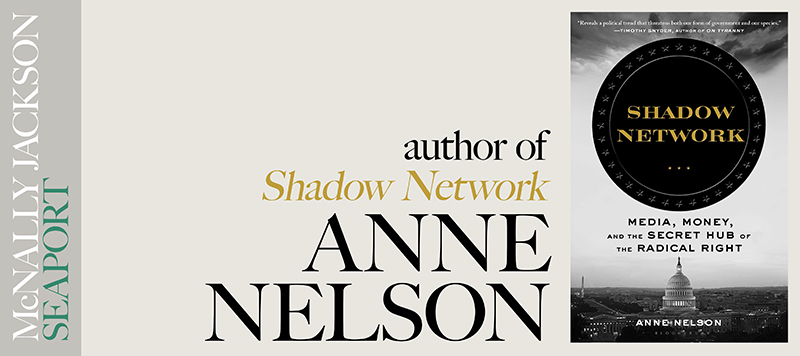
From a Google Image Search – McNally Jackson Books
I was attracted to the book Shadow Network: Media, Money and the Secret Hub of the Radical Right by Anne Nelson because I already knew that Evangelicals (white evangelicals in particular) shared Republican ideology, and liked this ideology better as it got more extreme. What I did not know is that Evangelicals, also called Fundamentalists, were prime movers in turning Republican politics into a well-oiled voter turnout machine.
Anne Nelson is on the faculty at the Columbia School of International and Public Affairs. She acknowledges the help of colleagues and students in the end notes. Although I have written on these subjects many times Anne Nelson had access to resources I did not. Her work is important to me because it offers proof that my “cheap seats” interpretations of recent events in our government have merit. It would be more satisfying if the truths did not back up the facts that the church has been meddling in our federal government and that they grew from scratch into a very effective organization, using tools both legal and possibly illegal to get Republicans elected.
Southern Baptists were not leaving the church the way other Americans were. The advent of church on TV had given birth to the megachurch phenomenon. Pastors with large numbers of followers became almost religious rock stars. For decades there had been a strong church presence on the radio, especially across the South and Midwest. Stardom can go to your head, at least that seems to be what happened. At first churches met, “convocated,” held conventions, and church leaders talked about the moral decline which they linked to the decline in religious observance in many parts of America. They felt that religion would cure our moral “slippage.” They were angered that it was no longer legal to pray in school. They began to understand that their numbers and their media network gave them power to change the things they did not like about America. Their natural allies were the Republican Party, even more so with the advent of the Tea Party.
Evangelicals began to found a series of social organizations which were ostensibly formed to deal with aspects of America’s slippage, things like the disintegration of the nuclear family, abortion, contraception, the exclusion of religious teachings from school, the increasing concentration of power at the federal level when it could benefit the church’s ability to thrive if power was concentrated instead at the state level (small government).
Evangelicals came to see that if they could get Republican voters to the polls they could get everything they wanted because the Republican agenda matched the Evangelical wish list. They eventually went digital and collected data on a house-by-house basis in places that leaned right.
One problem with this (among many) is that these groups are classified as 501 c3 (nonprofits for religious reasons) and 501 c4 (nonprofits for social welfare reasons). These groups, in order to keep their tax exempt status, are not supposed to be partisan or participate in getting members of any particular party elected. These groups, in an incestuous relationship with the Republican Party and rich Republican donors like the Koch brothers and the DeVos family, were violating their tax exempt status, not to mention colluding to have an outsized effect on our national, state, and local politics. This story is essentially a political thriller, except its real.
Anne Nelson’s very interesting book may not be to everyone’s taste but should be read by anyone who believes that we should participate in our democracy/republic.
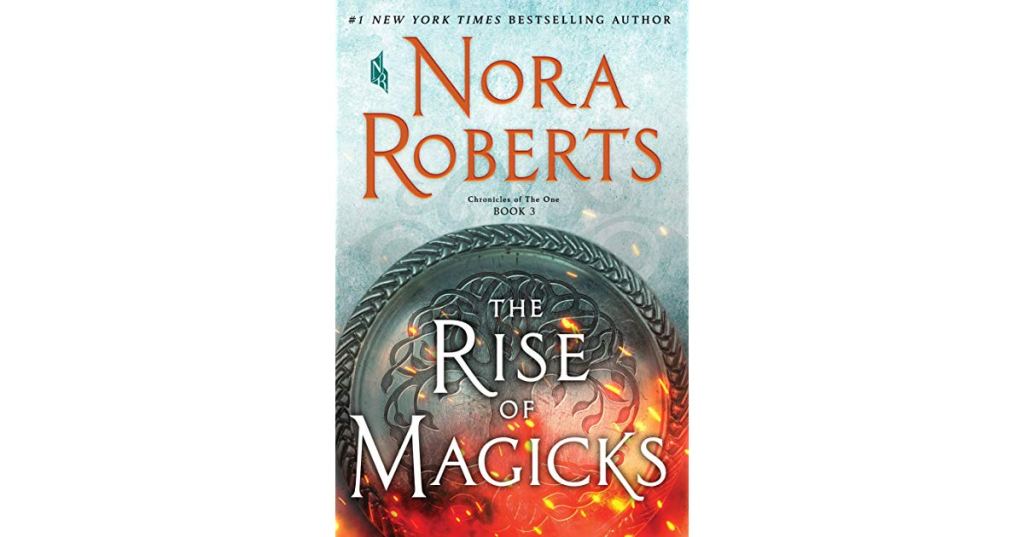
Although I found fault with the adolescent atmospherics in the second book in Nora Roberts most recent trilogy which began with Year One and continued with Of Blood and Bone, I decided that I enjoyed the first two books enough to want to read The Rise of Magicks, the last volume in the trilogy. (It could just be that, like Sheldon Cooper in The Big Bang Theory, I am unable to leave something unfinished.) I liked this last volume almost as much as I liked the first volume. Although I don’t believe in magic or even ‘magicks’, there was enough universal cultural commentary relevant to the times to keep me hooked. And I will confess that one of my guilty pleasures when it comes to reading was a love of the romance genre, especially the Regency romances of Barbara Cartland and Amanda Quick. I blame this on (or credit this to) my sister who loved these books so much. Although I rarely crave this particular genre these days, I’m guessing that particular endorphin pathway is still neurologically strong. Nora Roberts trilogy has enough romance to reengage those particular neurons and she does it with all the delicacy some of those Regency romances entailed.
When the seal that holds magick away from humans is broken in Scotland and both good and evil magic are loosed on the world they come in the form of a virus. Many die from this virus, millions, and the world is thrown into chaos. Some humans begin to learn that they have morphed into magical beings and some other humans, who have no magic are horrified by these magical humans and see them as abominations. They capture them and put them in containment centers where they devise experiments with various deviant purposes. So we have a culture that is dealing with the ‘others’, aliens, and it is not a proud moment in fictional human history, but which has some parallels in the real world.
Lana and Max, the first generation heroes, are witches who are being hunted by a group called the Purity Warriors, and by magical people who chose the dark side, the Dark Uncanny. They decide to halt their desperate escape at a small town which they, along with other first generation virus survivors, will turn into a community called New Hope. But this final book is the story of Lana and Max’s daughter, Fallon Swift, known far and wide as The One. And she is a refreshingly down-to-earth female heroine even though she is trained by her own Merlin and her path to power resembles the Arthurian legends (but this Arthur is a girl/woman). This final book in the trilogy, The Rise of Magicks is full of war and of love. This time Duncan and Fallon are grown-ups, no longer teens, and if you were frustrated that they each went their own way at the end of Book 2, then you will find it was worth the wait. While these are not the great American novel(s) they are an entertaining and addictive read delivered by a really talented, and very prolific, writer.
I decided not to put together a book list for December, although I may do that later when life slows down. But here are links to lists of the best books of 2019.
The Testaments by Margaret Atwood is the sequel to The Handmaid’s Tale, much anticipated (possibly demanded) by fans of the TV series based on Ms. Atwood’s book. By the end of The Handmaid’s Tale we know that there is a resistance movement. It is modeled on the real and desperate escape route for American slaves, the Underground Railroad. This time it is called the “Female Road” and the magic rescue word offered to handmaid’s, who are virtually sex slaves, is May Day. Offred escapes Gilead through this underground route. But what happens after she escapes? Does she die? Does she find a safe place and live out her days in peace? Does she join the resistance?
Margaret Atwood is able to use her words to build scenes from both the past and the future that are vivid and that come to life in our minds. She builds the entire nation of Gilead. She does it like one of those artists who can capture the essence of a person or a place with just a few deft strokes. We find we don’t need every little detail. Because her new nation is similar to things we already know our mind fills in the blanks. The same skill is at work as we follow the resistance movement inside and outside of Gilead, and as a very surprising character engineers the demise of Gilead.
Gilead has besides the handmaids; the Commanders, their wives, the Marthas, the Econowives, the Aunts, the Guardians, and the Eyes. The Aunts are modelled somewhat on nuns. They live regimented lives, ruled by prayers and bells, they are the teachers of handmaids and of the daughters of Commanders, they are the only women in Gilead allowed to keep books and to read and write. Big mistake. In this male-dominated world men believe that women are now powerless, completely reliant on men, and that even the powers of previously educated, professional women such as doctors, lawyers, and judges have been completely defused. In The Testaments we find Commander Judd and Aunt Lydia basically in a respectful/hostile power struggle. Aunt Lydia was a force in The Handmaid’s Tale, but in The Testaments we learn about her secret powers (no magic is involved, just intellect). We learn that what Commander Judd cannot imagine will eventually bring him down.
We also meet a young teen who is living with a couple of resistance fighters who she almost believes are her real parents. We meet the Pearl Girls, missionaries from Gilead who are also unwitting partners in the resistance. When Gilead uncovers “Nicole’s” parents and blows them up Nicole (Baby Nicole was stolen from Gilead) is hurriedly trained to infiltrate Gilead as a captive of the Pearl Girls. Watching her reactions as she is introduced to this repressed culture and watching the reactions of the others to her is part of that charming skill that Margaret Atwood brings to her writing. Atwood successfully, but not exhaustively, wraps up the tale of the handmaids and offers us a new hero, a woman, of course.






 So Many Books, Choose Wisely